Guided Coach Tours to European Christmas Markets: Routes, Journey Times, and What to Expect
Guided coach tours solve the part of a Christmas market trip that independent travel handles badly: the moving around. The markets cluster in different cities, the good ones run for only three to four weeks, and the most atmospheric hours are after dark, exactly when unfamiliar trains thin out. A coach handles the routing, the timing, and the luggage, and sets you down near the market rather than at a station on the edge of town. This guide covers how those tours are built, the typical journey times, and what to confirm before you book.
How a guided coach tour is structured
Two formats cover most of the market. A day trip runs from a nearby hub to a single market and back the same day, which works when the city is within two or three hours of the departure point. A multi-day loop strings several markets together across a region, with the coach as your transport between them and hotels booked along the way. The Rhine Valley, the Alsace-to-Bavaria corridor, and the Vienna-Salzburg-Prague triangle are the routes operators repeat, because the driving distances between stops are short.
The coach is the spine of either format. You board at a set departure point, the driver covers the intercity legs, and you keep the same seat and luggage space for the whole trip. That removes the station changes, platform sprints, and per-leg ticketing that turn the same itinerary by rail into a string of separate problems.
Journey times from the main departure hubs
Most operators run from a handful of hubs. From Munich, Nuremberg is about two hours by road and Salzburg around an hour and a half, which is why both sit on Bavarian day-trip schedules. From Frankfurt, the Rhine markets at Cologne and Strasbourg are roughly two to two and a half hours away. London-based operators reach Bruges in about four to five hours including the Channel crossing, and the Lille or Brussels markets a little less. Vienna anchors the eastern loops, with Salzburg about three hours west and Budapest around two and a half hours east, so a 3–4 day itinerary covers all three without long daily drives.
Treat published times as the moving part of the day, not the whole day. Peak December weekends slow the approach roads into popular market cities, and coach drop-off points are sometimes a short walk from the market square. Add a buffer at both ends.
Getting the evening hours
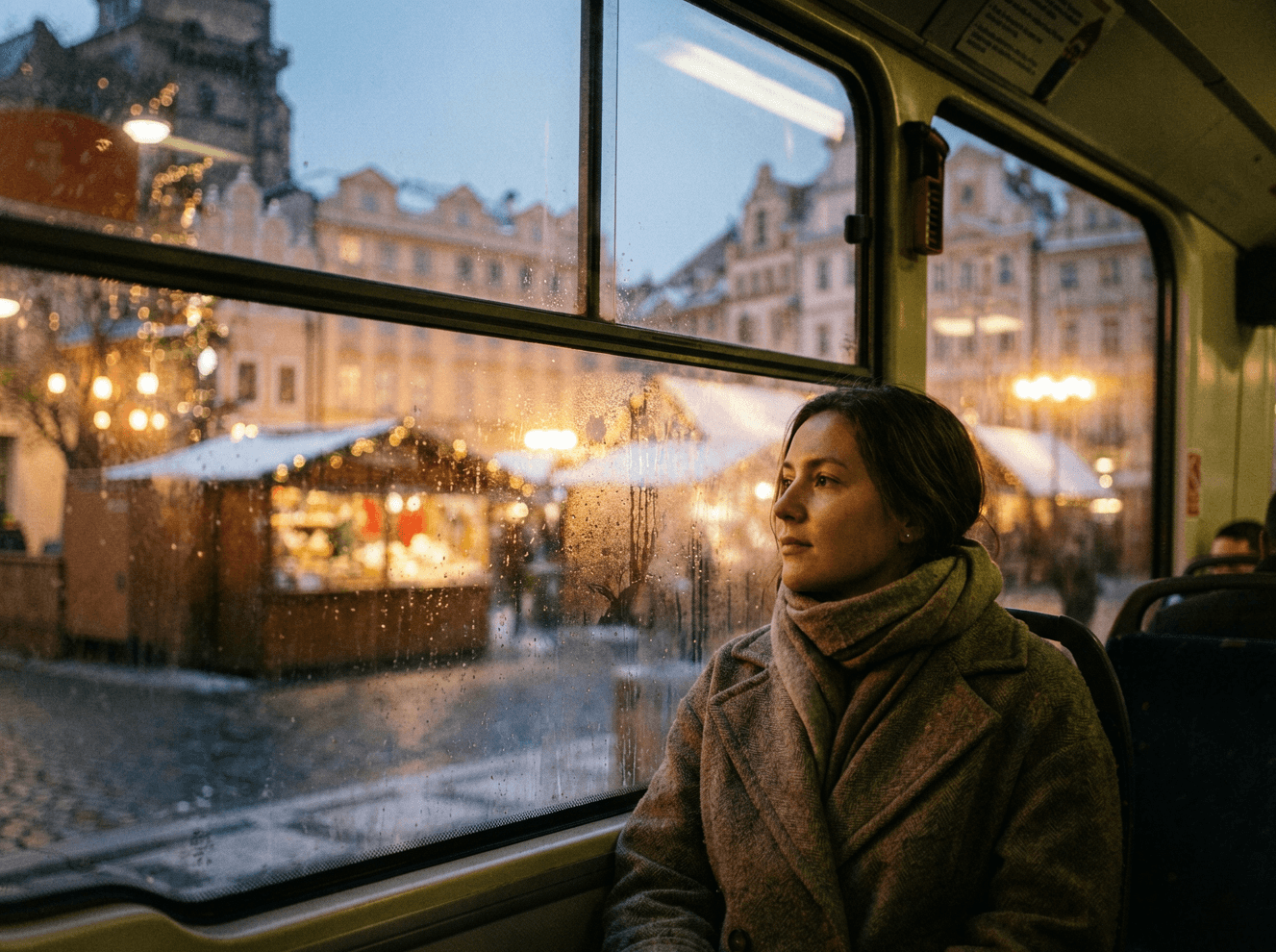
The markets look their best once the lights come on, generally from late afternoon into the evening. A day trip that arrives at midday and leaves at five misses that window. Before booking, check the time scheduled at the market and whether the return allows an evening departure. Multi-day tours that overnight near a market are the reliable way to get the after-dark version rather than the daytime one.
Luggage and pickup on coach tours
Coach allowances usually run to one checked bag in the hold plus hand luggage in the cabin. Christmas shopping adds volume on the way home, so confirm the limit before you pack. Many package tours include hotel pickup and drop-off at both ends, but some only collect from a central departure point. That detail decides whether you start the trip with a taxi across the city, so confirm it rather than assume it.
Ten markets and how coaches reach them
The markets below are the ones operators build routes around, with the cities coaches usually depart from and the format that fits each.
- Nuremberg Christkindlesmarkt. Documented back to at least 1628; the Hauptmarkt square is the classic Central European market. Usually a half-day stop on coach tours from Munich, Frankfurt, or Prague. Runs late November to 24 December.
- Strasbourg Christkindelsmärik. Dating from 1570, the centrepiece of Rhine Valley coach itineraries from London, Paris, and Frankfurt. The Cathedral quarter and Place Broglie are the main zones.
- Vienna Rathausplatz. The largest of Vienna's several markets. Usually reached on a multi-day eastern loop combined with Salzburg or Budapest rather than as a day trip, given the distance from western Europe.
- Prague Old Town Square. In front of the Astronomical Clock, with prices well below comparable Western European markets. Coach tours from Germany, Austria, and the UK typically allow three to five days to take in the wider city.
- Bruges Winter Glow. Across the Markt and Burg squares, the most coach-accessible full market for UK travellers via direct services from London. Day trips run, but an overnight catches the evening lighting.
- Cologne Cathedral Market. Directly in front of the Cathedral, an easy stop on any Rhine itinerary and well connected by coach across Germany. Worth combining with the Neumarkt and Old Town markets if the schedule allows.
- Dresden Striezelmarkt. Records from 1434, the oldest documented German market, still a working market for regional craft and Saxon Stollen. Sits naturally on a route combining Prague or Berlin.
- Salzburg Domplatz. Smaller and quieter than Vienna; the Cathedral-square setting feels less commercial. Combination coach tours with Vienna are standard and make geographical sense.
- Budapest Vörösmarty tér. Strong on food and cheaper than Vienna or Prague, which makes two to three days good value. Tours from Vienna usually combine both cities into one itinerary.
- Edinburgh Christmas Market. In Princes Street Gardens below the Castle, mid-November to early January. Day coach tours run from Glasgow, Newcastle, and Leeds for travellers staying in the UK.
What to confirm before you book
The best December weekend dates fill six to eight weeks ahead, and November and early December offer more availability and lower prices for the same markets. Beyond dates, three points decide how the trip actually runs: the time scheduled at each market and whether it includes the evening; the luggage allowance in the hold; and whether pickup is from your hotel or a central point only. A short combination tour usually packs two or three markets into a 3–4 day window, which is the most efficient way to see several without driving yourself between them.