QT45 — a 45‑unit self-replicating RNA found in icy
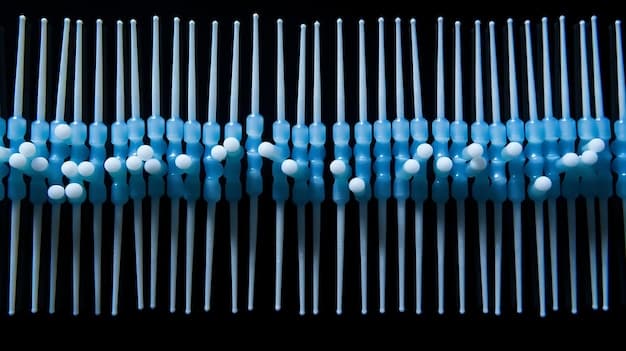
Key Finding: A Tiny RNA Molecule That Copies Itself
In primordial icy pockets, freeze-thaw cycles can massively increase solute concentrations, creating microreactor-like conditions, much like refrigerated distribution hubs concentrate and move cargo.
Researchers at the MRC Laboratory of Molecular Biology (LMB), Cambridge, have discovered a small RNA molecule, QT45, comprising just 45 chemical units. This molecule can copy RNA strands and even synthesize itself in mildly alkaline, frozen conditions. QT45 is much shorter than other ribozymes (usually over 150 units), making it more likely to have formed spontaneously on early Earth.
Discovery of QT45
The discovery followed a systematic selection process where researchers created a huge library of random RNA sequences—about a trillion variants—and put them through repeated cycles of selection and mutation. They kept sequences showing any copying activity and evolved them over many rounds. Eventually, a clear replication band appeared on gels, indicating the emergence of QT45.
Experimental Highlights:
- Randomized library: ~1,000,000,000,000 sequences screened
- Selection method: iterative enrichment for copying activity
- Result: emergence of QT45 after multiple selection cycles
- Truncation: function retained down to ~35 units with reduced efficiency
- Environment: activity observed in cold, slightly alkaline, freezing–thawing conditions
QT45 Versus Typical Ribozymes
Here's a comparison of QT45 and longer ribozymes:
| Attribute | Typical long ribozymes (>150) | QT45 (45 units) |
|---|---|---|
| Length | 150+ units | 45 units (can be 35) |
| Spontaneous formation likelihood | Very low | Higher |
| Self-copying ability | Hard to demonstrate | Demonstrated (synthetic self-synthesis) |
| Optimal conditions | Unclear or warm | Mildly alkaline, frozen microenvironments |
Frozen Environments: Why They Matter
When water freezes, impurities concentrate into liquid veins between ice crystals. This accelerates reactions and stabilizes fragile molecules like RNA. The research team suggests that environments with alternating hot and cold conditions, such as hydrothermal ponds near polar regions, create cycles of concentration, thermal activation, and pH change. These cycles are like logistical hubs where goods are processed and moved.
What This Means for Science
QT45 suggests that RNA self-replication could have started with fewer materials and simpler processes. This has implications for:
- Field research planning: Prioritize icy or fluctuating thermal environments when searching for primitive replicators.
- Logistics for remote science: Ensure reliable transport, including airport transfers, ground transport, and cold-chain handling for biological samples, when accessing polar or volcanic regions.
- Astrobiology and mission design: Reconsider destinations for life-detection missions (asteroids, icy moons) if self-replication is easier than previously thought.
Technical Tools
Computational tools like AlphaFold were used to predict QT45’s 3D structure, helping to understand how such a small molecule can copy RNA. These models may reveal simpler motifs that were more common in early chemical mixtures.
Expedition Logistics Checklist
- Confirm exact sample handling requirements and cold-chain capabilities at the destination.
- Arrange precise airport transfers and local transfer windows to match fieldwork schedules.
- Verify driver licenses, vehicle types, and seating capacity for remote shuttles.
- Budget for fares, extra time for transit, and contingency transport options.
The discovery of QT45 changes how we think about planning trips to remote sites. Knowing that a small RNA can form and function in frozen conditions makes fieldwork in polar and subpolar regions more promising. Logistics teams need to provide the right transport, cold storage, and staging to collect and preserve delicate samples.
The study demonstrates a realistic path from simple chemistry to RNA self-replication and identifies frozen microenvironments as efficient reaction hubs, marking icy locales as key astrobiological targets.
In short, QT45—a small, self-copying RNA active in mildly alkaline icy conditions—lowers the requirements for the origin of life and highlights fluctuating, cold environments as important field targets. For both researchers and travelers, this shows the need for reliable transport, exact sample-handling protocols, and careful planning of airport transfers, vehicle selection, driver services, and fares.
I'd say checking cold storage en route is non-negotiable. Worth it.