How to Find the Best Transport Option for Any Trip
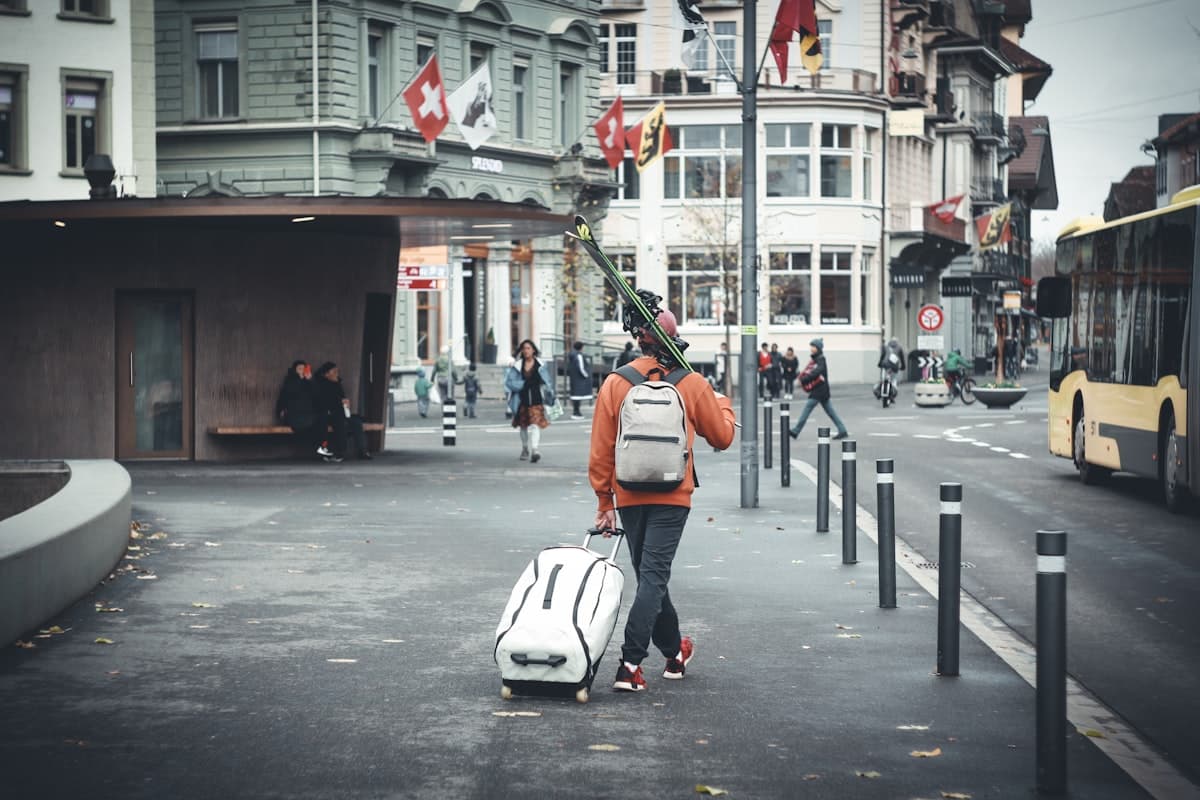
The options for getting between cities are genuinely better than they were ten years ago. High-speed rail has expanded across Europe and Asia. FlixBus and similar operators connect cities that used to require awkward transfers. Intercity coaches now have Wi-Fi and power sockets. For any trip under 700 km, mixing transport modes has stopped being a workaround and become the obvious strategy. The part that hasn't improved: finding out which combination is actually best before you commit.
Why the Maths Is Harder Than It Should Be
Here's what actually happens when most people plan a multi-modal trip: they open Skyscanner, find a flight, book it, then scramble to sort the airport transfer and onward train separately. Not because it's the best approach, just because that's the order things come to mind.
Train operators run their own booking systems. Bus companies have their own apps. Airport transfer prices vary wildly depending on where you look. There's no single interface that shows you the door-to-door cost of Option A versus Option B. So you end up with multiple tabs, multiple currencies, and a mental arithmetic problem, does the cheap flight still look cheap once you factor in the 90-minute transfer from a secondary airport?
Multi-modal comparison platforms are trying to fix exactly this, not selling tickets, just showing what's actually available across flights, trains, and buses in one place. A friend used something similar last August and found a direct overnight bus to a city she'd been planning to fly to. She'd been checking flight prices for weeks. The bus wasn't even on her radar.
When Ground Transport Wins and When It Doesn't
Flying wins on distance. But somewhere in the 300–700 km range, the calculation shifts. Most people don't do the full calculation.
City-centre convenience: airports sit outside cities. That's not a minor inconvenience, it's 45 to 90 minutes each way and €20, 40 per leg in transfers. A train that runs from centre to centre cuts all of that. For a same-day return trip, that's potentially three hours and €100 not spent.
Cost: intercity buses between major European cities regularly start at €15, 25. A last-minute flight on the same route, with baggage fees added, easily runs €80, 120. For a group of four, the difference pays for a couple of decent dinners.
Luggage: budget airlines have made carrying anything larger than a cabin bag expensive. Trains and coaches haven't. This matters more than most people account for, especially anyone who's had a bag weighed at the gate at 7am.
Airport Transfers: The Leg Most People Underthink
Rome's Fiumicino illustrates how differently this can play out. Taxi from arrivals to central Rome: around €50 fixed rate, 40–50 minutes in light traffic. Terravision shuttle bus: €6 one-way, 55 minutes, runs every 30 minutes. Leonardo Express train to Termini: €14, 32 minutes, fixed schedule.
Which one is right depends entirely on context. Arriving solo at 10am on a weekday, the train. Arriving at midnight with two kids and three bags, a taxi or pre-booked private transfer. A group of four splitting a private transfer through GetTransfer often works out cheaper per person than individual taxis, and a driver meets you at baggage claim with a name sign rather than requiring you to hunt for the cab rank while jet-lagged.
City-to-city: The Route Comparison That Changes by Context
Barcelona to Madrid, 620 km, is a useful case. The AVE high-speed train covers it in under three hours for €60, 80 booked early. Alsa buses do the same in about 7.5 hours for €25. The train is faster; the bus is cheaper; a night bus saves a hotel night, which changes the maths again.
For shorter routes the gap narrows. Lisbon to Porto at 300 km: FlixBus €15, 3.5 hours; train €25, 2.75 hours. Budget wins if you're flexible on time. Train wins if you're not. Taxis for city-to-city almost never make sense, Barcelona to Madrid by taxi runs €500+ and takes six hours.
Ryanair from London Stansted to Berlin can come out €40 cheaper than the other carriers. Flight time: 1h45. Stansted to central London: 50 minutes by train (£10) or an hour by taxi in traffic (£70). Airport train to Berlin Mitte: 30 minutes for €3.40. The cheap flight is usually still cheap once you add those up but not always. Check the baggage fees before getting excited about a low headline price. On some routes the fees exceed the base fare.
One Habit That Saves Time on Every Multi-city Trip
Most of the time spent planning a trip goes into flights and hotels. The transfer between the airport and the city, the bus that connects two legs, the decision between train and coach, these get thirty seconds. But the ground transport decision is often where the most time and money is actually lost or saved. Take care of it in advance to save yourself some stress and money. It takes the least research to get right but defines your overall experience from the trip.