Easter Island Travel Essentials - What to Know Before You Go
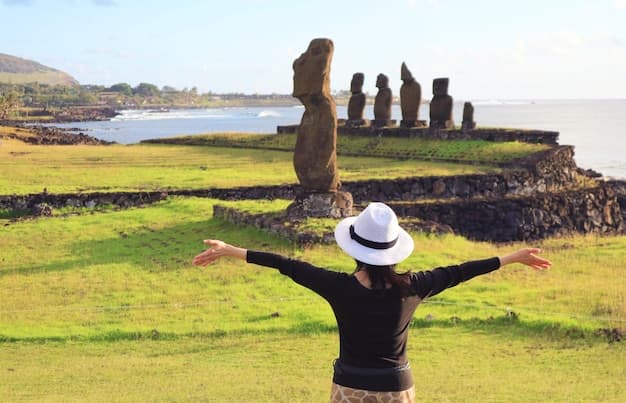
Want to explore Anakena Beach's white sand, Poike, and Rano Raraku at sunrise? Great idea. But here's a tip: get a reliable compact SUV and book it *at least* a month ahead. The island’s roads? Let's just say they aren't always smooth. A sturdy vehicle is key if you want to keep your schedule and catch that perfect light.
Budget alert: plan on spending about $100-150 *per person, per day* for lodging, meals, and tours. That's just a rough estimate, though, and it really does depend on the season. Shoulder season will save you a bit.
Day trips to Poike, Rano Raraku, and Ahu Akivi are often led by English-speaking guides. Book those two weeks out. You'll find most locals speak English, and they are incredibly friendly. Expect lots of smiles!
Use Google Maps to plan your routes between Hanga Roa and the quarry. And please, pay attention to the filming rules at archaeological sites. Always, always ask before using drones or filming near the sculptures. What follows is a practical planning outline, but remember, flexibility is your friend.
Coming from the Marquesas Islands? Get ready for long connections through Tahiti or Santiago. Last time I took that route, the flight was delayed. Book a return ticket and pad your schedule with an extra day for potential delays. Flights can be… unpredictable.
The goal here is a concise itinerary, mixing sightseeing with rest, photography, and respectful engagement with the local communities.
Easter Island Travel: What to Know Before You Go
Private guides who speak the local language? Worth every penny. They can truly bring the carvings to life, offering a deep understanding of the archaeological context. It transforms your visit into a culturally aware experience and supports responsible tourism. Check the official website for hours and tour info. Try to visit during the dry season to avoid rain. Locals will tell you that each site has stories passed down through generations. Listen.
Plan and stay smart
Pick hotels in quieter areas with easy access to the main sites. Shoulder season is less crowded, but you still need to book guides and transport in advance. The Rapa islet and northern coast offer amazing views, but the lava field trails can get slippery after rain. Prioritize safety and respect local customs. Crime isn't common, but petty theft can happen in busy areas, so keep your valuables safe. Don't be a target.
Practical travel notes
You'll see tons of archaeological features and carvings behind fences. Stay on the marked paths. Do not touch *anything*. Chatting with the guardians and locals will give you a better sense of the island's history and the Rapa people. Support locally-owned hotels or guesthouses instead of just big chains. The official website is a great resource, but a licensed guide can give you accurate context for each carving and sculpture. They all tell a story.
What are the entry requirements and park permits for Easter Island?
Get your Rapa Nui National Park permit online or at the airport when you arrive. Double-check the opening hours with the government before your trip. Keep a printed copy of the permit and your passport for verification.
International travelers should check visa requirements with their consulate. When you land on Easter Island, you'll need to show your passport and go through Chilean immigration. The island is under Chile’s jurisdiction, and entry rules vary by nationality.
CONAF (the Chilean government) issues the park permit, so you'll need it to visit the main ceremonial sites. Pay the fee at the airport or port; the money helps fund conservation work and protect the sites. If you're hiring a guide, make sure they're certified. It's worth the peace of mind.
Respect local communities and cultural sites in the park. Many places are sacred to Polynesian communities and include ceremonial platforms and cliffs along the south coast. You'll see remains of motu and rock faces with holes where ceremonial eyes were set. Always stay on the trails and don't remove artifacts. It's basic respect.
Pack a flashlight for dimly lit spots, double-check park hours, and set aside three days to see the main sites. Try curanto, a local seafood dish with fish and shellfish, often served in town. The government keeps corridors open for international explorers while protecting island rights.
When is the best time to visit in terms of weather, crowds, and activities?

April, May, September, and October are generally great times to visit. You'll find good weather, fewer crowds, and plenty to do. Shoulder season means quieter beaches, easier bookings, and better deals on hotels and tours. Tailor your trip to your own pace and interests.
The island is in the southeastern Pacific, about 3,700 km from Chile. It's a long flight. Daytime temperatures are usually in the low to mid 20s C, with cooler evenings—pack a light jacket. The white sand and palm trees at Anakena Beach offer a nice contrast to the island’s dark lava terrain, perfect for a relaxing afternoon after a morning hike. The weather tends to get drier after mid-year, with more sunny days for exploring.
The Tapati festival in February is when things get *super* crowded. There's dancing, crafts, and traditional skills competitions. If you'd rather avoid the crowds, visit in late April–May or late September–October. You'll find it easier to book things, and local service will be more reliable. If you're flying in or arriving on a cruise, give yourself extra time for airport transfers and park entry. Take your time and avoid long lines at major sites like the Moai and Ahu platforms.
Guided tours about the Moai and the Rano Raraku quarry are worth the cost. The quarry shows centuries of carving history. The Tapati festival has Marquesan influences, and sometimes you can catch a moonlit performance by the coast. Hike to a ceremonial site for views of the coast and the crater lake. A local guide can help you understand the symbols and stories. If you need translation help, they can usually assist on the spot.
The best way to get around is with a vehicle. Rent one or join a local tour, and then hit up Ahu Tongariki, Orongo, and Anakena. Service on the island is generally reliable in the main towns, and many guesthouses offer shuttles and guided transfers. You can even combine snorkeling, hiking, and stargazing under the full moon. If you're staying for a month, spread out your activities and rest days to avoid getting worn out.
History buffs can check out expedition logs and museum exhibits about early contacts, like the accounts from La Pérouse. The Moai show centuries of planning and quarrying, and a nighttime show can bring local legends to life. Spanish and Rapa Nui are widely spoken by guides, so learning a few phrases will help you chat with locals. People who hire local guides often get a deeper understanding of the festival and the meaning of trees, water, and astronomy in ancestral rituals. You can arrange your transfer with a booking platform.
How do you get to Easter Island and what are common flight routes?
Here's the deal: if you can, book a nonstop flight from Santiago to IPC. LATAM offers this route, and it's about 6.5 hours. Saves you from multiple connections.
If nonstop flights are booked solid, go for a one-stop flight instead. A stop in LIM or another hub is pretty common. These itineraries *can* be efficient if you plan ahead. Just be aware that scoring a seat during peak season can be tough.
Rapa Nui is pretty far from mainland Chile: about 3,700 km west of the coast. The usual route is SCL-IPC nonstop, and lots of travelers take it when they can. Others connect through LIM or another Pacific hub. It all depends on availability and price.
If you're planning a bigger Polynesian trip, you might add Tahiti or Mangareva as stops before heading to IPC. These options open different ticket options, but they'll add extra time. It depends on how much you value time versus money.
You can walk from the airport to your lodging, and the area around Hanga Roa has archaeological monuments. Surfing is an option on some coastlines, so check the conditions before you head out. If you want to balance cost and comfort, think about open tickets or multi-city plans. Security and boarding are well-organized, and you should have no problem getting back to Santiago.
Where to stay on Rapa Nui: lodging options and booking tips
If you want to keep things simple, stay in Hanga Roa at a certified property with English-speaking staff. It'll avoid confusion and get you reliable tours right away. It makes planning easier, especially if you're coming from the mainland. Plus, you'll be close to everything.
Lodging options
- Hangaroa Eco Village & Spa – certified luxury on the western coast, with ocean views, an on-site spa, three restaurants, and well-trained staff. It’s a solid pick for those who want comfort after long travel and prefer all-inclusive arrangements plus guided excursions.
- Explora Rapa Nui – a high-end option offering all-inclusive stays with private itineraries and English-speaking guides. Great for travelers who value curated experiences and a smooth daily routine.
- Mid-range hotels and guesthouses in Hanga Roa – characterful, locally run places that offer breakfast, wifi, and easy access to shops and walkable routes to the harbor and main beach. These properties tend to be more affordable and largely family-owned, with a personal touch that lasts decades.
- Private rentals and casas particulares – ideal for planning a longer stay or traveling with a group. You’ll find full kitchens, laundry facilities, and the chance to live like a local while paying significantly less per night than top resorts.
- Camping and eco-lodges near the coast – for adventurous travelers who want to keep costs down and enjoy a simple setup close to coral reefs and beach access. These options typically require advance booking and offer basic facilities.
Booking tips
- Plan early, especially for yearly peak periods. If you’re traveling mon-fri or around holidays, secure your stay at least six months ahead to lock in the best rates and availability.
- Use certified operators or official listings from a guidebook to avoid overpaying and to ensure accurate information on room types, breakfast options, and tours. English-speaking staff can simplify arranging transfers and excursions.
- From the mainland, most travelers fly via Santiago or valparaíso before connecting to Easter Island. Confirm transfer times and airport pickup when you book, so you’re not waiting with luggage after a long flight.
- Ask about what’s included in the rate (breakfast, tours, airport transfers) and confirm cancellation terms. A flexible policy matters more on a remote island where weather or flight delays can require adjustments.
- Check walking distance to town centers, beaches, and the main archaeological sites. A short walk often reduces transport costs and increases your daily exploration time.
- Look for properties that support easy access to the main road and southern beaches; western viewpoints and black-sand shores are popular, but travel times can add up if you’re far inland.
- Ask about gear storage if you’re carrying trekking or diving equipment; some rooms offer secure spaces for your gear, which is helpful when you want to explore multiple days in a row.
- For a more authentic experience, consider staying at a smaller guesthouse for a few nights and then swapping to a larger resort for a couple of nights. This mix gives you both intimacy and convenience and is a common approach that has worked for decades.
- What’s useful in planning is to note that a million stars can appear over the island at night, so choose a lodging with a dark-sky policy or a comfortable viewing area if you’re keen on astronomy during clear skies.
- If you need remote support during your stay, pick a property that can coordinate with local guides, shops, and transport operators; this typically increases your odds of a smooth, well-supported trip.
How to get around the island: transportation options and travel times
Rent a compact car or a reliable scooter for the best balance of flexibility, cost, and safety. This four-option approach lets you explore the north, the southern bays, and the eastern crater line on your own schedule and rhythm.
- Car rental – Most convenient for a weeklong stay. Typical daily rates range from 60 to 90 dollars for a small car, 90 to 120 dollars for a 4x4. Book in advance during peak season, and expect to pay a bit more for insurance and pickup at the harbor. Fuel prices stay economical, and you can plan exact site visits without waiting for a guided line. A car supports visits to Rano Raraku, Orongo, Ahu Tongariki, and Anakena with comfort and speed.
- Scooter or motorbike – A leaner option for solo travelers or couples. Expect 25 to 40 dollars per day, plus fuel. Scooters handle the island’s light traffic well; use protective gear, stay on paved roads, and limit rides after dark. This choice creates a relaxed leaves-of-shore rhythm while chasing four or five site visits in a day.
- Guided tours and private drivers – Ideal for efficient sighting of key sites with local context. Half-day tours run about 4–5 hours and cost roughly 60–100 dollars per person; private drivers for a 4-hour segment typically charge 120–180 dollars. Guides often provide insights on the symbolic moai, the crater line, and the island’s earth history, plus help with timings to catch sunsets near Motu Nui or the northern coast.
- Taxis and arranged shuttles – Useful for short hops or when travel times tighten. Rides within Hanga Roa usually range from 5 to 12 dollars; longer hops to Craters, Puna Pau, or Anakena can be 15–25 dollars. Request a pickup through your hotel or a local shop to secure a reliable line of service.
Major sites and typical drive times from Hanga Roa (approximate and weather-dependent): Orongo Crater with Rano Kau, 8–14 km, 15–25 minutes by car; Rano Raraku Quarry, 18–22 km, 25–35 minutes; Ahu Tongariki, 28–34 km, 35–45 minutes; Anakena Beach, 12–17 km, 25–35 minutes. A full loop around the coast covers roughly 64 km, easily doable in a day with a relaxed pace. Offshore, you may spot tiny islet features such as Motu Nui or Motu Iti on clear days, a reminder of the island’s rich coastal identity.
Practical notes: check vaccinations with a medical professional before travel; routine immunizations are usually advised, and there are no mandatory shots specific to the island. Carry protective sun gear, a reusable water bottle, and a portable GPS or offline map to keep your excursions precise. Shops near the harbor and in town provide fuel, snacks, and souvenirs, so you can pick up essentials without breaking your momentum. If your itinerary includes Mangareva as part of a broader Pacific route, plan separate flights and ports; this island cluster offers abundant experiences, but travel times between atolls vary by air and sea conditions.
What to pack: clothing, gear, and practical reminders
Pack four versatile outfits that layer well for variable conditions. Start with a breathable base layer, a quick-dry T-shirt, a light fleece, and a compact rain shell. Add lightweight long pants for cool mornings and sun protection, plus quick-dry shorts for beach days. Include a wide-brim hat and UV sunglasses to cope with strong sun reflecting off basalt shores. That four-outfit approach is a simple idea to stay flexible.
Footwear and wearability: bring sturdy sneakers for coastal trails and archeological sites, waterproof sandals for beach days, and a lightweight pair of socks with ventilation. Carry a compact towel, a rain cover for your daypack, and a small umbrella if you prefer. For comfort in modern travel, choose breathable fabrics and rotate shoes to reduce odor.
Gear and practicals: reef-safe sunscreen, lip balm, insect repellent, personal medications, and a basic first-aid kit. Pack a compact headlamp or flashlight, a power bank, charging cables, and a universal adapter. For your devices, a compact power bank supports modern smartphone use. Carry a reusable water bottle and consider a small water filter if you expect remote stays. Check whats allowed on hikes and boat trips. You will receive weather updates and safety reminders from your host.
Documents and logistics: passport and copies, travel insurance, hotel confirmations, and a simple itinerary. Bring a guidebook with local maps and emergency contacts. On arrival, a taxi can deliver you quickly to your lodging; the captain of boat trips often takes a safety briefing and weather update before departure.
Food, culture, and tips: plan meals around local specialties like curanto. If you sample a local dish, order curanto or baked seafood at a sea-side restaurant. For a quirky nod to culture, you may hear about ovahe on menus or in stories from locals. When you face rising heat and wind, do a short climb toward the highest point, Terevaka, to enjoy pretty scenic views of the coastline. A day trip from Santiago connects you to archeological sites and scenic coastlines.
Seasonal planning and pacing: seasonal planning helps because growing tourist numbers mean increased check-ins and queue times at popular eateries; book meals and tours in advance, and check the forecast daily. Easter Island sees two main seasons with distinct conditions; pack for warm, humid days and cooler evenings. Look after your belongings, and use the local language to ask whats open during your stay; compared with other destinations, Easter Island offers unique archeological experiences and pretty dramatic views when conditions permit.
Money, connectivity, safety, and local etiquette on the island

Carry cash and a certified card for most purchases; book flights and a certified guide for any trek to craters and carvings. Plan to spend much per day on meals, guided tours, and transport; in remote areas times of the day can affect shop hours, and some vendors have ceased card payments after siesta. When you land, items are transported by local teams to your lodging, so pack light and secure valuables.
Connectivity in Hanga Roa is reliable in hotels, but signal can be patchy in northern and coastal areas. theres a practical option: buy a local chileans SIM or eSIM to stay connected, and you’ll be taking photos and sharing whats happening with friends and family as you explore famous sites and coastal rookeries. For planning, download maps for offline use and consider a data plan with enough allowance to cover a short trek or a day full of coastal discoveries.
Safety comes first on rugged paths and near the coast. Stay on marked routes for crater rims and ceremonial sites, and hire certified guides for remote treks to avoid unstable ground. Be mindful of strong currents when taking a dip near fish markets or shorelines; keep valuables secured and avoid leaving belongings unattended at bus stops or beaches. Respect wildlife by keeping distance from animals and refraining from feeding seabirds, and bring a windbreaker for the cold mornings that often accompany ocean views along the famous northern coast.
Etiquette reflects a traditional respect for heritage and community. Chileans and local residents appreciate modest dress around sacred sites, calm interaction in markets, and asking before photographing people. Never touch carvings or ruins, and follow posted signs in heritage areas to honor the culture behind the carvings and craters. Support local artisans by buying directly from them and tip guides when service is solid. If you’re hoping for authentic insights, engage with families about whats around the island and the stories behind each area–theres plenty of knowledge to share, and your awareness makes the experience richer.
| Aspect | Practical tip |
|---|---|
| Money | Carry cash for small purchases; use certified guides; plan a daily spend of 40–120 USD; some remote areas may ceased card payments after siesta; expect items to be transported to lodging. |
| Connectivity | Wi‑Fi exists in towns, but patchy zones appear in northern/coastal areas; a local chileans SIM or eSIM helps; download maps offline and note where taking photos is convenient. |
| Safety | Stay on marked trails near craters and cliffs; hire certified guides for risky routes; keep valuables secure; be cautious around fish outlets and seas; respect wildlife and cold winds. |
| Etiquette | Dress modestly near sacred sites; ask before photos; don’t touch carvings; support local heritage by buying crafts; discuss whats around the island with locals; remember theres a long tradition behind every site. |