A Train with a Flight Number: Brussels Airport to Cologne

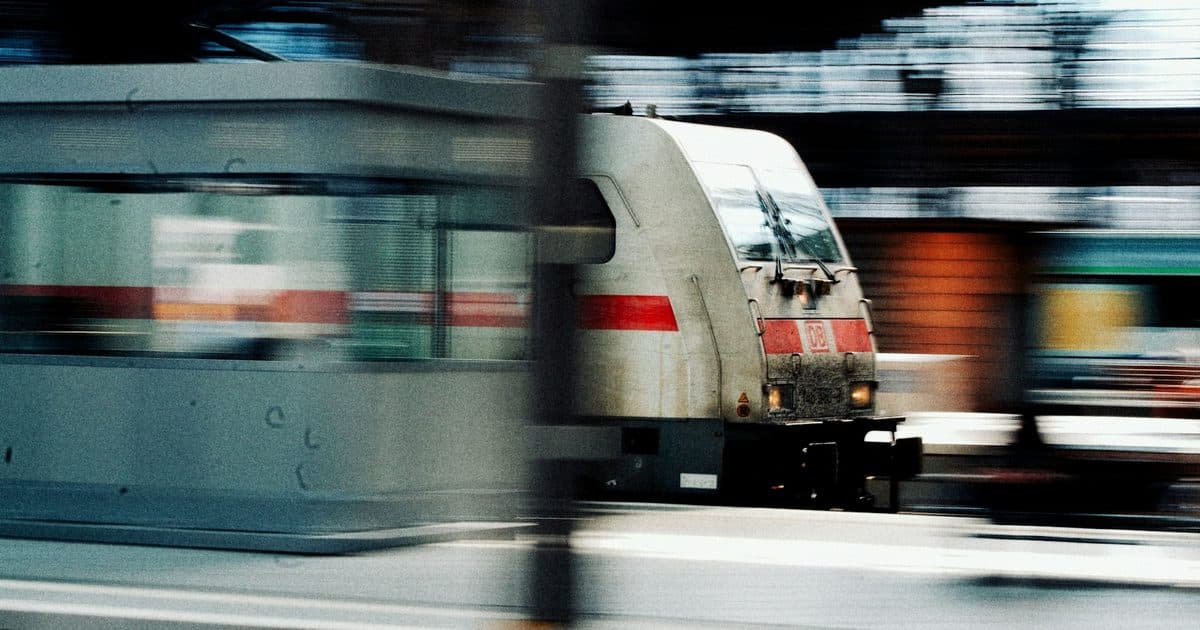
From 7 September 2026, Brussels Airport gets a direct high-speed train to Cologne, and the rail leg carries a Brussels Airlines flight number. Deutsche Bahn and the airline are running it as a codeshare, which changes what happens when the train is late.
The service
Deutsche Bahn and Brussels Airlines put it at two return services a day between Köln Hauptbahnhof and Brussels Airport, calling at Aachen, Liège and Leuven, then continuing to Antwerp. Journey time from Cologne to the airport is around two hours, covering roughly 200 kilometres. Tickets are already on sale through airline sites, travel agents and rail booking channels.
Why the flight number matters
Plenty of airports have a train. Very few have a train the airline treats as one of its own flights.
Under the codeshare the rail segment is ticketed with a Brussels Airlines flight number and the onward connection is protected. A delayed train that causes a missed flight becomes the airline's problem to solve. Book the train and the flight separately and that risk is yours: miss the check-in cutoff and you have bought a new ticket.
The protection attaches to the through booking, not to the route. Buying the same train separately because a rail site quoted less removes the only thing that distinguishes this service.
The model has a track record
This arrangement is not an experiment. Lufthansa and Deutsche Bahn have run Lufthansa Express Rail for more than twenty years, feeding Frankfurt Airport by train from 28 German cities. Lufthansa's own figure is more than 240 ICE connections a day carrying a Lufthansa flight number, with the train and the flight in one booking rather than two.
The German version has kept adding to what the ticket covers. Since 2025 the booking includes the railway City-Ticket, which covers local buses, trams, underground and suburban trains in 26 German cities, so the leg between the front door and the platform stops being a separate purchase. Air Canada extended its own codeshare onto the rail services in June 2025, so the flight number on the train can belong to an airline that does not fly the route at all.
What all versions share is the transfer guarantee: when the train fails, the airline handles rebooking rather than treating you as a no-show. That is the substance behind the Brussels arrangement, and the reason it is worth more than the two hours it saves.
What the through ticket includes
The codeshare is more than a flight number printed on a train. Booked as one itinerary, the rail leg carries a reserved seat, which on a two-hour run with luggage is worth more than it sounds. Local transport at the German end is included as well: the ticket covers city transport in Cologne and in Aachen, so the leg from the front door to the platform sits inside the same booking.
Frequent-flyer miles accrue on the train, and premium passengers who qualify can use the lounge at Köln Hauptbahnhof before departure. The connection is protected, which is the whole point: if the train runs late enough to break the flight, the airline rebooks. That is the difference between this and the cheaper rail ticket for the same seat bought on its own.
The service is also being loaded into standard airline reservation systems, so carriers other than Brussels Airlines can sell the train as a feeder to their own flights. Deutsche Bahn is extending an arrangement it already runs with Lufthansa rather than building one from scratch, which is why the mechanics are settled before the first train runs.
The morning slot is the one that matters
The timing to watch is the morning arrival the two operators have published, 08:29 at the station beneath the terminal. It is built to feed the long-haul departure bank rather than to be generally convenient, and it is the reason the service works at all on two round trips a day.
Work backwards from it. An 08:29 arrival leaves a comfortable margin for a late-morning intercontinental departure and a tight one for anything before 10:30, particularly with the slower border processing that has applied since April. If your flight leaves earlier than that, this train is not your connection, whatever the timetable suggests.
What it replaces
Cologne Bonn Airport is close but thin on long-haul routes, so passengers from the Rhineland have been driving to Brussels or riding the existing ICE to Brussels-Midi and changing there.
On the Belgian railway's own timetable that final leg is short but fiddly: 12 kilometres, 22 to 24 minutes, trains roughly every ten minutes, and a change with luggage in a large terminus. Around 110 trains a day run it.
One charge catches people regardless of route. The Belgian railway adds a surcharge to every journey to and from Brussels Airport, the Brussels Airport Supplement formerly called the Diabolo fee, currently €6.90 per single journey in either class. It is normally built into the quoted fare rather than collected at the barrier.
The limits
Two services a day in each direction is a thin timetable. It fits a morning long-haul departure and an evening return and little else. Outside those windows the Brussels-Midi route with a change is still the answer.
Allow more arrival buffer than the journey time suggests. Brussels Airport is a Schengen external border for long-haul departures, and border processing across the area has been markedly slower since the EU's new entry and exit checks reached full operation on 10 April 2026. Ninety minutes between arriving at the station and a long-haul departure is tighter this year than the same plan was two years ago.
What the stops along the way are worth
Aachen sits about 70 kilometres from Cologne and has no airport of its own worth the name, so its long-haul options have always meant a transfer to Düsseldorf, Cologne Bonn or Brussels. A direct call on this service turns Brussels into the practical hub for the city.
Liège gains the same way from the Belgian side, and the continuation to Antwerp gives northern Belgium a second through route to the airport that does not pass through Brussels-Midi.
Leuven benefits least. It already sits close to the airport on the existing network, so the through service removes a change rather than a journey.
When the road still wins
Groups of four or more, departures outside the two daily slots, and anyone starting somewhere the line does not serve. Four rail fares plus a missed-connection risk compares differently against one fixed price for a car, and a car does not care what time the flight lands.
The same applies to the awkward hours. A long-haul arrival at 23:00 in Brussels with an onward journey into the Rhineland is not a train problem any timetable solves this year.
For one or two people travelling between Cologne, Aachen or Liège and a long-haul departure from Brussels, the through ticket is now the straightforward choice.