
Causes and Consequences of Road Traffic Crashes in Dubai, UAE - Injury-Reduction Strategies

Install automated safety systems at the most congested intersections and deploy electrical on-doard signaling devices to cut crash rates in Dubai. Targeted placement at arterial corridors creates immediate behavior cues for drivers and pedestrians, while automated monitoring sharpens enforcement without expanding field staff. This approach aligns with the economics of prevention, showing clear returns in reduced injury severity and lower EMS loads.
Dubai's streets expose a high burden from crashes involving pedestrians and vehicles at busy nodes. Reviewing police, EMS, and traffic-analytics data highlights that most incidents happen around intersections during peak hours, with speed variance and distraction as core factors. By mapping interaction points between drivers, cyclists, and pedestrians, planners can target changes in curb layouts, lighting, and crosswalk timing. ecit frameworks and dashboards help standardize reporting. In every year, the economics of treatment and lost productivity climbs, underscoring the need for proactive safety programs with measurable outcomes.
Engineering and policy measures center on safer interactions at intersections and along corridors. By developing protected turn lanes, clearer pedestrian signals, and longer crossing times, the combination of measures reduces friction between turning vehicles and pedestrians. Locking mechanisms on vehicle safety devices during high-risk hours reinforce on-doard cues at the road surface. Key devices, including adaptive lighting and dynamic speed displays, support safer behavior. The stylistic redesign of signage improves comprehension for drivers and riders in the busy Dubai urban fabric, boosting stadility at critical crossings and accelerating the translation of policy into safer conduct.
A robust monitoring unit tracks changes in crash rates and injury severity, enabling rapid feedback to policymakers. Real-time dashboards synthesize data from police, EMS, and hospitals, making it possible to adjust interventions within weeks rather than months. A focus on high-risk corridors, driver training, and enforcement hotspots reduces crash exposure and shortens the time to care after incidents. Regular reviewing of programs ensures that strategies stay aligned with evolving road use patterns and seasonal fluctuations.
In Dubai, success takes coordinated effort among agencies, private partners, and communities, sharing data and agreeing on standards for devices, deterrence, and urban design. An incremental rollout with clear milestones–intersections upgrades, on-doard integration, and public awareness–takes time to mature but yields tangible change. After deployment, measure impact using unit-specific metrics for speed, exposure, and injury outcomes, and adjust budgets to address changes in traffic patterns. This approach keeps injury reduction front and center, with sustained gains supported by constant evaluation and stakeholder collaboration.
Causes and Consequences of Road Traffic Crashes in Dubai, UAE – Injury-Reduction Strategies and Cross-Sector Perspectives
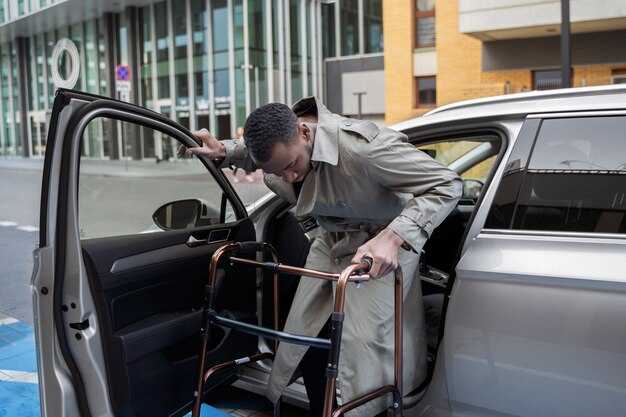
Recommend establishing a cross-sector injury-reduction program by mid-2026 that recognise speed, distraction, and pedestrian exposure as top causes, tightens regulatory controls, deploys forward-facing sensors and audible warnings at high-risk crossings, and builds a unified data service across police, emergency services, hospitals, and insurers to guide interventions in real time. The program should plan for a decade of funding and milestones, with clear ownership across agencies and private partners, ensuring the data feeds translate into timely actions on the road.
Causes and Risk Segments in Dubai
Dubai's traffic profile shows distinct segments of risk across road users and road types. Over the decade, speeding and aggressive driving remain the leading factor in serious crashes, with estimates attributing roughly 30–40% of fatal incidents to excessive speed. Red-light violations account for about 12–18%, while distracted driving adds another 8–15% of injuries. Pedestrian and cyclist exposures concentrate near transit hubs and dense commercial corridors during morning and evening travel times. A characteristic pattern is the clustering of incidents along arterial lengths linking airports, business districts, and shopping zones, where high travel volumes stress road design. To recognise that variation across regions matters, authorities need a country-wide data framework that aligns internal hospital and police data with regional traffic offices. Data obtained from hospitals, EMS, and traffic authorities indicate consistent patterns across countries with similar urban forms, though Dubai's density differs. The main side of risk shifts between interchanges and local streets, requiring different design approaches across road segments. Forward-facing cameras, cable networks, and sensor arrays feed travel and services apps, providing drivers with audio warnings at high-risk times and locations, while informing responders where crashes occur. Campaign messaging around holidays such as valentine days can push safer travel choices in busy retail corridors.
Cross-Sector Injury-Reduction Strategies and Implementation
We propose a phased plan that layers regulatory reforms, infrastructure upgrades, data sharing, and public health campaigns. In regulatory terms, lower speed limits on busy corridors (60–70 km/h where appropriate), expand red-light enforcement using automated systems, and mandate telematics for fleets. In infrastructure terms, install 300–500 forward-facing sensors and 1,000+ pedestrian-activated crossing devices across 20 high-risk routes; deploy adaptive signal timing and robust communications networks to reduce cycle lengths and waiting times. In data services, establish a unified data lake that ingests feeds from police, EMS, hospitals, insurers, and vehicle makers; use analytics to identify risk-prone segments and time windows, and provide real-time alerts to drivers and responders. In outreach, coordinate with telecom operators and media agencies to deliver region-specific messages during peak risk hours and around holidays such as valentine days. Maintain and update cables, power supplies, and sensor calibrations to ensure reliability. Time-bound targets include reducing injury crashes by 20–30% within five years and maintaining improvement through quarterly reviews. The plan must be country-wide yet tailored to city, regional, and emirate scales, with a dedicated cross-sector committee to provide oversight and accountability.
Dubai Crash Landscape: Data Sources, Metrics, and Zone-Specific Trends
Consolidate a centralized crash-data hub today to ensure full coverage from recording to report. Integrate streams from Dubai Police, RTA, EMS service, DHA hospitals, insurers, and cross-border entries to Oman and Gulf corridors. Establish a uniform period-based reporting cadence (monthly and quarterly) with a shared data dictionary so every incident maps to the same fields. This approach ensured a service-ready dataset for policy, hospital planning, and road-safety strategy.
Key data sources feed the hub: official crash records from Dubai Police; RTA traffic counts and geofenced event logs; EMS run sheets; hospital admission records; and insurer claims. We also record pre-hospital mortality and, when available, on-scene outcomes. We link cross-border data from corridors toward Oman and other Gulf routes to capture drands codes and cross-border risk signals. The line between public and private data must be clear, and data-dictionary-driven tagging makes integration robust. Note that alcantara interiors do not influence crash causation, while vehicle safety features remain valuable inputs for post-crash analysis.
Metrics should be defined and consistently computed: crash frequency (events per period), crash rate per 100,000 inhabitants, severity distribution (fatal, serious injury, minor injury), time-to-hospital or on-scene clearance, and zone-level crash density. We include hospital disposition, EMS response time, and vehicle category when recorded. Reporting should distinguish rear-end, intersection, run-off-road, and pedestrian crashes to guide targeted interventions. We also track recurring effects on traffic flow and EMS workload to quantify time loss and system strain; the resulting data makes risk signals actionable for your strategy.
Zone-specific trends currently show concentrated risk patterns: Downtown/Bur Dubai corridors with dense daytime traffic and complex signal networks produce high rear-end and intersection crashes; Jumeirah Beach Road and Marina corridors see mixed-speed crashes with pedestrian exposure; Deira and Al Barsha show elevated pedestrian-vehicle interactions near metro stations; high-speed Gulf-side routes along Sheikh Zayed Road drive severe injuries; industrial belts near Jebel Ali concentrate truck-involved crashes. Zone-centric analyses help decide where to apply speed enforcement, signal timing adjustments, and dedicated lanes. The Asia-Pacific practice of aligning signals with peak flows can be adapted to Dubai’s period and seasonal shifts. In this landscape, sounds from sirens and the silent gaps in reporting both reveal hidden risk pockets. Hospital data confirm the link between high-speed segments and injury severity.
To avoid silent data gaps, enforce mandatory field completion for location, time, zone, and vehicle type; require standardized coding for crash types (rear, side, frontal, rollover) and cross-reference with drands codes. Validate times across agencies to prevent misalignment, and apply geocoding accuracy checks. Currently, some zones lack precise GPS tagging; fix this with field validation and periodic audits. This improves country-wide trend reporting and supports hospital capacity planning, enabling a proactive response to surges in crashes during peak time.
Implementation steps include: appoint a cross-agency data steward; build an ongoing dashboard with near-real-time updates; integrate brake-disc data and other vehicle-teardown findings when available; publish a monthly report and a full annual review; align with Gulf-region safety strategy to address cross-border risk. Developing a formal risk-stratification model will help pre-position resources during peak periods and holidays; this time-sensitive strategy reduces hospital overload and accelerates patient care. The doth data highlight: the more integration you achieve, the more reliable your findings become, and the clearer your choice of interventions.
In sum, Dubai’s crash landscape benefits from centring on zone-specific risk, robust data integration, and a clear reporting cadence that informs a proactive, time-aware injury-reduction strategy across the Gulf region. Your dashboard should reflect Asia-inspired best practices while staying tailored to the Gulf’s unique traffic mix, road geometry, and seasonality, ensuring the country advances toward safer roads again and again.
Dominant Risk Drivers in Dubai: Speed, Red-Light Violations, Pedestrian Exposure
Implement a targeted enforcement and design program that reduces speed, curbs red-light violations, and protects pedestrians in high-risk corridors. The program includes calibrated speed cameras, longer red-light phases at busy intersections, protected crosswalks, and brighter street lighting. It uses data-driven safety parameters and a continuous review process to evaluate outcomes for both vehicles and pedestrians. This is something actionable you can begin implementing in the next quarter to see quick changes that lower fatalities.
Across Dubai, the maior share of road danger concentrates on three domains: speed, red-light violations, and pedestrian exposure. The dark hours and dense urban segments increase conflict between motorists and walkers. The experience of groups entering the road network this decade shows new drivers remain vulnerable, underscoring the need for conditioning, hands-on training, and peer feedback. macpherson notes that driver conditioning and timely feedback reduce these risks. Stakeholders are engaged across government, police, transport operators, and communities to ensure changes reflect real conditions and public concern. This approach benefits the country by reducing fatalities.
Data Signals and Risk Segments
Analyses highlight midrange speeds on key corridors as a primary predictor of pedestrian conflicts. The shape of risk varies by segment: arterial intersections near schools, busy downtown crossings, and high-traffic pedestrian routes require tailored controls. Braking discs and the maintenance of braking systems influence stopping distances in wet or dusty Dubai conditions, while copper-signal components and robust signage support safer decisions. The review of country-wide data shows increasing pedestrian exposure in dense districts, prompting investments in lighting, curb extensions, and safe crossing timing. Public mail outreach and surveys validate this concern and guide pragmatic changes that benefit everyone.
Strategic Interventions for Dubai
Recommended actions start with data-informed speed limits on high-risk segments and a phased rollout of adaptive signal timing. Extend yellow phases where needed, install protected turns, and deploy countdown signals at crossings. Enforce consistently with mobile camera units and real-time monitoring, backed by a formal policy review and regular progress reports. Include education campaigns, workplace programs, and targeted conditioning for new drivers to sustain safer behavior. Align infrastructure improvements with behavior change to shape a safer travel experience and preserve driving pleasure while reducing risks. All actions involve engaged communities, including older pedestrians and school groups, and aim to decrease fatalities country-wide. This decade-long benchmark provides a clear path to evaluate progress and calibrate policies as conditions change.
Injury Outcomes and Healthcare Burden: EMS, Hospitals, and Long-Term Disability
Implement a unified, zero-delay trauma pathway that coordinates EMS, hospitals, and rehabilitation services to cut prehospital-to-definitive-care time by 20–30% within two years.
There is clear evidence that rapid, coordinated care improves outcomes for severe road crashes. In Dubai, urban EMS response times typically range from 7 to 9 minutes, with shorter times there when scenes are within close proximity to major hospitals. Studies and papers from DHA-linked facilities show that fastest reach to definitive care reduces intracranial injury progression, lowers the need for multi-system support, and shortens ICU exposure. Enhanced prehospital notification and direct-to-trauma-bay activation are the keystones of these dynamics, and they should be standardized across state-owned and private providers to maintain parity.
To translate these findings into practice, the following actions should be kept at the core of every crash-response plan:
- EMS and hospital alignment: implement direct dispatch-to-hospital pathways, with pre-arrival data transmission and automatic trauma-bay mobilization.
- Frontline training: ensure EMS crews and ED teams receive regular, forward-facing simulations that emphasize rapid triage, airway management, and hemorrhage control; audio and visual feedback loops should be used to reinforce best practices.
- Imaging and diagnostics: promote direct-to-CT imaging for suspected head and torso injuries where clinical criteria are met, reducing time to diagnosis and treatment.
- Bed management and intensivist access: maintain dedicated trauma bays and a surge plan that keeps severe cases out of elective queues, thereby shortening ICU and overall hospital stays.
Healthcare burden unfolds in three linked arenas: EMS workload and transport, hospital care, and long-term disability. In Dubai, papers from state-owned and private facilities indicate annual major trauma admissions in the low-to-mid thousands, with roughly a quarter to a third admitted to ICU. Typical ICU stays for severe injuries span 3–7 days, and total hospital bed-days attributable to road-crash trauma cluster around tens of thousands yearly, depending on severity profiles and admission practices. These patterns are driven by crash dynamics, including high-energy collisions and multi-system injuries, which demand rapid stabilization, reliable imaging, and multidisciplinary decision-making.
Long-term disability carries substantial implications for people, families, and the economy. Survivors with severe injuries frequently require rehabilitation, prosthetics or assistive devices, and vocational support. In recent UAE series, 15–25% of survivors presented with moderate-to-severe functional limitations at 12 months post-discharge, and 40–60% needed some form of rehabilitation services within the first year. Early access to multidisciplinary therapy–physiotherapy, occupational therapy, speech-language pathology, and psychological support–improves mobility, independence, and return-to-work chances. To maximize outcomes, healthcare planners should ensure seamless transitions from acute care to rehabilitation, with case managers coordinating services across offices there, groups, and community providers.
Economic and workforce implications are material. The direct costs of trauma care–emergency response, imaging, operative procedures, ICU days, surgeries, and inpatient care–combine with indirect costs from lost productivity and caregiver burden. Evidence from regional papers shows that enhanced care pathways can reduce hospital length of stay and post-discharge disability in substantial ways, partially offsetting upfront investments in training, equipment, and data systems. In Dubai, a sustained program has the potential to prevent bottlenecks and monopolisation of trauma services by single facilities, ensuring there are multiple capable centers with state-owned leadership and private partners, thereby distributing capacity more evenly across the city’s velocity of care needs.
Key means to achieve these gains include:
- Establishing a centralized dashboard that tracks EMS response times, transport durations, time-to-imaging, and door-to-intervention metrics.
- Creating standardized, cross-facility protocols for severe injuries, with a single electronic beam of patient data that travels with the patient from scene to ICU.
- Investing in mobile prehospital diagnostics and electrical monitoring equipment to accelerate on-scene assessment and stabilization.
- Maintaining a robust, state-owned backbone for data collection, audits, and continuous improvement; publish annual papers and briefings to keep perspectives aligned across agencies there and abroad.
To improve long-term outcomes, rehabilitation and social reintegration must be planned from admission. Early referral to multidisciplinary teams and access to community-based programs reduce disability duration and support return-to-work goals. Structured follow-up, including neurosurgical and orthopedic reviews, pain management, and mental health care, should be guaranteed for at least 12–24 months after discharge, with audianced feedback loops to clinicians and families. Such approaches, produced by coordinated efforts among hospitals, EMS, and social services, have shown enhanced stability in post-crash trajectories and better quality of life for patients.
In sum, robust, evidence-informed, and forward-facing systems–supported by state-owned governance, diversified provider networks, and continuous data feedback–will reduce the burden of injuries on EMS and healthcare facilities, while preserving the potential of survivors to rebuild lives. By keeping these dynamics and means aligned, Dubai can improve not only acute care outcomes but also longer-term recovery and societal well-being.
Practical Injury-Reduction Toolkit for Dubai: Engineering, Enforcement, Education, and EMS Workflow
Implement a four-pillar injury-reduction toolkit in Dubai now: Engineering, Enforcement, Education, and EMS Workflow, starting with a 90-day pilot on two arterial corridors to quantify impact and scale fast based on results.
Engineering and Enforcement Actions
Identifies highest-risk nodes using rtcs analyses; baseline speed, pedestrian density, and sightline parameters drive prioritization. In these segments, implement a step-by-step package: raised crosswalks, curb extensions, protected turn lanes, and improved lighting backed by electrical circuits with power conditioning to endure summer heat. These engineering changes add friction to momentum and curb collision speeds, reducing injury severity when crashes occur.
Audible cues (cymbals) and visual cues at conflicts reduce erroneous maneuvers; upgrade signals with live data and adaptive timing toward observed risk, particularly during dusk and night hours. Use friction-improving surfaces and selective road-dusting; install solar-powered lighting where grid reliability is weak. These measures are priced in a way that delivers ROI in 12–24 months by lowering hospital admissions and lost productivity, and can be quite cost-effective with well-planned maintenance.
Enforcement: pair automated speed enforcement with visible patrols during peak hours; adopt a step-based enforcement cadence; tie penalties to behavior change; align with corporate fleets and city initiatives. Track impact with rtcs, hospital data, and user feedback. Aim for 15–25% reductions in severe crashes in pilot corridors; monitor with pre/post comparisons and dashboards. USPS-style user profiles help tailor messages to different drivers (usps). Tailored messaging improves adoption among users, whilst enforcement remains visible.
ROI and learning: monitor energy consumption, electrical usage, and thermal load; evaluate thermodynamics of heat exposure and energy absorption; ensure power conditioning for reliability; live dashboards keep operators informed; corporate partners share costs and outcomes; the highest gains occur when engineering and enforcement actions align with education and EMS workflow. This approach adds credibility to the program.
Education and EMS Workflow
Education: design targeted campaigns for high-rtcs routes; deliver concise, action-oriented messages in local languages; measure changes in actions within 90 days (seatbelt use, phone avoidance). Use real-life case studies from hospitals to reinforce learning; leverage incentives (rewards, convenience packages) to drive behavior, and present clear USPs (usps) of safe driving. This approach fosters feeling of control and respect for users, and can be quite effective when thought through as a practical, step-based program. Not for pleasure; safety remains the objective.
EMS Workflow: implement pre-notification to hospitals and dynamic routing to minimize on-scene time; standardize a 60-minute care window from crash to hospital arrival; train crews on rapid triage and extrication; integrate ambulances with hospital readiness and surge plans. Use live data to reallocate units and cut response times by 10–20%. Prioritize conditioning and well-deing of operators to reduce fatigue; use power-aware vehicle management and performance dashboards to track outcomes; stop delays at the scene and in transit.
Offering a practical, scalable blueprint, Dubai authorities, hospitals, and corporate fleets can implement these measures with modest upfront investment and clear savings in traffic injuries, hospital stays, and productivity losses. This toolkit supports a shared toward safer roads and better outcomes for all rtcs stakeholders, while focusing on users’ safety and well-being.
Policy, Infrastructure, and Urban Design Roadmap: 2024–2030 Initiatives and Case Studies
Adopt a national policy to standardize pedestrian-first corridors and 30 km/h urban speed zones, backed by automatic enforcement, real-time data sharing, and performance dashboards to measure reductions in deaths and injuries by 2030.
The Centre for Safe Mobility coordinates policy, infrastructure procurement, and urban design guidelines, ensuring cooperation among ministries, transport authorities, and city administrations. It actively receives input from everyday commuters, freight operators, and hospitals, translating listening sessions into actionable design codes.
Infrastructure investments prioritize permeability, protected intersections, and adaptable street layouts that allocate space for walking, cycling, and rapid transit. Designs include low-curvature curves, insulation barriers for noise control around dense nodes, and sensor discs embedded in pavement to capture capacitance-based traffic data in real time. Eastern districts and central business zones now feature adjustable lane allocations, with volumes tracked continuously to direct temporary reallocation during peak events.
Public-private cooperation emerges as a core driver. In pilots, kardon sensors integrate with city networks to receive movement signals and deliver alerts to operators, enabling proactive safety interventions and faster incident response. The approach often combines standardized tests, such as front-wheel stability assessments for micromobility devices, with mass-data analyses to identify clusters of risk around schools, markets, and logistics hubs.
Case studies illustrate how the roadmap translates into practice: a Royal City Centre corridor demonstrates speed reduction and fewer severe crashes; an eastern freight cluster demonstrates safer goods movement; a city-wide listening program shows improved compliance and user satisfaction. Each case codifies a concept: design pays for safety by design, data informs adaptation, and cooperation binds public and private actors.
| Initiative | Timeline | Expected Impact / Metrics | Notes |
|---|---|---|---|
| Urban Design Codes for Safe Movement | 2024–2028 | Deaths reduced by ~25%; average core speed 30–40 km/h; multi-modal share up by 10–15% | Centre-led governance; integrates with PPP and listening programs |
| Freight and Goods Corridor Integration | 2025–2030 | Heavy-vehicle crashes down ~15–20%; smoother crossings; volumes at key nodes stabilized | Prioritizes clear separation of goods routes and living-area corridors |
| Data & Sensing Network (Capacitance & Discs) | 2024–2026 (pilot); 2026–2030 (scale) | Incident-detection latency under 2 minutes; alerts up 30–40%; detection density increases by 25% | Includes kardon sensors and pavement discs; costs monitored against safety gains |
| Public-Private Cooperation with Vendors | 2024–2030 | Response time halved in pilot zones; compliance improves in target clusters | Roy, government agencies, and private firms collaborate on funding and delivery |
| Eastern District Pilot Clusters | 2024–2027 | Baseline crash-rate reductions; lessons scaled to other emirates | Tests urban design concepts in high-volume eastern corridors |
Related Research, Cross-Sector Insights, and Resources: Papers, Datasets, and Industry Innovations
Adopt an open-data strategy across urban transport, safety, and health sectors to cut mortalities and fatalities; publish a live dashboard (doard) with precise time stamps and regional breakdowns; deliver automatic alerts to field teams; use painted road markings and loudspeakers to warn drivers; integrate data from phones to capture live events and time-of-day patterns; center coordination in a dedicated management hub to act along major corridors and within heritage zones.
Key Papers and Datasets
- Paper: Causes and Consequences of Road Traffic Crashes in Dubai, UAE – analyzes urban density, driver behavior, and infrastructure controls, with a focus on time-of-day patterns and first responders’ response times.
- Paper: GCC Urban Road Safety: Cross-Sector Insights for Policy and Practice – compares regional regions, highlighting measures that reduced fatalities and improves live data sharing.
- Dataset: Dubai Open Data – Road Traffic Accidents (yearly, by time, region, and severity) with precise numbers and trend lines for long-term planning.
- Dataset: RTA and Dubai Police Crash Registry – fatalities, mortalities, and injury severities by arterial corridors, including painted crosswalks and urban heritage districts.
- Dataset: Phone-Driven Incident Reports – captures citizen-reported events via mobile apps, enabling rapid validation and verification of live incidents.
- Dataset: Urban Corridor Safety Map – geospatial layers showing controls, speed limits, and centre locations for accident-prone routes, including Tabuk and other GCC references for regional context.
- Report: Thermodynamics and Pavement Performance – links ambient temperatures to tire grip, braking distances, and maintenance planning for high-heat months.
Industry Innovations and Cross-Sector Insights
- Innovation: Automatic incident detection integrates sensor feeds, CCTV analytics, and centre-based management to reduce response times and improve time-to-intervention along high-mortality corridors.
- Innovation: Live, time-stamped dashboards connect with public safety agencies, urban planners, and hospital networks to align rapid response with hospital capacity and patient outcomes.
- Innovation: Public-alert systems with loudspeakers at key intersections and painted warning cues on roads reinforce driver awareness in busy urban zones and near heritage sites.
- Innovation: Phone-based reporting apps create a feedback loop that adds context to incident data, enabling more precise control decisions and forward-planning in the centre.
- Innovation: Cross-sector pilots in regions such as Dubai and Tabuk test multi-agency data sharing, improving coordination of enforcement, maintenance, and emergency services.
- Practice: Data obtained from open datasets informs a phased plant-of-technology approach, where sensor networks, signal timing, and road geometry adjustments are produced in successive rounds and evaluated against defined KPIs.
- Practice: Heritage-aware safety planning integrates cultural sites and urban form into risk assessments, yielding targeted interventions in areas with historical importance and complex pedestrian flows.
- Practice: Clear governance, including first- and second-level approvals, ensures that there is dedicated time for data validation, then deployment of controls that reduce fatalities and mortalities over time.
- Practice: Centres of excellence collaborate with researchers, industry, and local communities to refine models, update datasets, and translate findings into actionable guidelines for urban safety management.
- Practice: Continuous improvement loops use numbers and time-series analyses to validate whether interventions produce measurable gains in safety, with regular updates to dashboards and reports.


