



 Svenska
  English (UK)
  Русский
  العربية
  日本語
日本語  한국어
한국어  Magyar
  Türkçe
  Español
  Čeština
  Português
  Ελληνικά
  Suomi
Suomi  Nederlands
  Română
  Italiano
  Français
  Polski
  Українська
  Deutsch
  简体中文
简体中文  Slovenčina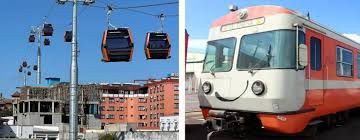

This article reveals Madagascar’s new Train Urbain in Antananarivo and assesses how it may change daily journeys and last‑mile transfers.
Key features of the new urban line
The newly launched service runs a 16‑kilometre route between Soarano station in the city centre and Ambohimanambola. Officially inaugurated on December 16, the initial timetable provides two daily departures — early morning and late afternoon — crafted to serve commuters during peak demand. Each consist includes a locomotive and two coaches with capacity for roughly 300 passengers, and trip times are estimated between 55 and 65 minutes.
| Aspekt | Detaljer |
|---|---|
| Vägbeskrivning | Soarano – Ambohimanambola (16 km) |
| Daily departures | 5:00 a.m. and 5:30 p.m. |
| Kapacitet | ~300 passengers per trip |
| Journey time | 55–65 minutes |
| Management | Operated by a ministry‑supervised entity led by Nestor Mamitiana Raveloson |
Planned expansion and national rail priorities
The capital service is part of a broader strategy to revive Madagascar’s rail network. Authorities plan to add a second train on the urban corridor to boost frequency and reliability. Longer‑term projects include rehabilitation of the strategic Antananarivo – Toamasina corridor and restoration of the Fianarantsoa‑Côte Est (FCE) line, which spans some 160 kilometres and plays an important role in regional connectivity and economic development. The government has pledged subsidies to keep key regional routes viable while attracting funding for major upgrades.
What this means for taxis and transfers
Introducing a reliable rail spine through the city will change patterns for taxis, minibuses and private transfers. Trains can reduce road congestion, reshape demand peaks for ride services near stations, and create new opportunities for integrated transfers — for example, scheduled shuttles, supervised pick‑ups, or on‑demand rides timed to train arrivals. Platforms like GetTransfer.com can bridge the last mile by allowing travellers to pre‑book a car with driver, select the exact vehicle, and view make, model and driver ratings before arriving at the station.
- Reduced congestion along main arteries during commute hours.
- Better predictability for transfer services and cab dispatching.
- New passenger flows that require coordinated station drop‑offs and pick‑ups.
- Possibilities for combined ticketing or station‑based transfer promotions.
Benefits vs. challenges
| Potential benefits | Main challenges |
|---|---|
| Lower road traffic and emissions | Initial limited frequency and capacity |
| Faster, more comfortable commutes | Funding and rehabilitation needs on longer corridors |
| Stimulus for regional tourism and trade | Integration with existing urban transport networks |
Operational outlook
Operational responsibility rests with a ministry‑controlled agency, headed by Director of Rail Transport Nestor Mamitiana Raveloson, while Jhanard Privat Andriamiarantsoa, Director General of Land Transport, has highlighted affordability as a core principle. Bringing additional rolling stock online, securing international investment for corridor rehabilitation, and coordinating with local transit operators will be critical steps to scale the service and increase frequency.
While this development will not dramatically alter the global tourism map on its own, it offers a practical local improvement with the potential to make Antananarivo a more navigable destination for visitors and residents alike; it also signals Madagascar’s intent to modernise connections that support trade and tourism. Highlights include clear commuter benefits, environmental gains, and the strategic revival of key rail corridors, though the real test will be riders’ firsthand experience. On GetTransfer, you can hire a car with driver from verified providers at reasonable prices. This empowers you to make the most informed decision without unnecessary expenses or disappointments. Start planning your next adventure and secure your worldwide transfer with GetTransfer. Book your Ride GetTransfer.com
At a glance, Antananarivo’s new Train Urbain brings a promising, affordable public service that could ease congestion, shorten commute times and create smarter links between stations and destinations. For travellers and locals alike, the arrival of rail changes how one might plan a trip to a city destination, airport transfer or short intercity journey: exact schedules improve planning, predictable fares and vehicle options reduce uncertainty, and pre‑booking via an app helps secure the right car, seat and driver for the route. Whether you need a private seater, a limousine, a cheap cab or the best private transfer, services that combine train and car options will determine how much time and money you save. In short, improved rail plus transparent transfer platforms make it easier to book the right ride at the right price and get to your location on time — a real benefit for any traveller or commuter looking to know how much a service will cost and who will hold the license to drive them.
Kommentarer