



 Română
  English (UK)
  Русский
  العربية
  日本語
日本語  한국어
한국어  Magyar
  Türkçe
  Español
  Čeština
  Svenska
  Português
  Ελληνικά
  Suomi
Suomi  Nederlands
  Italiano
  Français
  Polski
  Українська
  Deutsch
  简体中文
简体中文  Slovenčina

In August 2025, the Legal Team of GetTransfer.com initiated a formal request for regulatory clarification from the Ministry of Sea, Transport and Infrastructure of the Republic of Croatia (MMPI) regarding licensing obligations for digital platforms enabling pre-booked passenger transport services. The request was part of the company’s ongoing assessment of the feasibility of launching a new intermediary-model platform, “WelcomeRides,” in Croatia and across other EU jurisdictions.
Because EU case law sharply distinguishes between active platform-based models și neutral marketplace models, the central question concerned whether platforms facilitating pre-booked transfers must obtain a Croatian taxi operator license, even when all transport is performed by locally licensed drivers.
Solicitare de la echipa juridică GetTransfer:
“GetTransfer, a company registered in Cyprus, which is currently assessing the feasibility of launching a new online platform model under the working name “WelcomeRides,” offering pre-booked passenger transport services in Croatia and other EU countries.
Our company is committed to full compliance with all applicable national and European regulations and seeks to ensure that our business model is aligned with both Croatian passenger transport legislation and EU law. The platform we intend to launch will serve as an intermediary between customers and licensed local drivers, enabling passengers to pre-book transfers at fixed fares.
Înțelegem că:
1. According to the jurisprudence of the Court of Justice of the European Union, in particular Cauza C-434/15 (Asociación Profesional Élite Taxi împotriva Uber Systems Spain SL), platforme digitale care exercită o influență decisivă asupra elementelor esențiale ale unui serviciu de transport – cum ar fi stabilirea prețurilor, stabilirea condițiilor contractuale și alocarea șoferilor – trebuie considerate furnizori de servicii de transport. Ca atare, aceste platforme sunt supuse cerințelor naționale de licențiere și reglementare care guvernează transportul de pasageri.
2. In Case C-320/16 (Uber France SAS împotriva lui Nabil Bensalem), Curtea a confirmat, de asemenea, că, în cazul în care platforma digitală controlează condițiile operaționale și furnizarea serviciilor, aceasta nu poate fi clasificată drept un intermediar neutru în temeiul legislației UE, ci trebuie să respecte reglementările statelor membre aplicabile furnizorilor de servicii de transport.
3. Furthermore, passenger transport services are expressly excluded from the scope of the Directiva 2000/31/CE privind comerțul electronic, ceea ce înseamnă că platformele digitale care oferă astfel de servicii nu au dreptul să beneficieze de limitarea răspunderii și de scutirile de reglementare acordate “serviciilor societății informaționale”. În schimb, reglementarea acestor servicii intră în competența fiecărui stat membru, în conformitate cu Directiva 2006/123/CE privind serviciile în cadrul pieței interne, ceea ce permite autorităților naționale să impună standarde de licențiere, siguranță și operaționale entităților care prestează servicii de transport pe teritoriul lor.
Pentru a ilustra mai bine solicitarea noastră și a asigura o claritate deplină, am pregătit două diagrame care compară două modele de afaceri distincte, relevante pentru sectorul transportului digital. Aceste modele sunt utilizate pe scară largă în Europa și diferă fundamental în ceea ce privește obligațiile legale și fiscale:
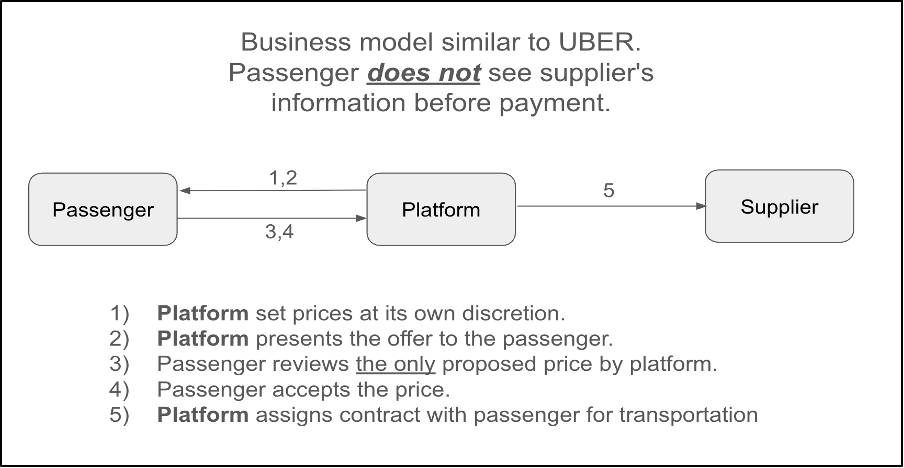
Schema 1. Model bazat pe platformă (similar cu Uber)
(Pasagerul nu vede identitatea furnizorului înainte de rezervare)
În acest model:
- Platforma stabilește tariful la propria discreție.
- Pasagerul primește o singură ofertă, direct de pe platformă.
- Platforma încheie contractul de transport cu pasagerul.
- După efectuarea plății, platforma alocă un șofer sau un furnizor.
Această structură sugerează că platforma nu acționează ca un intermediar neutru, ci mai degrabă ca un furnizor de servicii de transport, pe baza criteriilor stabilite de Curtea de Justiție a Uniunii Europene (de exemplu, Cauza C-434/15 Uber Spain și Cauza C-695/20 Fenix International). În consecință, o astfel de platformă poate fi responsabilă pentru TVA-ul aferent tarifului complet și pentru obligațiile de licențiere/securitate socială în conformitate cu legislația națională.
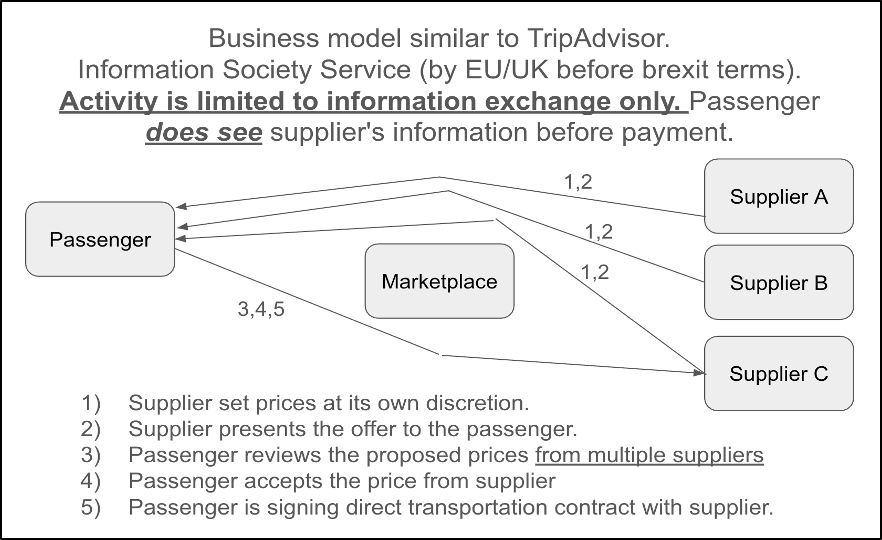
Schema 2. Modelul de tip Marketplace (similar cu TripAdvisor sau GetTransfer)
(Pasagerul vede furnizorii și alege din mai multe oferte)
În acest model:
- Furnizorii stabilesc prețurile în mod independent și prezintă oferte prin intermediul platformei.
- Pasagerul alege dintre mai mulți furnizori și vede identitatea acestora înainte de a rezerva.
- Contractul de transport este încheiat direct între pasager și furnizorul ales.
- Rolul platformei se limitează la schimbul de informații și la facilitarea comunicării și a plății.
Acest model se aliniază cu conceptul de Serviciu al Societății Informaționale, așa cum este definit în legislația UE, iar platformele care operează în acest mod sunt, în general, responsabile doar pentru TVA asupra comisionului lor, nu asupra tarifului total, și nu sunt considerate furnizori de transport.
At the same time, We are aware that many digital platforms are currently active in Croatia. Based on publicly available information, these platforms operate as Scheme 1 and under a unified commercial brand, display fixed prices for common routes, automatically assign licensed local drivers, collect payments directly from passengers, and maintain full control over pricing, customer contact, service standards, and driver allocation. As far as we can determine, these platforms do not appear to hold Croatian transport operator licenses, yet they provide services in cities such as Zagreb.
In this context, and prior to any activity in Croatia, we respectfully request confirmation and legal clarification on the following matter.
We respectfully request your clarification as to whether operating under the Scheme 1 model (“Platform – Based Model”) would require our company to obtain a Croatian transport license, even if all rides are carried out exclusively by locally licensed drivers. Or we can operate the same way as suggested examples currently operate.
Lastly, given that some companies are operating in Croatia using the first model Scheme 1 as described, we would appreciate your confirmation as to whether our company, adopting a similar structure, would be considered in full compliance with Croatian regulatory requirements and lawfully permitted to operate.
We thank you in advance for your time and attention to this matter. We would greatly appreciate your written confirmation or guidance, as this will help us ensure our business model is fully compliant with applicable regulations before launch.”
Am primit o explicație oficială.:
“Your letter (received by e-mail): August 21, 2025
E-mail de contact: info@mmpi.hr
Dear Sir/Madam,
The performance of taxi services is regulated by the Road Transport Act (Official Gazette Nos. 41/18, 98/19, 30/21, 89/21, 114/22, and 136/24; hereinafter: the Act).
Article 14, paragraph 1 of the Act prescribes the following:
“(1) A legal or natural person – sole trader may engage in the activity of public road transport of passengers or goods in domestic road traffic if they are registered in the court or trade register for carrying out road transport activities and if they hold a license for domestic transport issued by the competent administrative authority according to the registered office/residence of the carrier.”
Article 47, paragraph 1 of the Act prescribes the following:
“(1) Taxi passenger transport in domestic road traffic shall be carried out on the basis of a license for taxi passenger transport and a permit for taxi passenger transport, in accordance with the definition in Article 4, paragraph 1, item 1 of this Act.”
Article 47, paragraph 4 prescribes:
“The permit referred to in paragraph 1 of this Article shall be issued to a legal or natural person – sole trader who holds a valid license for performing taxi transport in domestic road traffic at the time of submitting the application for the issuance of the permit.”
In order for someone to be considered a taxi operator and to be able to perform taxi transport, they must hold a valid license and a valid permit for taxi passenger transport.
With regard to the use of a taximeter or an application, Article 48, paragraphs 2, 3, and 4 of the Act further prescribe the following:
“(2) If the carrier provides taxi services using a taximeter, the taximeter must be switched on while the service is being provided, and a price list must be displayed in a visible place in the vehicle.
(3) The taxi price list referred to in paragraph 2 of this Article shall be determined independently by the carrier and must contain at least the price per kilometer traveled.
(4) If the carrier provides taxi services through an electronic application in which the maximum price and the planned route of travel are visible to the passenger in advance, the application must be switched on in the vehicle for the entire duration of the service.”
The Act does not differentiate between the “type” of taxi service depending on whether it is carried out via a taximeter or an electronic application. It is always taxi transport, which may be carried out using, in one case, one “tool” (taximeter), and in the other case, another “tool” (electronic application). Likewise, the Act does not differentiate between carriers who advertise via a website or in another way. All who perform taxi transport must meet the prescribed conditions – from the manner of performing this type of transport in accordance with the statutory definition, to holding a valid license and permit, and fulfilling the special vehicle conditions prescribed by the accompanying Regulation.
Article 96, paragraph 1 of the Act defines agency activities and prescribes:
“Agency activities in road transport, within the meaning of this Act, are mediation services in the employment of carriers’ transport capacities in passenger and freight transport on behalf of and for the account of carriers, as well as the sale of tickets on behalf of and for the account of carriers in public scheduled bus passenger transport at organized points of sale, if not carried out by a bus terminal, and obtaining permits for exceptional transports and organizing escorts for exceptional transports within the territory of the Republic of Croatia.”
From the above it follows that agency activities are performed only by legal persons or sole traders who:
- Employ transport capacities on behalf of and for the account of carriers, and
- Issue invoices on behalf of and for the account of carriers.
Companies that act as information society service providers and do not provide transport services, do not employ carriers (carriers are persons who hold a valid license), nor do they conclude transport contracts with them, do not perform agency activities. Instead, they offer a platform through which transport service providers – carriers – establish contact with their users. Should they perform activities corresponding to the cited definition of the Act, they would then be obliged to obtain a license.”
Concluzie
The exchange between the GetTransfer.com Legal Team and the Ministry of Sea, Transport and Infrastructure of Croatia provides essential clarity for any company evaluating the launch of a digital ride-booking platform in the Croatian market. Croatia’s interpretation of EU case law and national transport legislation confirms a clear distinction between platform-based transport providers și neutral intermediary marketplace models. Platforms that set fares, assign drivers, or contract with passengers in their own name are considered transport operators and must obtain a Croatian licence. By contrast, digital intermediaries that simply connect users with licensed Croatian carriers may operate legally without entering the regulated sphere of taxi transport, provided they do not control the essential elements of the service.
For companies planning to introduce pre-booked passenger transport services in Croatia, the Ministry’s position provides a reliable regulatory framework: compliance depends on the platform’s operational model and the degree of influence it exerts over pricing and service delivery. This clarity is particularly important as digital mobility solutions continue to expand across the EU and face growing scrutiny from national regulators.
As Croatia modernises its mobility ecosystem, understanding the legal boundaries for ride-booking platforms, intermediary services, și online marketplaces becomes crucial. The insights summarised in this article—grounded in EU jurisprudence, Croatian transport law, and direct ministerial guidance—equip businesses with the knowledge required to design compliant and scalable operations within Croatia’s dynamic digital transport sector.
Observații