



 Română
  English (UK)
  Русский
  العربية
  日本語
日本語  한국어
한국어  Magyar
  Türkçe
  Español
  Čeština
  Svenska
  Português
  Ελληνικά
  Suomi
Suomi  Nederlands
  Italiano
  Français
  Polski
  Українська
  Deutsch
  简体中文
简体中文  Slovenčina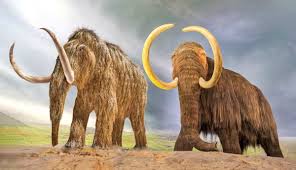

Exploring the Past: Jefferson’s Scientific Curiosity
Thomas Jefferson, an iconic figure in American history, was not only a founding father but also a passionate advocate for scientific inquiry during the late 18th and early 19th centuries. Beyond politics, his dedication to reason, evidence, and exploration played a pivotal role in the early days of paleontology in the United States — especially in uncovering the truth behind mysterious prehistoric creatures like the American Mastodon.
Challenging Old Beliefs: The “American Degeneracy” Theory
During Jefferson’s time, the idea of “American degeneracy” was popular in some European circles, notably promoted by French naturalist Georges-Louis LeClerc, Comte de Buffon. Buffon claimed the New World’s environment was too harsh to support large animals or advanced civilizations, painting it as a place of natural inferiority.
Jefferson was determined to debunk this notion. A symbol of this challenge was the American Mastodon, referred to then as the “Incognitum” or “mammoth.” Fossils of these enormous creatures had often been found along the Ohio River, revealing that the continent once supported giant animals, contrary to Buffon’s theory. The mastodon became more than just a prehistoric curiosity; it was a symbol of American vitality and potential.
Fossil Discoveries at Big Bone Lick
The key site for mastodon fossils was Big Bone Lick in Kentucky, an area rich in fossilized bones and teeth. Jefferson saw an opportunity to push scientific boundaries and national pride by studying these remains. His interest coincided with the famous Louisiana Purchase in 1803, which opened new frontiers to be explored.
Jefferson initiated efforts to recover and study these fossils, even instructing explorers like Meriwether Lewis to collect specimens during their expeditions. Though an early attempt to transport the fossils to Jefferson was thwarted by a river accident, the significance of these finds remained undiminished. Later, William Clark undertook the first formal fossil excavation at Big Bone Lick in 1807, marking the dawn of American vertebrate paleontology.
Understanding Extinction: A Breakthrough in Science
Analysis of the fossils brought scientists to a profound realization: the mastodon and other Ice Age giants were extinct. This was a groundbreaking concept that challenged contemporary beliefs often rooted in religious perspectives, which held that all creatures ever created still existed somewhere on earth.
French scientist Georges Cuvier played a critical role in this shift with his comparative studies of bones from living elephants, mastodons, and woolly mammoths. His work demonstrated clearly that the mastodon was distinct and no longer roaming the wilds—a revelation that extended the scientific method to paleontology and laid the groundwork for modern comparative anatomy.
Jefferson’s Personal Views and the Final Truth
Despite the scientific advances, Jefferson initially hoped that mastodons might still roam the unexplored western territories acquired through the Louisiana Purchase, influenced in part by Native American stories and his own philosophical beliefs.
However, expedition reports from Lewis and Clark, combined with growing scientific consensus, confirmed that the American Mastodon was indeed a creature of the past. Jefferson’s quest to use evidence rather than myth to understand nature marked a significant moment in America’s scientific maturity.
The Mastodon and Its Legacy
The American Mastodon’s fossilized remains carry not only biological significance but also represent an emblem of early American scientific ambition. Today, institutions like the Cincinnati Museum Center preserve these fossils, reminding us of Jefferson’s legacy in promoting exploration, science, and reason.
| Anul | Eveniment | Significance |
|---|---|---|
| 1803 | Louisiana Purchase | Expanded territory for exploration and potential mastodon habitat |
| 1803 | Meriwether Lewis instructed to collect fossils | Early efforts to document mastodons scientifically |
| 1807 | William Clark’s fossil excavation at Big Bone Lick | First formal vertebrate paleontology excavation in America |
| Late 1700s–early 1800s | Georges Cuvier’s comparative morphology studies | Established reality of extinction, distinguishing species |
Connecting Past Discoveries to Today’s Travel and Transfers
While the story of mastodon discoveries may seem far removed from everyday taxi or transfer services, the spirit of exploration and precision in research parallels the way modern travelers seek exact, reliable transport options. Platforms like GetTransfer.com embody this mindset by offering precise, user-friendly options to book transfers worldwide, whether heading to an airport or exploring cities rich in history.
Just as Jefferson helped pave the way for scientific accuracy and trust in data, today’s travelers benefit from clear, detailed information about cars, drivers, fares, and services long before they book a ride. This transparency ensures confidence and convenience for every trip.
Rezumat
Thomas Jefferson’s dedication to science and discovery played a key role in advancing knowledge about the American Mastodon, effectively challenging outdated European theories about the New World. Through meticulous fossil excavations, scientific comparisons, and explorations, extinct creatures of the Ice Age were identified, marking a profound moment in early American science.
These stories encourage a broader appreciation of reason, evidence, and exploration—principles that resonate with today’s travel industry, where informed choices and trustworthy services are paramount. Whether you’re navigating a new city or scheduling an airport transfer, having exact details and trusted drivers is essential for smooth travel.
Final Notes on Booking with GetTransfer
The journey through history and science reminds us just how important personal experience and trustworthy information are. Even the best reviews can’t replace the value of firsthand knowledge. On GetTransfer.com, travelers can hire vehicles driven by verified providers at affordable prices, ensuring no unnecessary costs or surprises.
With a wide selection of vehicles, from private cars to larger seater options, plus a transparent approach to fares and services, GetTransfer.com meets travelers’ needs worldwide. Book now and enjoy tailor-made, dependable transfers for your next city, airport, or destination ride with GetTransfer.com.
Privind înainte
The continuing discovery and sharing of historical and scientific knowledge influence how people move and explore the world, shaping the global tourism and travel map in subtle ways. While the mastodon tale may not shift global travel trends overnight, its spirit of curiosity and accuracy is a beacon for modern services.
GetTransfer stays up to speed with these evolving demands, offering transparency and reliability in transportation. Start planning your next adventure and secure your worldwide transfer with GetTransfer.
Observații