



 Português
  English (UK)
  Русский
  العربية
  日本語
日本語  한국어
한국어  Magyar
  Türkçe
  Español
  Čeština
  Svenska
  Ελληνικά
  Suomi
Suomi  Nederlands
  Română
  Italiano
  Français
  Polski
  Українська
  Deutsch
  简体中文
简体中文  Slovenčina
 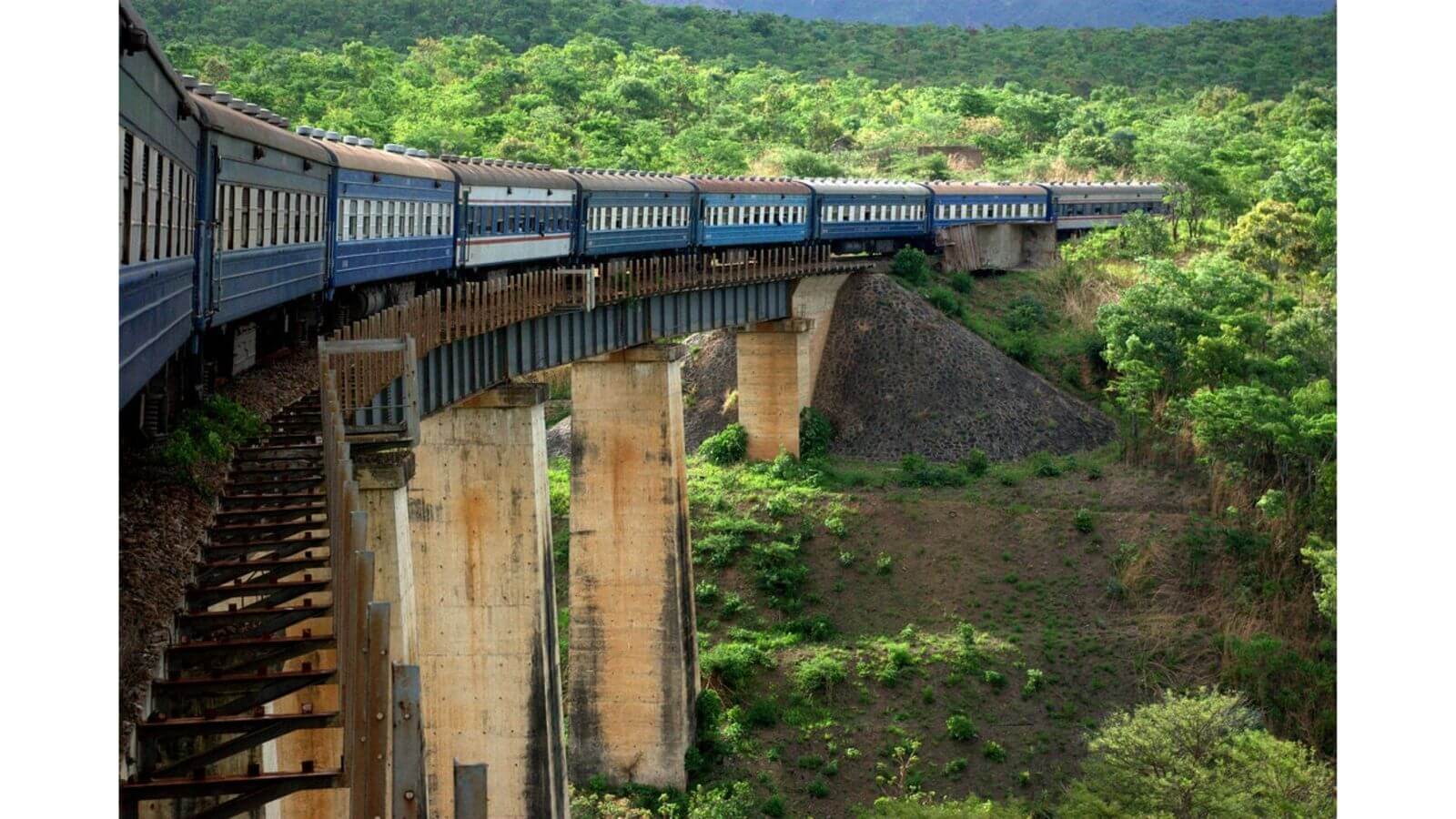 TAZARA Restarts Passenger Service on the Dar es Salaam–New Kapiri Mposhi Line">

On 10 February 2026 the Tanzania Zambia Railway Authority (TAZARA) reopened cross-border passenger operations along the 1,860 km corridor between Dar es Salaam and New Kapiri Mposhi, reinstating the flagship Mukuba train with a reduced, pragmatic schedule that reflects rolling stock and infrastructure constraints.
Revised timetable and operational approach
The Mukuba now runs once weekly in each direction: departures from New Kapiri Mposhi on Tuesdays and from Dar es Salaam on Fridays. The service adopts a hybrid stopping pattern—limited-stop express segments on New Kapiri Mposhi–Kasama and Nakonde–Msolwa, and all-stations calling elsewhere—balancing speed on long stretches with essential access for communities lacking parallel road links.
| Serviço | Direction | Departure Day | Stops Pattern | Notas |
|---|---|---|---|---|
| Mukuba (cross-border) | New Kapiri Mposhi → Dar es Salaam | Terça-feira | Express (selected sections) / All-stations | Reduced frequency: 1x weekly |
| Mukuba (cross-border) | Dar es Salaam → New Kapiri Mposhi | Sexta-feira | Express (selected sections) / All-stations | Consolidated rolling stock |
| Udzungwa (local shuttle) | Kidatu ↔ Makambako | Twice weekly | All-stations | Resumed 12 February 2026 |
Why services were suspended and the recovery strategy
The 2024 suspension followed mounting technical issues tied to an ageing fleet, heavy maintenance demands and limited funding. Rather than maintain an overambitious timetable and risk frequent cancellations, TAZARA concentrated resources on fewer departures to improve reliability. This consolidation allows operators to allocate available locomotives and coaches more predictably and to phase rehabilitation programmes for rolling stock and track infrastructure.
Implications for travelers and rail-dependent communities
- Timing sensitivity: With only one cross-border departure per week in each direction, itinerary planning must align exactly with the Tuesday and Friday departures.
- Essential access: The all-stations pattern on some sections preserves lifeline services for remote towns lacking reliable road alternatives.
- Conforto vs. character: Adventure travellers should expect a memorable route through varied terrain but not the punctuality and luxuries of developed rail networks.
- Tour operator adjustments: Packages that include Mukuba need clearer timing buffers and contingency plans for onward transfers.
Practical checklist for booking rail-inclusive trips
- Confirm departure days and book tickets well in advance.
- Build buffer time for cross-border formalities and freight movements.
- Arrange first- and last-mile transfers—airport, city centre or lodges—based on the fixed Mukuba days.
- Advise clients about limited onboard services and variable seat comfort.
What this means for taxis and transfer providers
Reduced rail frequency sharpens demand peaks for taxis, shuttles and private transfers around superscheduled departure and arrival days. Transfer companies in Dar es Salaam, New Kapiri Mposhi and intermediate hubs will see concentrated booking windows, making pre-booked airport-to-station and station-to-lodge services more valuable. Drivers and operators should allocate vehicles and staff around the Mukuba timetable to capture predictable spike demand while offering flexible last-mile options for travelers who choose mixed transport itineraries.
Operational takeaways for logistics and travel professionals
Consolidation of services is a deliberate trade-off: fewer trains but a higher chance each departure runs as planned. For freight planners and tour operators alike, that trade-off translates into greater predictability in scheduling cargo movements and tour logistics—provided bookings are aligned with the revised timetable. Phased rehabilitation of rolling stock also signals incremental capacity improvements rather than immediate restoration of former frequencies.
Highlights: the Mukuba’s reduced frequency, the hybrid express/local stopping pattern, and the Udzungwa shuttle’s return are the most important and interesting points for passengers and professionals. Even the best reviews and the most honest feedback cannot truly compare to personal experience. On GetTransfer, you can hire a car with driver from verified providers at reasonable prices. This empowers you to make the most informed decision without unnecessary expenses or disappointments, and lets you arrange exact, reliable transfers between station, airport and city locations. For your next trip, consider the convenience and reliability of GetTransfer. Book your Ride GetTransfer.com
In summary, TAZARA’s relaunch restores a strategic cross-border link while prioritising operational realism: a single weekly Mukuba in each direction, targeted express segments, and continued local shuttles where demand is strong. For travelers and logistics planners this means aligning itineraries to fixed departure days, factoring in transfer times to and from airports and city centres, and deciding on the exact services and vehicle types to book. GetTransfer.com supports this approach by offering transparent fares, vehicle details (make, model, seater options), licensed drivers and a user-friendly app to book private cars, cabs, minibuses or even limousine services—helping you get the right car, at the right time, for the right price when connecting to rail services. Whether calculating how much to pay for a driver, choosing a cheap or premium option, or ensuring an extra seat for luggage, thoughtful transfer planning removes uncertainty and keeps your trip on track.
Comentários