



 Português
  English (UK)
  Русский
  العربية
  日本語
日本語  한국어
한국어  Magyar
  Türkçe
  Español
  Čeština
  Svenska
  Ελληνικά
  Suomi
Suomi  Nederlands
  Română
  Italiano
  Français
  Polski
  Українська
  Deutsch
  简体中文
简体中文  Slovenčina
 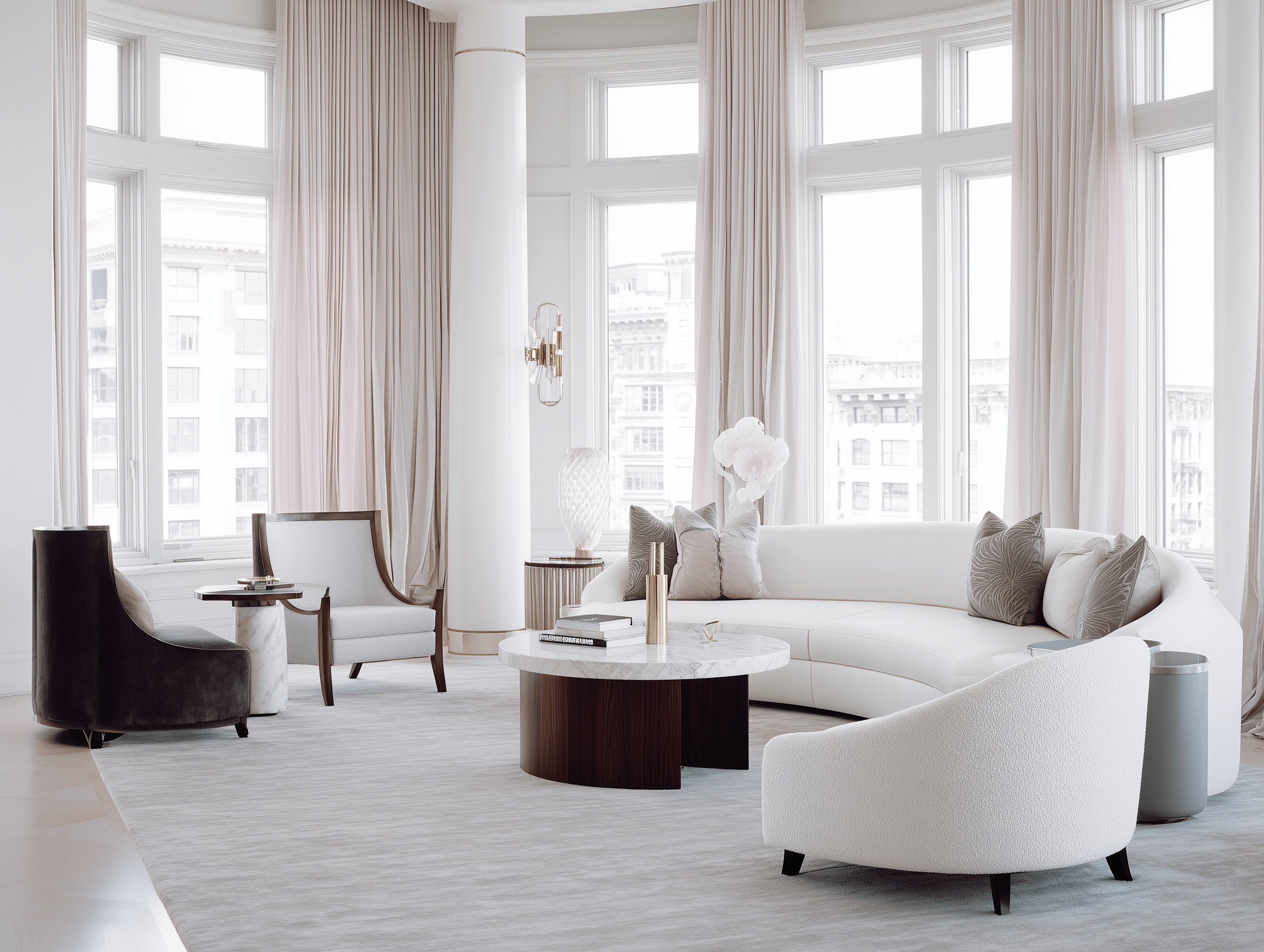 How Italian Luxury Furniture Became a Global Standard">

The phrase “Italian luxury furniture” carries a certain inevitability today, as though Italy has always held an uncontested position at the summit of global design. Yet the ascent was neither automatic nor accidental. It is the result of centuries of material knowledge, regional craft traditions, post-war ingenuity, and a cultural temperament that treats beauty not as decoration but as a civic duty. What we recognise now in the work of leading Italian makers – a fluency of line, a reverence for materials, a refusal to compromise on execution – is the distillation of a far longer story.
To understand why Italian furniture became a benchmark from Milan to Miami and from London to Dubai, one must look beyond glossy catalogues. The true explanation lies in workshops, guild legacies, family ateliers, and industrial districts where artisans and engineers collaborate with an ease that still feels uniquely Italian. For anyone curating a sophisticated interior or selecting rugs and furnishings that harmonise with modern tastes, recognising this lineage deepens the appreciation of what “Made in Italy” genuinely signifies.
Craft Traditions That Pre-Date the Design Industry
Italy’s dominance did not begin in the twentieth century; it began in Renaissance city-states where woodworkers, stone carvers, metalworkers and textile guilds set exacting standards for technique. Florentine intarsia, Venetian marquetry, Lombard cabinetry – these regional specialisations created distinct schools of craftsmanship. Much of today’s Italian luxury furniture still relies on those inherited skills, though modernised through machinery and contemporary forms. A meticulously hand-finished tabletop or a perfectly balanced lacquered cabinet is not simply the output of technical training but the continuation of a lineage in which mastery was once a matter of civic pride.
Crucially, these traditions fostered an intimate understanding of materials: walnut with its expressive grain, ash for its resilience, oak for structural stability, Carrara marble with its almost architectural veining. This material sensitivity sits at the heart of Italian production. The best manufacturers still treat materials as the starting point for design rather than as a medium to be coerced into trend-led shapes. If a marble slab suggests quiet grandeur, the designer listens; if a timber plank shows a knot that may compromise form, it is rejected without sentimentality. The approach is disciplined yet instinctive, and it shapes everything from a dining table to a hand-tied rug selected to complement its surface.
The Post-War Renaissance of Industrial Craft
While Italy’s craft heritage set the stage, the country’s modern design identity emerged after the Second World War when artisans, inventors and small industrial firms converged in what came to be known as distretti industriali. These clusters – notably in Brianza for furniture – allowed workshops to specialise in individual processes: one firm perfecting veneers, another mastering upholstery, a third refining lacquer finishes. The result was an agile ecosystem in which a designer could prototype a new chair or cabinet within days, supported by a network of specialists who understood the nuances of materials and engineering.
This ecosystem also encouraged a now-famous dialogue between designers and craftspeople. Visionaries like Gio Ponti, Vico Magistretti and later Antonio Citterio understood that Italian artisanship could carry sophisticated, modern forms without losing its soul. Their designs often demanded radical experimentation with joinery, bending techniques or composite structures, and the craftspeople responded with an inventiveness that blurred the line between manual skill and engineering. It is this blend – not purely handmade, not purely industrial – that gave Italian furniture its unmistakable precision.
Elegance as a Cultural Instinct
Unlike in many markets where luxury furniture is treated as a status signal, in Italy it is first a cultural expression. Domestic interiors have long been places of hospitality, display and continuity. The notion that one invests in pieces to be used, inherited and reimagined rather than replaced every few years has shaped Italian attitudes to design. The aesthetic that emerges from this mindset is calm, assured and quietly sensuous. It avoids theatrical form for its own sake and instead focuses on proportion, surface harmony and tactile pleasure.
When Italian furniture began to travel internationally in the late twentieth century, this philosophy resonated. Buyers recognised that these designs did not chase fashion; they articulated a lifestyle. In contemporary interiors where homeowners now mix handmade rugs, sculptural lighting and minimalist architecture, the restraint and refinement of Italian furniture fits naturally. Its elegance offers a foundation on which texture can be layered, whether through a silk-wool rug or a hand-loomed flatweave positioned to soften a marble floor.
From Family Ateliers to Global Icons
Many of Italy’s most respected furniture houses still operate with the ethos of family ateliers: long apprenticeships, continuity of knowledge, an insistence that every new collection must advance the brand’s vocabulary rather than mimic others. One compelling example is Malerba’s contemporary craftsmanship, familiar to collectors of modern luxury furniture and notable for its sculptural lines, deep lacquer and meticulous detailing. What sets the brand apart is its refusal to treat craftsmanship as nostalgia. Its finishes are modern, its silhouettes refined, but every piece testifies to an artisan trained not merely to assemble furniture but to elevate it.
Brands such as Malerba exemplify why Italian furniture retains its authority even as global competition grows. They navigate contemporary tastes – high-gloss surfaces, subdued palettes, architectural forms – while honouring methods that rarely feature in marketing copy because they are taken for granted in the workshop. The sanding of a lacquer layer repeated a dozen times, the alignment of veneers so that grain flows uninterrupted across panels, the careful proportioning that allows a cabinet to feel simultaneously light and monumental: these are the choices that create long-lasting allure.
For clients exploring a curated selection of authentic Italian luxury furniture on SayRUG, this convergence of heritage and modernity is precisely what distinguishes Italy from other manufacturing nations. The pieces do not simply appear refined; they are engineered and finished to withstand decades of use without losing their poise.
Material Intuition and the Pursuit of Perfection
One of the least discussed reasons behind Italy’s global influence is the country’s unwavering material intuition. While many manufacturers worldwide can follow a specification sheet, Italian producers often read materials the way a luthier reads tonewood. Timber is selected not only for durability but for its narrative. A walnut board with a sweeping cathedral grain suggests a particular orientation for a tabletop. A slab of marble with delicate grey veining may be paired with matte lacquer to accentuate its softness rather than its drama. These decisions require almost instinctive judgement, the kind honed over generations.
This is where Italy’s approach resonates strongly with the world of rugs. A handmade rug relies on the material’s intrinsic qualities – the lustre of silk, the resilience of highland wool, the depth achieved through natural dyes. Its beauty emerges when the design works with those qualities rather than forcing them into rigid templates. Likewise, Italian furniture achieves its sophistication by respecting the personality of each material. When an interior combines the two – for example, a deep walnut dining table with a hand-knotted rug in muted mineral tones – the result is not just visual harmony but a dialogue between crafts.
Global Appeal in a Fragmented Design Landscape
The twenty-first century design market is more fragmented than ever. Scandinavian minimalism remains influential, American interiors prioritise comfort and scale, and Japanese design brings meditative restraint. Yet Italian luxury furniture continues to serve as a universal reference point. Architects specify it because its visual clarity does not clash with different cultural aesthetics. Collectors acquire it because the pieces age gracefully, patinating rather than degrading. Retailers promote it because the names carry credibility that needs little explanation.
This global appeal is not merely about style. It also stems from reliability. Italian manufacturers have repeatedly demonstrated that they can innovate without sacrificing quality. They adopt advanced lacquers, composite structures and metal alloys, yet still insist on hand-finishing where the eye and hand detect subtleties that machines cannot. This combination of precision and sensitivity assures buyers that a piece will retain its structural integrity and aesthetic composure over time.
Why Italian Furniture Matters to Contemporary Interiors
Contemporary interiors increasingly value texture, grounded palettes and the tactility of natural materials. Rugs are selected not only as décor but as architectural tools that zone open spaces, anchor furniture and introduce warmth against stone or concrete. Italian furniture aligns with this shift because it avoids excessive ornamentation, allowing material surfaces to communicate their quiet luxury.
A polished eucalyptus cabinet, for instance, acquires a deeper glow when paired with a hand-loomed rug in smoky greys. A sculptural Malerba table in high-gloss lacquer becomes more inviting when softened by a dense wool rug that absorbs sound and light. The pairing is symbiotic: the rug highlights the purity of the furniture’s lines, and the furniture elevates the rug from textile to design object. This interplay is why many interior designers treat Italian furniture not as a finishing touch but as a structural element of a room’s composition.
A Legacy Still in Motion
Italian luxury furniture became a global standard because it never relied on standardisation. Its legacy is a living one, continuously refined by designers and craftspeople who view materials as collaborators rather than components. The industry’s strength lies in its refusal to choose between heritage and modernity, between artisanal discipline and industrial precision. That balance, fragile yet enduring, continues to inspire homeowners and designers around the world.
As the appetite for well-crafted interiors grows, the role of Italian furniture becomes even more pronounced. It offers not just beauty but continuity – a reassurance that in an age of rapid production, some things are still shaped with deliberation. Whether placed beside a hand-knotted rug, beneath an architectural pendant, or within a minimalist interior, these pieces carry with them the quiet confidence of a tradition that has earned its global stature not through noise but through excellence.
Comentários