
Artystyczna podróż Stradanusa: Od koncepcji do ryciny
Wprowadzenie do Stradanusa
Jan van der Straet, often referred to as Stradanus, was a renowned Flemish artist of the late Renaissance who found his creative calling in Italy. He contributed significantly to both paintings and tapestries, especially for the Medici court in Florence. Stradanus's extensive body of work included numerous print series, showcasing a rich tapestry of themes—ranging from pioneering technologies to historical moments and spiritual narratives. His prints transcended geographical boundaries, captivating audiences across Europe and extending their reach to Asia and the Spanish Americas, inspiring countless artistic endeavors.
Bliższe spojrzenie na godne uwagi dzieła
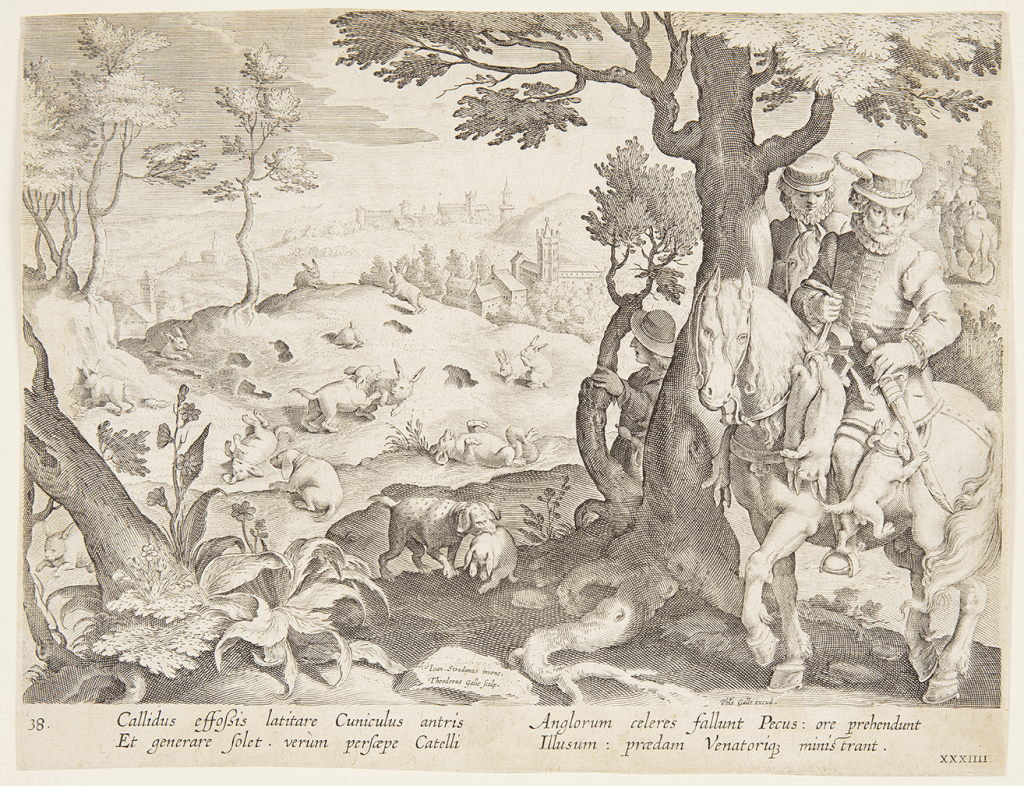
Among Stradanus's most acclaimed pieces are his hunting-themed prints, such as Król Anglii polujący na królikistworzony pod koniec XVI wieku. Ta rycina jest częścią większej kolekcji zatytułowanej Venationes, ferrarum, arium, piscium (Polowania na dzikie zwierzęta, ptaki i ryby), pierwotnie stworzone na potrzeby serii gobelinów zaprojektowanych dla willi Medyceuszy w Poggio a Caiano w latach 1566-1577. Udane przejście od gobelinów do druków ugruntowało miejsce Stradanusa w świecie sztuki, prowadząc do dalszych eksploracji polowań na różne zwierzęta w kolejnych seriach.
The captivating scene showcases the king on horseback, accompanied by fellow hunters in an idyllic landscape. Stradanus's skill is evident as he portrays the dynamic interactions between the hunters and their hounds, capturing the exhilarating moment of a hunt amidst a backdrop of distant buildings hinting at the royal estates.
Proces drukowania: Artystyczna współpraca
Tworzenie grawerunku takiego jak Król Anglii polujący na króliki wymagało szczegółowej pracy zespołowej. W jaki sposób Stradanus stworzył tak wspaniałe wydruki? Podróż od początkowej koncepcji do gotowego wydruku obejmowała różne etapy - szkicowanie, dopracowywanie i współpracę z grawerami.
Wstępne szkice: Geneza pomysłów
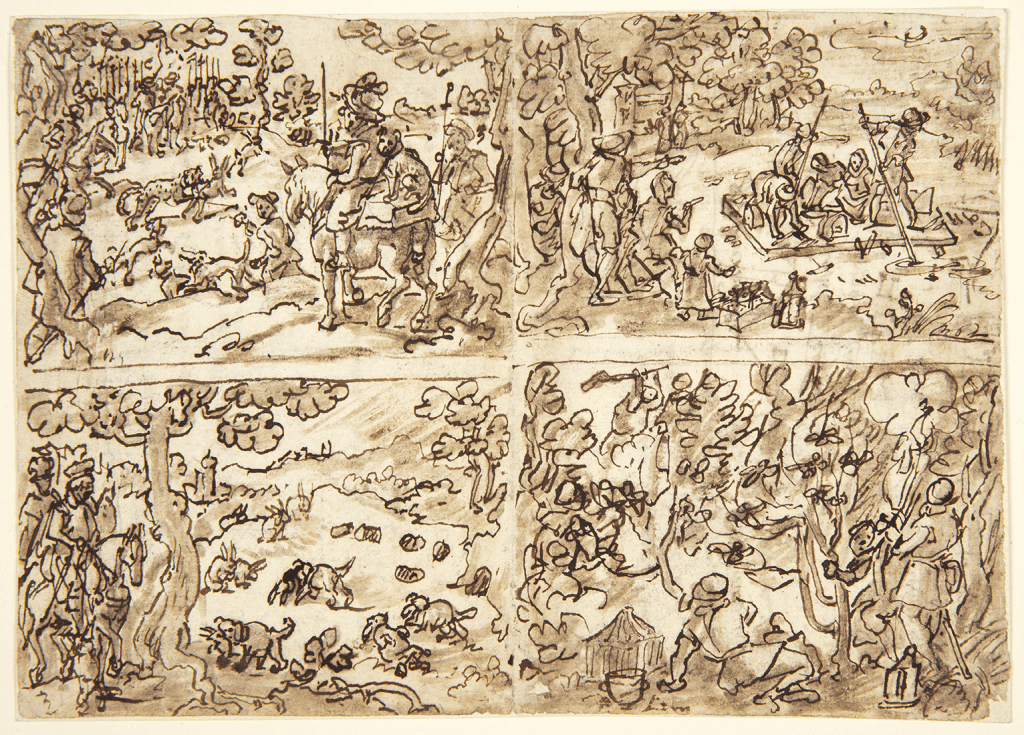
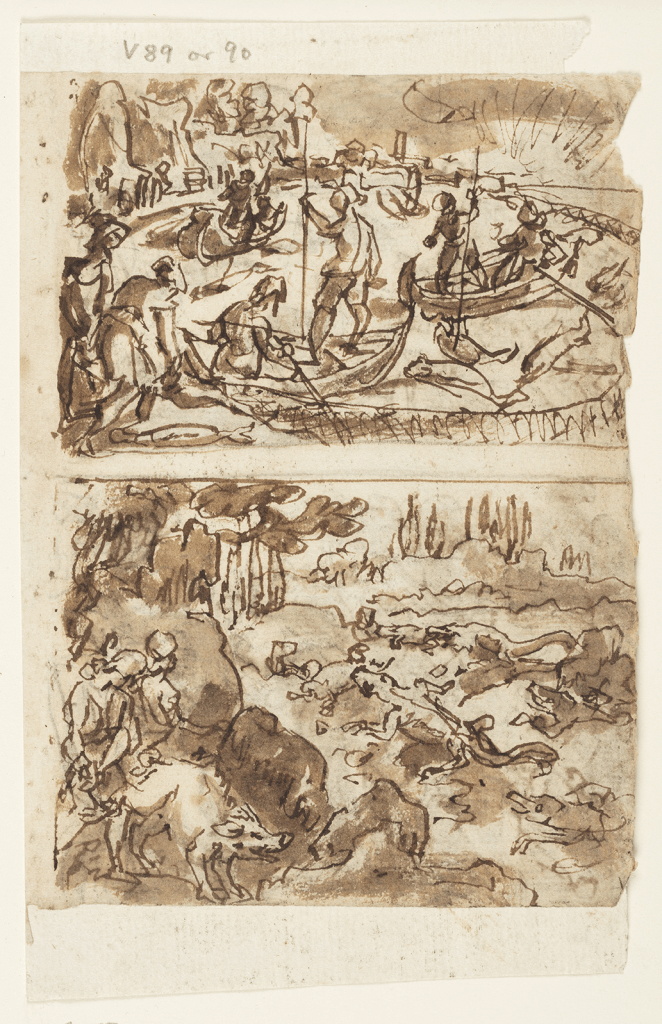
Stradanus documented his artistic vision through initial sketches, referred to as "prima pensieri." The early design for Król Anglii polujący na króliki służy jako doskonały przykład. Jego szybkie pociągnięcia wskazywały na rozmieszczenie postaci, zwierząt i scenerii, ze swobodnym nakładaniem tuszu i prania. W XVI wieku papier był rzadkim zasobem, więc artyści tacy jak Stradanus łączyli wiele koncepcji na jednym arkuszu, aby zmaksymalizować wykorzystanie materiału.
Udoskonalanie koncepcji: Modello
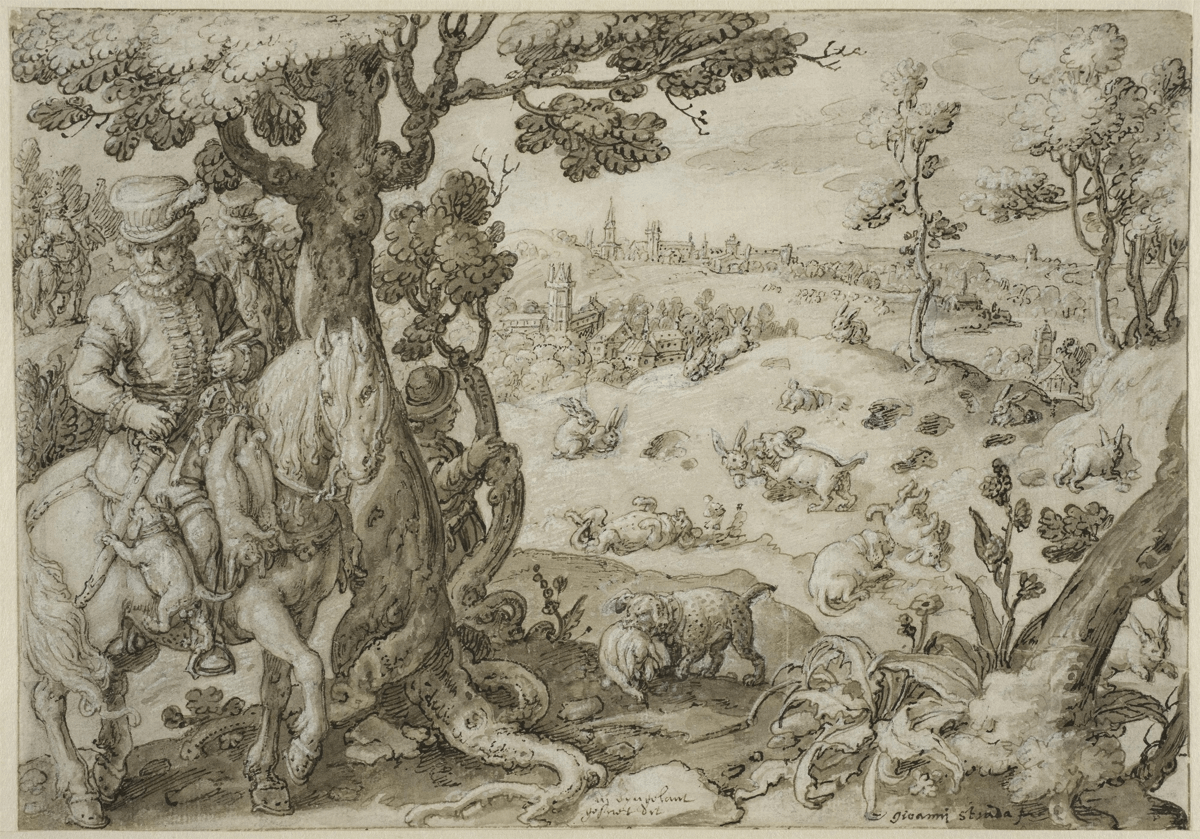
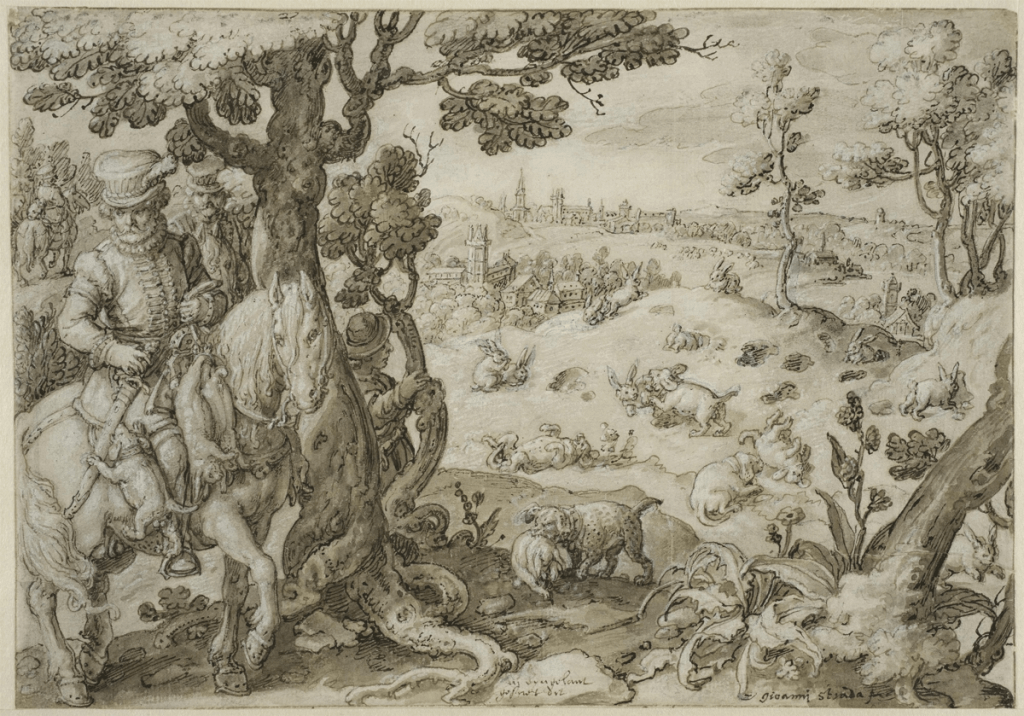
Po wykonaniu szkiców Stradanus tworzył bardziej dopracowany rysunek znany jako modello - szczegółowy projekt dla grafika. Ta dopracowana wersja polowania na króliki, zachowana w Nationalmuseum w Sztokholmie, ilustrowała bogactwo szczegółów. Skrupulatnie nakreślono tekstury, cienie i relacje przestrzenne, tworząc precyzyjny przewodnik dla grawera Theodora Galle, który zapewniłby, że zawiłości zostały powtórzone w ostatecznym wydruku.
The contrast between the modello's meticulous detail and the quicker initial sketches highlights the artist's dedication to capturing not only the essence of his ideas but also the visual narrative intended to resonate z viewers.
Proces grawerowania
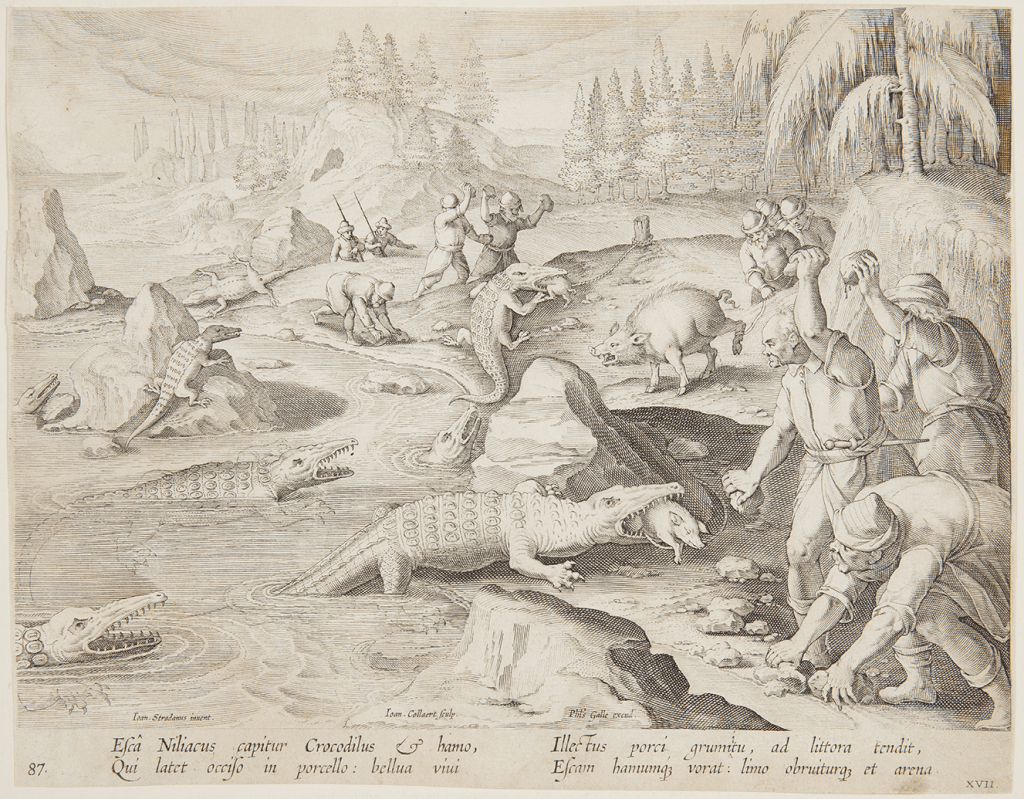
Once the modello was ready, Theodor Galle, known for his engraving prowess, engaged the printmaking process. Utilizing a burin, he meticulously engraved Stradanus's design onto copper plates, before inking and transferring the image onto paper using a printing press. This method effectively reproduced the intricate details, including textures, shadows, and atmospheric effects, generating prints that vividly brought Stradanus's visions to life. However, it is essential to note that the final prints appeared as mirror images of the original drawings, resulting from the mechanics of the print-making process.
Wyzwania i zmiany w procesie artystycznym
Challenges often arose when moving from sketches to final prints, as demonstrated by Stradanus's Polowanie na krokodyle ze świniami jako przynętą. The evolution from the initial sketch showcased a boar that ultimately transformed into a crocodile during the engraving phase. This change not only altered the focus of the composition but also emphasized the thrill and danger of the hunt, showcasing Stradanus's flexibility and creativity as an artist.
Międzynarodowy wymiar grafiki
Stradanus's artistic collaborations extended beyond Italy, illustrating that printmaking was an international venture. While composed in Italy, the engravings took shape in Antwerp, a vibrant hub for print publication. Prominent publishers like Philips Galle played crucial roles in bringing these engravings to broader audiences. The partnership between artist and printmaker highlights the interconnectedness of art and commerce during this period.
Wnioski
Skomplikowana podróż grafików takich jak Stradanus ujawnia szeroki zakres kreatywności ukształtowanej przez współpracę i adaptację. Ponieważ świat sztuki wciąż odkrywa niuanse podejścia Stradanusa poprzez szkice, podkreśla to znaczącą rolę procesów artystycznych w kontekście historycznym i kulturowym.
Even the most detailed analyses and reviews of Stradanus’s work can only capture part of the experience; nothing compares to the hands-on encounter z art. Meanwhile, for those looking to explore destinations infused z art and culture, GetTransfer.com offers a seamless solution. With the ability to hire a car z a driver from verified providers at competitive prices, passengers can experience convenience and choice while traveling to their chosen locations. Whether it's the thrill of the journey or the excitement of arriving at a new destination, Zarezerwuj przejazd z GetTransfer.com aby cieszyć się spersonalizowanymi transferami dostosowanymi do Twoich potrzeb.


