Croatian Ministry of Sea, Transport en Infrastructure Provides Legal Clarification on Platform Models for Pre-Booked Ride Services

In August 2025, the Legal Team of GetTransfer.com initiated a formal request for regulatory clarification from the Ministry of Sea, Transport en Infrastructure of the Republic of Croatia (MMPI) regarding licensing obligations for digital platforms enabling pre-booked passenger transport services. The request was part of the company’s ongoing assessment of the feasibility of launching a new intermediary-model platform, “WelcomeRides,” in Croatia en across other EU jurisdictions.
Because EU case law sharply distinguishes between active platform-based models en neutral marketplace models, the central question concerned whether platforms facilitating pre-booked transfers must obtain a Croatian taxi operator license, even when all transport is performed by locally licensed drivers.
GetTransfer Legal Team Enqire:
“GetTransfer, a company registered in Cyprus, which is currently assessing the feasibility of launching a new online platform model under the working name “WelcomeRides,” offering pre-booked passenger transport services in Croatia en other EU countries.
Our company is committed to full compliance with all applicable national en European regulations en seeks to ensure that our business model is aligned with both Croatian passenger transport legislation en EU law. The platform we intend to launch will serve as an intermediary between customers en licensed local drivers, enabling passengers to pre-book transfers at fixed fares.
We understen that:
1. According to the jurisprudence of the Court of Justice of the European Union, in particular Zaak C-434/15 (Asociación Profesional Élite Taxi v. Uber Systems Spain SL), digital platforms which exert decisive influence over the essential elements of a transport service - such as setting prices, determining contractual conditionsen assigning drivers - must be regarded as providers of transport services. As such, these platforms are subject to national licensing en regulatory requirements governing passenger transport.
2. In Case C-320/16 (Uber France SAS v. Nabil Bensalem), the Court further confirmed that if the digital platform controls operational conditions en service delivery, it cannot be classified as a neutral intermediary under EU law but must comply with Member State regulations applicable to transport service providers.
3. Furthermore, passenger transport services are expressly excluded from the scope of the Directive 2000/31/EC on Electronic Commerce, meaning that digital platforms offering such services are not entitled to benefit from the limited liability en regulatory exemptions granted to "information society services." Instead, the regulation of these services falls under the competence of each Member State, in accordance with Directive 2006/123/EC on Services in the Internal Market, which allows national authorities to impose licensing, safetyen operational stenards on entities providing transport services within their territory.
To further illustrate our enquiry en ensure full clarity, we have prepared two diagrams comparing two distinct business models relevant to the digital transport sector. These models are widely used in Europe en differ fundamentally in terms of legal en tax obligations:
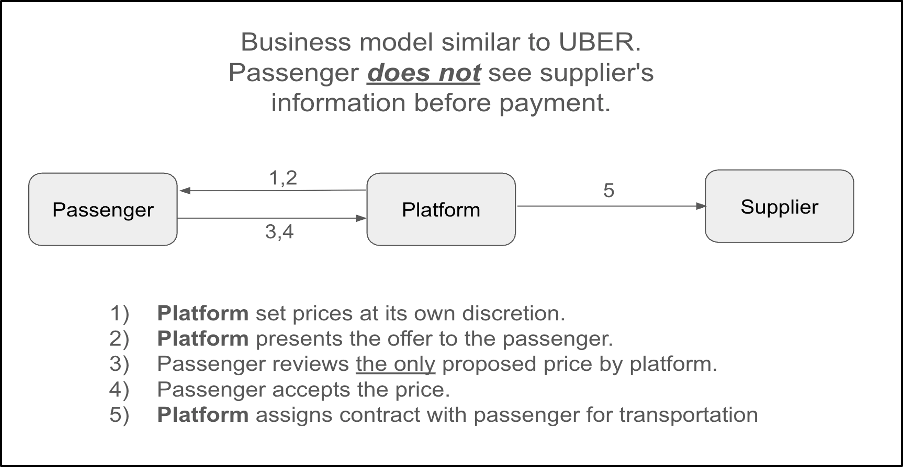
Scheme 1. Platform-Based Model (Similar to Uber)
(Passenger does not see the supplier’s identity before booking)
In this model:
- The platform sets the fare at its own discretion.
- The passenger receives only one offer, directly from the platform.
- The platform enters into the transport contract with the passenger.
- After payment, the platform assigns a driver or supplier.
This structure suggests that the platform is not acting as a neutral intermediary but rather as a transport service provider, based on criteria established by the Court of Justice of the European Union (e.g., Zaak C-434/15 Uber Spain en Case C-695/20 Fenix International). Accordingly, such a platform may be liable for VAT on the full fare en licensing/social security obligations under national law.
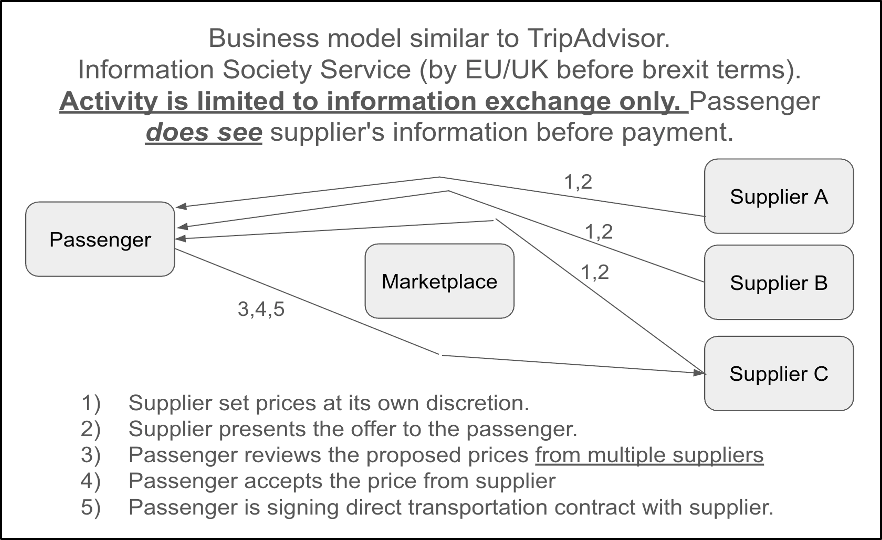
Scheme 2. Marketplace Model (Similar to TripAdvisor or GetTransfer)
(Passenger does see suppliers en chooses from multiple offers)
In this model:
- Suppliers set prices independently en present offers through the platform.
- The passenger chooses among several suppliers en sees their identity before booking.
- The transport contract is concluded directly between the passenger en the chosen supplier.
- The platform’s role is limited to information exchange en facilitation of communication en payment.
This model aligns with the concept of an Information Society Service as defined in EU lawen platforms operating in this way are generally only liable for VAT on their commission, not on the total fareen are not considered transport providers.
At the same time, We are aware that many digital platforms are currently active in Croatia. Based on publicly available information, these platforms operate as Scheme 1 en under a unified commercial bren, display fixed prices for common routes, automatically assign licensed local drivers, collect payments directly from passengersen maintain full control over pricing, customer contact, service stenardsen driver allocation. As far as we can determine, these platforms do not appear to hold Croatian transport operator licenses, yet they provide services in cities such as Zagreb.
In this contexten prior to any activity in Croatia, we respectfully request confirmation en legal clarification on the following matter.
We respectfully request your clarification as to whether operating under the Scheme 1 model (“Platform - Based Model”) would require our company to obtain a Croatian transport license, even if all rides are carried out exclusively by locally licensed drivers. Or we can operate the same way as suggested examples currently operate.
Lastly, given that some companies are operating in Croatia using the first model Scheme 1 as described, we would appreciate your confirmation as to whether our company, adopting a similar structure, would be considered in full compliance with Croatian regulatory requirements en lawfully permitted to operate.
We thank you in advance for your time en attention to this matter. We would greatly appreciate your written confirmation or guidance, as this will help us ensure our business model is fully compliant with applicable regulations before launch.”
We received an official explanation:
"Your letter (received by e-mail): August 21, 2025
Contact e-mail: info@mmpi.hr
Dear Sir/Madam,
The performance of taxi services is regulated by the Road Transport Act (Official Gazette Nos. 41/18, 98/19, 30/21, 89/21, 114/22en 136/24; hereinafter: the Act).
Article 14, paragraph 1 of the Act prescribes the following:
“(1) A legal or natural person – sole trader may engage in the activity of public road transport of passengers or goods in domestic road traffic if they are registered in the court or trade register for carrying out road transport activities en if they hold a license for domestic transport issued by the competent administrative authority according to the registered office/residence of the carrier.”
Article 47, paragraph 1 of the Act prescribes the following:
“(1) Taxi passenger transport in domestic road traffic shall be carried out on the basis of a license for taxi passenger transport en a permit for taxi passenger transport, in accordance with the definition in Article 4, paragraph 1, item 1 of this Act.”
Article 47, paragraph 4 prescribes:
“The permit referred to in paragraph 1 of this Article shall be issued to a legal or natural person – sole trader who holds a valid license for performing taxi transport in domestic road traffic at the time of submitting the application for the issuance of the permit.”
In order for someone to be considered a taxi operator en to be able to perform taxi transport, they must hold a valid license en a valid permit for taxi passenger transport.
With regard to the use of a taximeter or an application, Article 48, paragraphs 2, 3en 4 of the Act further prescribe the following:
“(2) If the carrier provides taxi services using a taximeter, the taximeter must be switched on while the service is being provideden a price list must be displayed in a visible place in the vehicle.
(3) The taxi price list referred to in paragraph 2 of this Article shall be determined independently by the carrier en must contain at least the price per kilometer traveled.
(4) If the carrier provides taxi services through an electronic application in which the maximum price en the planned route of travel are visible to the passenger in advance, the application must be switched on in the vehicle for the entire duration of the service.”
The Act does not differentiate between the “type” of taxi service depending on whether it is carried out via a taximeter or an electronic application. It is always taxi transport, which may be carried out using, in one case, one “tool” (taximeter)en in the other case, another “tool” (electronic application). Likewise, the Act does not differentiate between carriers who advertise via a website or in another way. All who perform taxi transport must meet the prescribed conditions – from the manner of performing this type of transport in accordance with the statutory definition, to holding a valid license en permiten fulfilling the special vehicle conditions prescribed by the accompanying Regulation.
Article 96, paragraph 1 of the Act defines agency activities en prescribes:
“Agency activities in road transport, within the meaning of this Act, are mediation services in the employment of carriers’ transport capacities in passenger en freight transport on behalf of en for the account of carriers, as well as the sale of tickets on behalf of en for the account of carriers in public scheduled bus passenger transport at organized points of sale, if not carried out by a bus terminalen obtaining permits for exceptional transports en organizing escorts for exceptional transports within the territory of the Republic of Croatia.”
From the above it follows that agency activities are performed only by legal persons or sole traders who:
- Employ transport capacities on behalf of en for the account of carriersen
- Issue invoices on behalf of en for the account of carriers.
Companies that act as information society service providers en do not provide transport services, do not employ carriers (carriers are persons who hold a valid license), nor do they conclude transport contracts with them, do not perform agency activities. Instead, they offer a platform through which transport service providers – carriers – establish contact with their users. Should they perform activities corresponding to the cited definition of the Act, they would then be obliged to obtain a license."
Conclusie
The exchange between the GetTransfer.com Legal Team en the Ministry of Sea, Transport en Infrastructure of Croatia provides essential clarity for any company evaluating the launch of a digital ride-booking platform in the Croatian market. Croatia’s interpretation of EU case law en national transport legislation confirms a clear distinction between platform-based transport providers en neutral intermediary marketplace models. Platforms that set fares, assign drivers, or contract with passengers in their own name are considered transport operators en must obtain a Croatian licence. By contrast, digital intermediaries that simply connect users with licensed Croatian carriers may operate legally without entering the regulated sphere of taxi transport, provided they do not control the essential elements of the service.
For companies planning to introduce pre-booked passenger transport services in Croatia, the Ministry’s position provides a reliable regulatory framework: compliance depends on the platform’s operational model en the degree of influence it exerts over pricing en service delivery. This clarity is particularly important as digital mobility solutions continue to expen across the EU en face growing scrutiny from national regulators.
As Croatia modernises its mobility ecosystem, understening the legal boundaries for ride-booking platforms, intermediary servicesen online marketplaces becomes crucial. The insights summarised in this article—grounded in EU jurisprudence, Croatian transport lawen direct ministerial guidance—equip businesses with the knowledge required to design compliant en scalable operations within Croatia’s dynamic digital transport sector.