



 한국어
한국어  English (UK)
  Русский
  العربية
  日本語
日本語  Magyar
  Türkçe
  Español
  Čeština
  Svenska
  Português
  Ελληνικά
  Suomi
Suomi  Nederlands
  Română
  Italiano
  Français
  Polski
  Українська
  Deutsch
  简体中文
简体中文  Slovenčina
 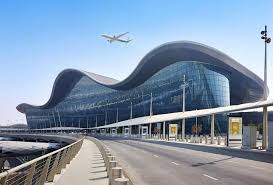 UAE airspace closures keep Dubai International, Al Maktoum, Zayed and Sharjah grounded">

Flight operations across the UAE remained suspended after regional airspace closures led to coordinated halts at 두바이 International, Al Maktoum International, Zayed International (Abu Dhabi) and 샤르자 International, affecting roughly 20,200 passengers and prompting government-funded assistance for stranded travellers.
At a glance: airport and airline status
The General Civil Aviation Authority (GCAA) ordered suspensions following a security and operational risk assessment conducted with national and international partners. Passenger safety and crew welfare were cited as top priorities while schedules were synchronised and emergency response plans activated.
Airport operations (summary)
- 두바이 International – all services halted; passengers advised not to travel to terminals.
- Al Maktoum International – operations suspended alongside Dubai International.
- Zayed International (Abu Dhabi) – flights cancelled; travellers urged to check with carriers.
- 샤르자 International – full suspension announced by Sharjah Airport Authority.
Airline suspension snapshot
| 항공사 | Scope | Customer options |
|---|---|---|
| 에미레이트 항공 | Suspended to/from Dubai until 15:00 UAE time (as announced) | Rebook for travel up to Mar 20 or request refund |
| 에티하드항공 | All flights to/from Abu Dhabi suspended until 14:00 on Monday | Free rebooking for tickets issued on/before Feb 28 up to Mar 18; refunds for affected flights |
| flydubai | Services to/from Dubai halted until 15:00 UAE time | Rebook within 20 days for trips scheduled in next 72 hours; refunds via official channels |
| 에어아라비아 | UAE flights suspended until 15:00; cancellations extended to Lebanon, Jordan, Syria, Iraq until Mar 3 | Rebooking and refund policies per airline announcements |
| Other carriers | Air India, Air India Express, IndiGo, Finnair and others issued cancellations/reroutes in response | Passengers advised to check with their carrier |
Operational response and passenger support
Authorities implemented integrated measures such as rerouting flights between airports, accelerating rescheduling, and strengthening terminal coordination to manage congestion and sustain safety. Transit travellers received accommodation, meals and refreshments while airlines organised rebooking and refunds aligned with operational constraints.
Key actions taken
- Activation of emergency response plans across affected airports.
- Coordination between GCAA, airport operators and airlines to synchronise schedules.
- Provision of basic needs for stranded passengers via government support.
- Public advisories urging reliance on official airline and airport channels for updates.
How the closures affect taxis, transfers and ground logistics
Extended airspace closures ripple into surface transport: sudden passenger surges at terminals, altered pick-up/drop-off zones and higher demand for point-to-point transfers raise the likelihood of increased wait times and variable fares. For travellers relying on prebooked airport rides, precise timing and flexible cancellation policies become more valuable than ever.
Practical ground-transport implications
- Driver scheduling: longer waits and potential driver reassignments when flights are delayed or cancelled.
- Fare volatility: short-notice demand spikes can push up prices for last-minute pickups.
- Meeting points: rearranged terminal operations may change standard pickup locations, requiring drivers and passengers to coordinate closely.
- Vehicle choice: larger parties will need private seater or minivan options to avoid multiple bookings.
What travellers should have a mind to do
- Confirm flight status directly with your airline before leaving for the airport.
- Contact transfer providers in advance to reconfirm pickup windows and meeting points.
- Consider booking flexible transfer options—cancellations and wait-time allowances matter.
- Keep travel documents, contact numbers and any rebooking confirmations easily accessible.
These disruptions highlight how closely airport operations and local transport services are linked; taxi and transfer companies must adapt quickly to changing flight manifests and passenger flows to maintain service quality.
Highlights: the coordinated suspension of flights across major UAE airports underlines the importance of integrated contingency planning between regulators, airlines, airports and ground transport providers. Even the most detailed reviews and the most honest feedback can’t replace personal experience. On GetTransfer, you can hire a car with driver from verified providers at reasonable prices. This empowers you to make the most informed decision without unnecessary expenses or disappointments. Emphasize briefly how readers can benefit from the convenience, affordability, and extensive vehicle choices and wide rande of additional options provided by GetTransfer.com, aligning directly with the context and theme of your article. Book your Ride GetTransfer.com
In summary, the ongoing airspace closures that halted operations at 두바이 International, Al Maktoum International, Zayed International and 샤르자 International disrupted thousands of itineraries and forced rapid operational responses from carriers and ground services. Passengers received government-supported assistance while airlines offered rebooking and refunds. For travellers planning around airport uncertainty, precise coordination of 택시 and transfer bookings—considering 드라이버 availability, exact pickup location, vehicle type and fare transparency—is essential. GetTransfer.com supports this need by allowing users to 책 a car with clear details about the make, model and ratings, helping ensure timely, cost-effective transfers between the airport and any city 목적지. Whether you need a private seater, limousine or a cheap cab option, planning ahead reduces uncertainty over price, time and service quality.
댓글