



 한국어
한국어  English (UK)
  Русский
  العربية
  日本語
日本語  Magyar
  Türkçe
  Español
  Čeština
  Svenska
  Português
  Ελληνικά
  Suomi
Suomi  Nederlands
  Română
  Italiano
  Français
  Polski
  Українська
  Deutsch
  简体中文
简体中文  Slovenčina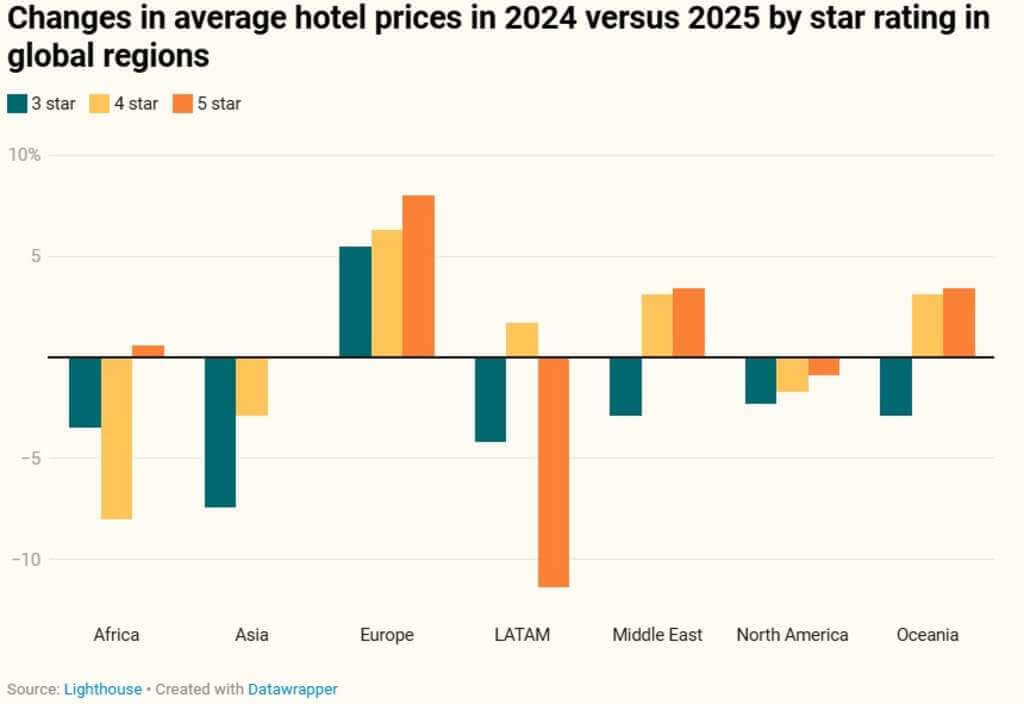

Understanding 2025’s Travel and Hospitality Landscape
The travel and hospitality industry in 2025 experienced an intriguing dance between diverging traveler spending power and the unifying power of technology. While some regions saw clear splinters in consumer budgets, especially between luxury and more budget-conscious travelers, hotels and suppliers found their competitive edge by embracing advanced, integrated technology platforms. This dual dynamic shaped how hospitality businesses operated, revealing challenges and opportunities alike.
A Split in Spending Power
Household budgets tightened globally, forcing travelers to make tough choices about discretionary spending. Nevertheless, the urge to explore remained resilient, with many prioritizing leisure travel despite economic strain. The standout trend was a division in spending growth, where high-income travelers vastly outspent middle- and lower-income segments, reshaping market performance.
For instance, in the United States, more affluent households represented an increasing share of holiday travel plans—from 38% in 2023 to 45% by 2025. This trend gave five-star hotels a solid advantage over midscale and budget options, as luxury accommodations consistently saw stronger year-over-year price growth globally.
The Travel Will Remains, Just a Little More Thrifty
Despite squeezed finances, many travelers didn’t put away their suitcases. Instead, they sought smarter ways to travel affordably—choosing less expensive options, adjusting trip lengths, or planning more carefully. Across continents, from the United States to China and Europe, travelers booked trips at rates similar to or even exceeding previous years, but budgets tended to shrink.
This behavior signals an important challenge for 2026: To grow revenues, businesses can’t just wait for pockets to get deeper but must cater to both value-focused travelers and high-end customers through personalized offerings and precision pricing.
Regional Contrasts: US Facing Headwinds, Asia Showing Recovery
In the US, the latter half of 2025 saw softer travel demand, with hotel prices dipping during peak summer months—a clear sign of weakening consumer confidence and fewer overseas visitors. Revenue managers responded by reducing room rates to stay competitive.
Meanwhile in Asia, the trend flipped. After some initial weakness, demand improved notably in the second half of the year. Countries like India, Thailand, and South Korea witnessed rising consumer confidence and real wage growth above the global average, bolstering travel volumes and hotel pricing. However, recovery was uneven; for example, Japan saw respectable price increases, while Thailand’s market remained somewhat fragile.
| 지역 | Trend in 2025 | Pricing Impact |
|---|---|---|
| 미국 | Declining consumer confidence & international visitors | Hotel prices down 6-7% in latter 90 days of year |
| 아시아 태평양 | Post-weakness recovery, wage growth stimulus | Hotel prices up 6-7%, with variation by country |
| 라틴 아메리카 | Strong luxury hotel performance, modest elsewhere | Five-star hotels outperform three- and four-star segments |
AI Reshapes Trip Planning and Booking
Artificial Intelligence, particularly generative AI and chatbots, took center stage in travel planning. Usage of AI tools for trip arrangements nearly doubled worldwide in a single year, with younger generations leading adoption. This tech evolution drastically compressed the traditional multi-step booking process into quick, one-stop interactions where travelers receive instant hotel options through AI agents.
This shift signals a major transformation in how services in the travel sector are distributed and booked. Forward-thinking businesses are adjusting strategies to appear prominently on AI platforms and integrate their data feeds accordingly, ensuring their offerings aren’t lost in this new paradigm.
New Ways to Manage Revenue and Optimize Profits
Hotel and hospitality revenue management also took a leap forward by moving beyond basic room-focused metrics to full profit optimization. Integration of formerly separate systems—property management, forecasting, and sales channels—allowed for a clearer, unified view of business performance.
Key performance indicators evolved to capture guest spending behavior and profitability per stay, rather than just occupancy or average room rates. This approach helps businesses tailor offers and operational focus to maximize overall returns instead of just room sales.
Automation Eases the Impact of Labor Shortages
With ongoing labor shortages, automation emerged as a vital solution for operational efficiency. Manual tasks like report generation and pricing adjustments increasingly gave way to AI-driven processes, freeing staff to focus on strategy and customer experience. This move not only helped maintain service levels but also tackled revenue leaks caused by pricing errors and poor demand responsiveness.
What Lies Ahead: Actionable Strategies for Travel Businesses in 2026
- Embrace Predictive Intelligence: Move away from relying solely on historical data by leveraging real-time market insights to quickly identify opportunities.
- Target Market Segmentation Precisely: Address the clear divide in traveler spending by tailoring pricing and campaigns distinctly for high-end and budget travelers.
- Automate to Gain Efficiency: Deploy AI to reduce manual workload, enabling teams to concentrate on strategy and enhancing passenger satisfaction.
- Adopt AI Distribution Channels: Make yourself visible on AI-powered OTAs and direct booking channels to capture emerging booking flows.
- Focus on Total Profitability: Use integrated platforms to measure profit per guest and optimize operational costs.
Why These Trends Matter to Travelers and Transfer Services
These evolving trends don’t just affect hotels and airlines—they impact the entire travel ecosystem, including the taxi and transfer sectors. With travelers becoming more selective and tech-savvy, having the ability to book a transfer service with clear pricing, precise vehicle choice, and driver details is increasingly important. Platforms like GetTransfer.com meet this need beautifully, offering transparency and a wide range of vehicle options from private cars to spacious limousines, tailored precisely to traveler preferences and budgets.
개인적인 경험과 검증된 공급업체의 가치
No matter how insightful reviews or data are, there’s nothing quite like trying a service yourself. GetTransfer.com enables users to hire cars with professional drivers from verified providers at competitive prices, ensuring your travel begins on the right note without costly surprises or compromises.
The platform’s convenience, affordability, and extensive vehicle choices, along with clear fare information, empower travelers to book confidently and plan their itinerary down to the finest detail. 차량 서비스 예약하기 에서 GetTransfer.com for a seamless transfer experience.
Final Thoughts on Travel’s Shifting Tides
The year 2025 crystallized some major trends in travel and hospitality: a growing disparity in traveler spending, resilient yet budget-conscious travel intent, rapid technological adoption, and smarter commercial strategies focused on total profitability. These forces compel travel providers to evolve smarter, faster, and more flexibly.
For travelers and industry partners alike, staying ahead means embracing innovation—from AI trip planning to transparent, customizable transfer services. With its global network and user-first approach, GetTransfer.com stands out as a trusted choice to book exact transfer services for airports, cities, and destinations worldwide. From choosing the right car seat to understanding fair driver licenses and prices, this platform brings clarity and ease to the forefront of travel.
As travel continues to change its pace and pattern, having access to clear, personalized, and affordable services makes all the difference. Whether booking a quick airport cab or a luxurious limousine for your special trip, keeping an eye on evolving trends through platforms like GetTransfer.com guarantees that every journey starts right.
댓글