



 日本語
日本語  English (UK)
  Русский
  العربية
  한국어
한국어  Magyar
  Türkçe
  Español
  Čeština
  Svenska
  Português
  Ελληνικά
  Suomi
Suomi  Nederlands
  Română
  Italiano
  Français
  Polski
  Українська
  Deutsch
  简体中文
简体中文  Slovenčina
 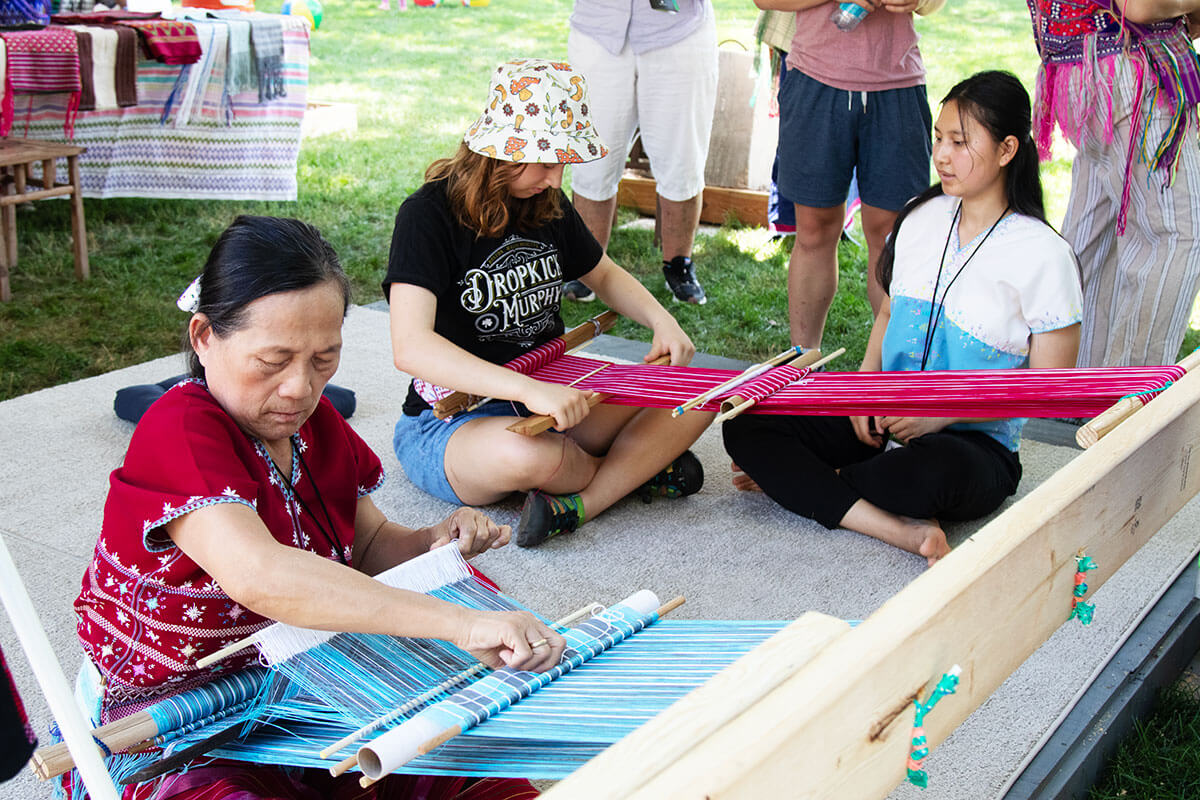 How Karen Weaving Preserves Heritage and Builds Community Among Refugees in the US">

The Enduring Tradition of Karen Weaving
The art of weaving holds a special place in the Karen community, serving not only as a craft but as a vital thread linking generations and preserving cultural identity. Originating from Karen people who hail from southern Burma (Myanmar) and Thailand, this tradition stands as a testament to their resilience amid a history marked by displacement.
For many Karen refugees resettled in the United States, particularly in Minnesota where the largest Karen community in the country thrives, weaving is more than making cloth—it is an act of remembering, teaching, and connecting.
Community Ties and Cultural Continuity
Gathering in groups such as the Karen Weaving Circle in Saint Paul, Minnesota, demonstrates a deliberate effort to nurture cultural heritage while fostering community cohesion. Established in 2015 with minimal resources, this circle initially relied on donated yarns and basic tools but grew into a vibrant weekly meeting point for socializing, teaching, and sustaining the art of backstrap weaving.
The circle connects weavers young and old, ensuring the craft is passed to new generations—including both young women and men—as part of a broader cultural education that includes language, dance, and traditional dress. These gatherings also extend into public engagement through participation in local art fairs and festivals, helping weave threads of understanding with the broader community.
Technical Ingenuity and Adaptation
Karen weavers exhibit remarkable creativity, adapting their craft to new environments and resources. Traditional tools like the backstrap loom—where the weaver’s own body provides tension—are complemented by innovations like a portable folding warping board designed to be travel-friendly.
Since displacement from their homeland, Karen weavers have transitioned from hand-cultivated and dyed cotton to commercially available yarns. They ingeniously craft loom components from local lumber and hardware, highlighting the evolving nature of their craft rooted in both tradition and practical problem-solving.
Symbolism Woven Into Every Thread
Every pattern tells a story or holds an instruction from the weaver’s village or region of origin. Many of these intricate textiles feature designs created using supplemental weft techniques or ikat resist-dyeing, topped with colorful embroidery and beads fashioned from coix seeds—symbols prized for representing rice, an essential community staple.
A particularly meaningful motif resembles a spider web. It symbolizes persistence and continuous effort, reflecting the Karen people’s spirit of never giving up until their work is complete. Such symbolism enriches the textile’s value beyond mere fabric, embedding identity and collective memory in every piece.
Clothing as Cultural Identity and Adaptation
Karen garments are not just costumes but living stories that mark stages of life and special events. The iconic color palettes—typically red, black, and white—represent marital status, community events like weddings, and the Karen New Year, with brighter hues embraced in contemporary designs.
In daily life, many blend traditional weaving with modern clothing, like pairing embroidered shirts with jeans, thereby illustrating how cultural pride adapts gracefully to new surroundings.
Table: Key Attributes of Karen Weaving and Cultural Elements
| アスペクト | 説明 |
|---|---|
| Weaving Method | Backstrap loom using body tension |
| 材料 | Commercial cotton yarns, locally adapted tools |
| Patterns | Supplemental weft, ikat dyeing, symbolic motifs (e.g., spiderweb) |
| Embellishments | Colorful embroidery and coix seed beads |
| Community Function | Cultural education, social gathering, art fairs |
| Symbolic Meaning | Persistence, identity, origin storytelling |
From Tradition to Global Engagement
The Karen Weaving Circle’s efforts exemplify how cultural arts can thrive even after displacement, offering hope and a sense of belonging. Their participation in festivals and public demonstrations not only showcases their craftsmanship but also builds bridges with host communities, enriching the multicultural mosaic of cities like Saint Paul.
For travelers and those interested in cultural exchanges, understanding such deep-rooted traditions enhances appreciation. When visiting new destinations or arranging airports or city transfers, platforms like GetTransfer.com allow travelers to book rides that fit precisely their needs, offering access to local cultural insights through the driver’s knowledge and the convenience of exact service.
Why Personal Experience Trumps All
Even the most insightful reviews and honest feedback cannot fully capture the richness of experiencing Karen weaving and culture firsthand. Exploring these traditions through community events or visits enriches understanding in ways that remote descriptions cannot. On GetTransfer, users can hire cars with drivers from verified providers, offering not only comfort and affordability but also opportunities for discovering local stories that often remain hidden.
The platform’s transparency about vehicle types, prices, and driver licensing provides peace of mind, while the wide range of car options allows travelers to choose exactly what fits their journey. This level of control and trust supports meaningful encounters without overspending or disappointment. 乗車予約 で GetTransfer.com to enjoy the best offers.
The Broader Impact on Travel and Cultural Understanding
The story of the Karen weaving community highlights the enduring importance of cultural preservation in a rapidly changing world. While this narrative may be primarily local, it reflects a global pattern where displaced communities maintain identity through tradition—crucial knowledge for anyone involved in travel or tourism.
Platforms supporting personalized transfers and trips, like GetTransfer.com, enhance travelers’ abilities to engage authentically with destinations, connecting them to cultural experiences beyond the usual tourist corridors. Through such services, a journey becomes richer, more exact in meeting individual needs, and more respectful of tradition and community.
結論
In essence, Karen weaving is more than a craft; it is a vital cultural lifeline binding generations and communities separated by distance. Its survival and continued evolution attest to creative adaptation and shared identity. For those planning trips—especially involving airport or city transfers—using services that offer transparency and choice, such as GetTransfer.com, ensures comfort and connection, allowing travelers to immerse themselves more fully in the local culture.
With a reputation for reliable, affordable taxi and limousine services worldwide, GetTransfer supports seamless, personalized journeys to and from any destination. By enabling customers to select the exact car model, rating, and fare, the platform enhances trust and convenience, aligning perfectly with the theme of honoring and respecting cultural journeys, whether in a city or beyond.
コメント