



 Italiano
  English (UK)
  Русский
  العربية
  日本語
日本語  한국어
한국어  Magyar
  Türkçe
  Español
  Čeština
  Svenska
  Português
  Ελληνικά
  Suomi
Suomi  Nederlands
  Română
  Français
  Polski
  Українська
  Deutsch
  简体中文
简体中文  Slovenčina
 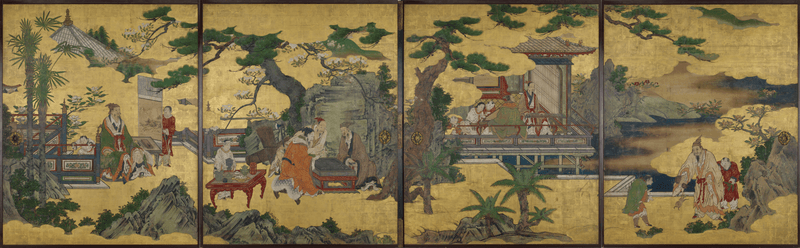 Remounting Kinkishoga, Sennin-zu (The Four Accomplishments and Immortal) for a Japanese Exhibition">

The four 17th‑century fusuma sliding door panels now in the Tateuchi Conservation Studio require custom crating, climate‑controlled transport, and a coordinated schedule across institutions to meet the summer 2026 loan deadline in Japan; shipping manifests, condition reports, and conservation timelines are being shared between Seattle Art Museum, the British Museum, and Tohoku University of Arts and Sciences to ensure secure cross‑border transfer and exhibition readiness.
Conservation workflow at Tateuchi Conservation Studio
Remounting these panels involves simultaneous attention to both the mounting structure and the painted surfaces, because in Japanese formats the artwork is physically attached to its support. Conservators remove old linings, stabilize pigments, and reconstruct support layers before final attachment to new interior lattices.
Tools, materials, and key steps
Typical conservation actions for the panels include surface cleaning, consolidation of friable pigments, tear mending, and reattachment to the panel. The studio relies on specialized paper preparation and traditional adhesives to respect original techniques while meeting modern display standards.
- Primary adhesives: animal glue for consolidation and wheat starch paste for layering and mending.
- Support work: handmade Japanese papers and bamboo folders to prepare linings.
- Tools: tweezers, small brushes, knives, awls, and controlled water sprayers for safe removal of old supports.
- Mounting: a custom interior lattice and lacquer trim are being produced in Japan to match historic methods.
Practical logistics for large panels
Because each panel is oversized and originally double‑sided, packing requires engineered crating with vibration protection and humidity buffering. Coordination with carrier agents and customs brokers is necessary to secure temperature‑ and humidity‑controlled handling from studio to airport and on to exhibition venues in Japan.
| Conservation Task | Tools / Materials | Lead Institution |
|---|---|---|
| Surface consolidation | Animal glue, fine brushes | Seattle Art Museum (Tanya Uyeda) |
| Support removal & relining | Handmade Japanese papers, wheat starch paste | Tohoku University of Arts and Sciences |
| Crating & transport specs | Custom crates, humidity control, shock mounts | British Museum & National Museum of Asian Art (Smithsonian) |
Provenance insights and material evidence
Dismantling the panels has revealed recycled underlayers—old account books, letters, and printed sheets—that carry dates and place names. These incidental fragments provide physical clues confirming that the SAM panels were remounted at least twice after leaving their 17th‑century shrine setting. Comparative analysis of paper sizes and configurations also supports links to related fusuma in the British Museum and a recently discovered set in Aomori, Japan.
Art historical outcomes
Conservation findings have fed into curatorial research: the working collaboration with Aaron Rio and international colleagues contributed to attributing the set to Kano Sōgen Shigenobu. Material study and reunification efforts enrich scholarship and will be highlighted in the exhibition catalog and a forthcoming essay in Kokka.
Exhibition, travel demand, and service implications
The traveling exhibition—focused on the British Museum’s Japanese collection and visiting two venues in Japan in summer 2026—will reunite long‑separated formats. While this is primarily a cultural milestone rather than a major shift in global tourism flows, regional visitation to the exhibition venues may increase, affecting local hospitality, airport transfer demand, and specialized logistics for art handlers.
- Institutions coordinating international loans must schedule precise pickup and delivery windows tied to flight and customs timings.
- Specialist drivers and vehicles are needed for secure airport transfers from museum storage to cargo terminals and to final installation sites.
- Advance booking of vehicles that can accommodate oversized crates reduces last‑minute risk.
At a glance, transporting artworks of this scale highlights how art logistics intersect with everyday transfer services: choosing the right car, driver qualifications, and a reliable service affects both cost and safety. Platforms that allow selection of vehicle type, viewable driver ratings, and clear pricing can streamline those arrangements during exhibition seasons.
The conservation story is compelling: careful material analysis, international collaboration, and sensitive treatment bring Kano Sōgen Shigenobu’s work back into public view. The highlights include the technical process of remounting, the provenance clues found in recycled papers, the attribution confirmed through joint research, and the logistical choreography required to move large historic panels across borders. Yet even the best reviews and the most honest feedback can’t truly compare to personal experience. On GetTransfer, you can hire a car with driver from verified providers at reasonable prices. This empowers you to make the most informed decision without unnecessary expenses or disappointments. Emphasize briefly how readers can benefit from the convenience, affordability, and extensive vehicle choices and wide range of additional options provided by GetTransfer.com, aligning directly with the context and theme of this article. Book your Ride GetTransfer.com
In summary: the fusuma remounting combines conservation technique, cross‑institutional research, and detailed logistics to prepare four large panels for a summer 2026 exhibition in Japan. The project underscores how exact transport specs, trusted drivers, and clear service pricing matter when moving cultural property between city and destination, through airport procedures, and into exhibition spaces. For travelers and institutions alike, transparent booking via an app or platform that shows vehicle, driver, license, and fares helps to get the right car and seat at the right time and price. Whether you’re organizing an art loan or arranging a private transfer to see the show, a reliable service that lists prices, vehicle type, and driver details makes it easier to know how much to expect and where to book. GetTransfer.com offers global, user‑friendly options that combine transparency and convenience for taxis, private cars, limousines, or larger seater vehicles—helping you book the best service without surprises.
Commenti