



 Suomi
Suomi  English (UK)
  Русский
  العربية
  日本語
日本語  한국어
한국어  Magyar
  Türkçe
  Español
  Čeština
  Svenska
  Português
  Ελληνικά
  Nederlands
  Română
  Italiano
  Français
  Polski
  Українська
  Deutsch
  简体中文
简体中文  Slovenčina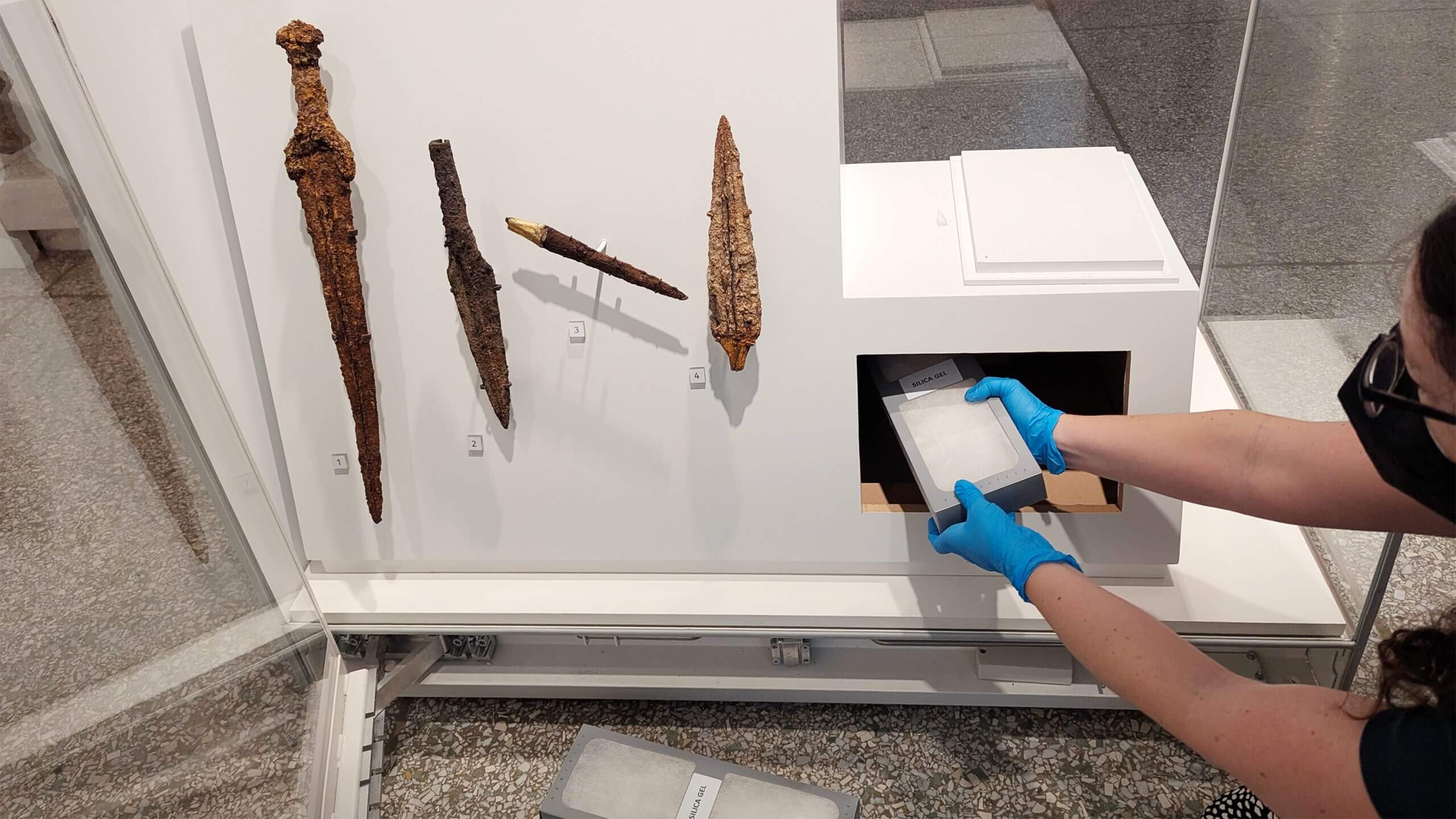

Understanding the Challenge of Preserving Sensitive Artifacts
Humidity control is a crucial factor in museum conservation. Various materials such as iron, ivory, wood, and delicate manuscripts can deteriorate rapidly if exposed to inappropriate relative humidity. While people tend to find 30-60% relative humidity comfortable, artifacts require more precise conditions depending on their composition. For instance, metals often need a relative humidity below 20%, while organic materials like wood and paper usually demand a stable range around 40-60%.
Maintaining this delicate balance requires constant monitoring of environmental conditions inside display cases. Museums like the Penn Museum employ hygrometers—small dials that record temperature and humidity—to keep a vigilant eye on climate factors within exhibit enclosures.
What Is Silica Gel and Why Is It Used?
You’ve probably come across small packets of silica gel inside shoe boxes, vitamin bottles, or snack packages. Though unassuming, these packets are miniature guardians protecting contents from moisture damage. Museums harness silica gel on a far larger scale. Composed of inert, non-toxic silicon dioxide beads, this gel acts as a buffering agent to regulate the humidity inside display cases.
Silica gel’s magic lies in its capacity to absorb or release moisture, thus stabilizing the relative humidity. It works as a reservoir that reacts to changes in air moisture, preventing the harmful humidity swings that can wreak havoc on sensitive materials. This ability to “even out” fluctuations is invaluable for maintaining the integrity of priceless collections over time.
How Museums Use Silica Gel for Artifact Protection
At the Penn Museum, approximately 300 kilograms (over 660 pounds) of silica gel are strategically placed across galleries, especially in sections featuring iron objects and delicate manuscripts. The gel is carefully conditioned to hold humidity levels within either a desiccated range (below 30%) for metals or a conditioned range (40-60%) for organic materials.
| Material Type | Recommended Relative Humidity | Silica Gel Type Used |
|---|---|---|
| Metals (e.g., iron) | Below 20% | Desiccated Silica Gel (dry) |
| Organics (e.g., ivory, wood) | 40-60% | Conditioned Silica Gel |
The silica gel is cleverly hidden inside cases—in custom-built compartments, trays, or sachets sewn from polyester fibers—ensuring the aesthetic of the display remains uninterrupted. This placement allows the gel to interact with the air environment around the artifacts while remaining invisible to visitors.
Microclimate Control with Cases-Within-Cases
One of the clever techniques employed is the use of “cases-within-cases.” This layered approach creates a microclimate, so that sensitive artifacts are kept under even stricter humidity control without needing to condition the entire large display case. Such microclimates reduce the amount of silica gel required dramatically and offer a fine-tuned environment for particularly vulnerable items.
For example, a lead tablet in the Eastern Mediterranean Gallery needs a very dry atmosphere. Conditioning a large case for this would normally require about 20 kilograms of silica gel. However, placing the tablet in a smaller inner case lowers the requirement to just about 500 grams—a huge efficiency.
Maintaining and Reconditioning Silica Gel
Like any working material, silica gel has its limits. Over time, it absorbs or releases moisture until it can no longer maintain equilibrium. When this happens, the gel must be taken out and reconditioned.
Seasonal weather plays a role: Philadelphia’s humid summers necessitate drying the desiccated gel in an oven to drive out absorbed moisture. Conversely, dry winters require adding moisture back to the conditioned gel. This reconditioning is a delicate, ongoing task carried out in the museum’s lab, where up to 20 kilograms can be processed per week.
- Drying: Baking silica gel at controlled low temperatures to remove water and restore dryness.
- Conditioning: Using vapor chambers to carefully add moisture, achieving precise relative humidity targets.
Implications for Travel and Transfers in Museums
When planning a visit to see such carefully preserved collections, the role of reliable transfers to and from the museum cannot be overstated. Whether arriving from an airport or moving around the city, choosing transport services that respect timing and convenience adds to the overall experience.
Platforms like GetTransfer.com elevate the transfer experience by letting travelers choose exact vehicles tailored to their preferences, from comfortable sedans to spacious limousines or private shuttles. The ability to view full details—including make, model, and driver ratings—ensures confidence and transparency before booking.
Summary: Why Silica Gel and Precise Humidity Control Matter
The preservation of sensitive artifacts hinges on maintaining exact humidity levels, a task to which silica gel is uniquely suited. By absorbing or releasing moisture, silica gel helps stabilize microclimates within display cases, safeguarding fragile metals, papers, and organics against deterioration.
This technology is enhanced by regular monitoring with hygrometers and careful reconditioning of the gel to adapt to seasonal changes. From microclimate strategies using inner cases to extensive gel usage, museums deploy a thoughtful combination of science and craftsmanship in artifact protection.
The lesson extends beyond collections care. Visitors traveling to museums benefit greatly from dependable, transparent transport services that help preserve a smooth schedule and comfortable experience.
Why Personal Experience Matters for Choosing Transfer Services
While reviews and ratings offer useful information, nothing replaces the firsthand experience of booking and riding with a trusted provider. On GetTransfer.com, travelers can hire cars with drivers from verified companies across the globe at reasonable prices. This platform offers a wide range of vehicles including private sedans, limousines, and multi-seaters with competitive fares and transparent licensing.
Thanks to the extensive choices, affordability, and clear pricing on GetTransfer.com, passengers can avoid unnecessary costs or disappointments and enjoy seamless service aligned with their needs. Book your ride on GetTransfer.com and experience the ease and reliability firsthand.
Looking Ahead: The Role of Innovations in Travel and Culture
Although the science behind silica gel’s role in artifact preservation might not directly transform global travel at a glance, its importance to cultural heritage is undeniable. Museums worldwide depend on controlled environments to keep history alive. Similarly, the travel industry—represented by platforms like GetTransfer.com—is continuously evolving to meet travelers’ growing demand for precise, personalized, and transparent service.
GetTransfer continues to stay abreast of such developments, ensuring travelers can book transfers confidently. Start planning your next adventure and secure your worldwide transfer with GetTransfer to make every trip around rich cultural destinations as smooth as possible.
Kommentit