



 Suomi
Suomi  English (UK)
  Русский
  العربية
  日本語
日本語  한국어
한국어  Magyar
  Türkçe
  Español
  Čeština
  Svenska
  Português
  Ελληνικά
  Nederlands
  Română
  Italiano
  Français
  Polski
  Українська
  Deutsch
  简体中文
简体中文  Slovenčina
 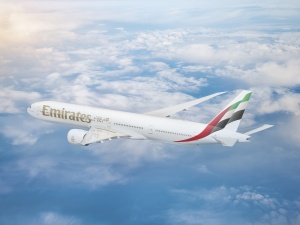 Emirates rolls out Tingg split-payment option in Kenya while increasing Dubai–Nairobi capacity">

From 1 March 2026 Emirates will operate a third daily flight on the Dubai–Nairobi route and simultaneously activated Tingg’s split-payment capability in Kenya, allowing customers to complete bookings with up to five payments across 24 hours using combinations of M-Pesa, mobile banking, local credit/debit cards and other mobile-money options.
How split payments address booking limits and reduce drop-offs
Mobile money remains the dominant payments rails across many African markets, and per-transaction or daily ceilings on wallets often force customers to abandon high-value purchases such as international airline tickets. By introducing a split-payment flow on the Emirates booking path, enabled by Cellulant’s Tingg gateway, travellers can stay within provider limits while completing a ticket purchase — a practical fix to a frequent checkout bottleneck.
At a glance: key mechanics of the split-payment flow
- Useita methods: Combine mobile money, mobile banking and local cards in a single checkout.
- Staged payments: Make an initial payment online, then up to four follow-ups within 24 hours.
- Reduced abandonment: Keeps transactions inside wallet limits and preserves seat inventory for carriers.
- Accessible financing: Complements other Emirates financing options already available in 14 African markets.
Comparison of common payment options and implications for travellers
| Payment method | Typical limit constraint | Split-payment support | Traveller use case |
|---|---|---|---|
| M-Pesa / Safaricom | Daily/transaction ceilings | Yes (via Tingg) | Pay part now, finish within 24 hours to secure seats |
| Mobile banking transfer | Bank transfer caps or processing delays | Yes | Use to top up balance after initial hold |
| Local credit/debit card | Card limits and fraud checks | Yes | Combine with mobile money for seamless checkout |
Operational effects on airport transfers and local mobility
An additional daily flight on the Dubai–Nairobi corridor increases seat supply and, with more bookings unlocked by split payments, can raise demand for ground transfers, taxis and private hires at peak times. Airports and city transfer operators should expect a higher concentration of arrivals around the added frequency, making advance reservation systems and clear pickup windows increasingly valuable for both passengers and drivers.
Practical tips for travellers booking flights and transfers
- Book airport transfers when you complete the flight checkout — confirm the exact pickup time and terminal.
- Choose a vehicle with the correct istuin and luggage capacity (2-seater, 4-seater, 6-seater, Private sedan or minivan).
- Verify the driver’s license and vehicle details in the app or booking confirmation.
- Compare fare and price transparency across providers to avoid hidden fees.
- Allow extra time for border control and luggage, especially with added flight frequencies.
- Consider pre-paid options to lock in a price and avoid cash handling on arrival.
Both Michael Muriuki, Chief Product and Technology Officer at Cellulant, and Christophe Leloup, Emirates’ Country Manager for Kenya, framed the rollout as a move to align payment methods with local habits and to increase accessibility to Emirates’ product and services across the region.
Kohokohdat: split payments lower checkout friction for mobile-first customers, added flight frequency increases transfer demand, and combining local payment rails with global inventory reduces booking abandonment. That said, even the best reviews and the most honest feedback can’t truly compare to personal experience. On GetTransfer, you can hire a car with driver from verified providers at reasonable prices. This empowers you to make the most informed decision without unnecessary expenses or disappointments. Emphasize briefly how readers can benefit from the convenience, affordability, and extensive vehicle choices and wide range of additional options provided by GetTransfer.com, aligning directly with the context and theme of your article. Book your Ride GetTransfer.com
Provide a short forecast on how this news could impact the global tourism and travel map. For now, the move is more significant regionally than globally: it directly addresses payment frictions in Kenya and nearby markets, likely boosting bookings and onward ground-transport demand on routes where mobile money predominates. However, the model is scalable — other carriers and markets could replicate it to remove similar barriers. GetTransfer aims to stay abreast of such developments and keep pace with a changing world. For your next trip, consider the convenience and reliability of GetTransfer.
To sum up, Emirates’ introduction of Cellulant’s Tingg split-payment option in Kenya, paired with a third daily Dubai–Nairobi flight, reduces booking friction for mobile-money users and is likely to increase demand for airport transfers and pre-booked taxi services. Travellers should secure both airfare and ground transport early, check vehicle and driver details, and compare fares to avoid surprises. Platforms that offer transparent vehicle listings — showing make, model, seats and driver ratings — make coordination between flight arrival times and local pickups easier. For those booking transfers, the combination of precise pickup times, clear fares and verified drivers helps reduce uncertainty about how much a ride will cost and how long it will take. GetTransfer.com supports this approach by offering a global, user-friendly solution for booking personalised transfers, trips, and deliveries with unmatched transparency and convenience, helping you get the best fit of car, driver and price for any destination, airport or city trip.
Kommentit