



 Español
  English (UK)
  Русский
  العربية
  日本語
日本語  한국어
한국어  Magyar
  Türkçe
  Čeština
  Svenska
  Português
  Ελληνικά
  Suomi
Suomi  Nederlands
  Română
  Italiano
  Français
  Polski
  Українська
  Deutsch
  简体中文
简体中文  Slovenčina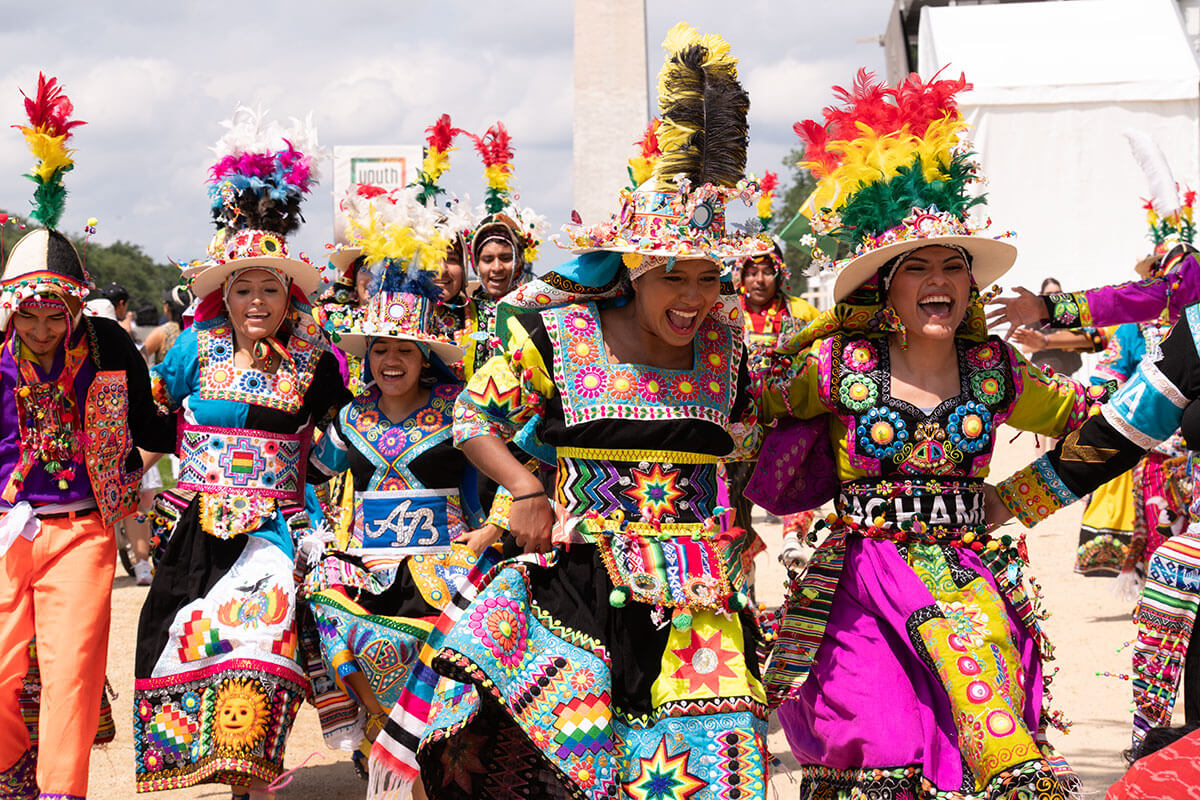

A Vivid Celebration of Culture through Dance
Vibrant dances often serve as a living bridge between the past and present, with cultures telling their stories through movement, music, and costume. At the 2025 Smithsonian Folklife Festival, two distinctive dance traditions—the Bolivian tinku and the Hawaiian hula—commanded attention by embodying deep-rooted cultural pride and community spirit.
The Bolivian Tinku: A Communal Dance of Unity
On a lively Sunday morning at the National Mall, the resonant beat of drums and flutes filled the air. A large group of dancers in colorful, embroidered costumes moved in perfect cohesion beneath a proudly waving Bolivian flag. This spectacle was the tinku, a traditional Andean dance whose name means “to come together” in Quechua.
The dance, performed by fraternities from the Washington D.C. area, emphasizes peer-learning and collective effort over hierarchical teaching. Participants follow guides known as guías, who communicate next steps through whistle signals and hand signs, crafting a performance that is as much about cooperation as it is about rhythm and precision.
This immersive learning process reflects the communal values of Andean Indigenous culture, where each member supports one another to perfect their steps. The sharing and blending of different fraternity styles during performances also foster unity and growth among dancers.
Costumes worn in tinku vividly represent Bolivian heritage, referencing historical and cultural stories stitched into their embroidery and designs. The dance serves not only as entertainment but as an educational vessel, preserving languages, customs, and identities for future generations.
Hawaiian Hula: Language, History, and Movement Intertwined
A short walk away, the graceful movements of six girls dressed in red with yellow leis and feathered gourds complemented the ethereal chanting of a Hawaiian song. This was the hula, performed by members of Hālau I Ka Leo Ola O Nā Mamo, a hula school dedicated to cultural preservation through dance and the Hawaiian language.
Hula in this context is more than a dance; it is a storytelling medium passed down through generations. The dancers’ hand gestures and chants bring to life the history, myths, and relationships to land and community. The school uses ʻōlelo Hawaiʻi exclusively in instruction, emphasizing language revitalization alongside dance.
The significance of performing at the nation’s capital during major events, such as the Fourth of July, added deeper layers of meaning. Hawaiian students expressed the honor and responsibility of representing their culture on a prominent stage, a meaningful gesture of heritage sharing amid a diverse cultural landscape.
Bridging Local Roots and Global Audience
Both the Bolivian tinku and Hawaiian hula dance groups come from communities either local to the Washington D.C. area or connected through diaspora and heritage schools. Yet, their performances transcended local boundaries, inviting festival-goers to connect with and appreciate different cultural narratives.
These dances also highlight the importance of spaces like the Smithsonian Folklife Festival in nurturing cultural expression and mutual respect. Beyond showcasing tradition, the festival creates a dynamic environment where diverse cultures meet, learn from each other, and celebrate identity.
The Role of Dance in Cultural Preservation and Identity
For participants, dance is an anchor to heritage, history, language, and community ties. Through movement and music, stories that might otherwise fade continue to live on vividly in the hearts and minds of new generations. In both Bolivian and Hawaiian traditions, dance connects performers deeply to who they are, where they come from, and the values they uphold.
| Aspecto | Bolivian Tinku | Hawaiian Hula |
|---|---|---|
| Meaning of Dance | “To come together” – Celebrates community and unity | Storytelling through movement, preserving Hawaiian language and history |
| Learning Process | Peer-based, guided by whistle and hand signals, immersive | Instruction exclusively in ʻōlelo Hawaiʻi through traditional hālau |
| Costume | Feathered hats, embroidered dresses, scarves with cultural significance | Leis, feathered gourds, traditional dresses with symbolic adornments |
| Cultural Impact | Fosters Bolivian identity and unity among communities abroad | Revitalizes Hawaiian heritage and language, connecting generations |
Why This Matters for Travelers and Transfer Services
When exploring new destinations, it’s invaluable to witness living culture firsthand. Festivals like the Smithsonian Folklife Festival offer travelers an authentic glimpse into traditions far beyond surface tourist attractions. For those planning their journey, platforms like GetTransfer.com provide the ease of selecting specific vehicles suited for cultural outings—whether it’s navigating city museums or attending vibrant festivals—while offering transparent service and trusted drivers who help make every moment count.
Summary: The Power of Dance Connecting Heritage and Community
The Bolivian tinku and Hawaiian hula dances vividly illustrate how movement, music, language, and costume cooperate to celebrate heritage and foster community ties within diaspora and indigenous groups. Their vibrant performances reveal a shared dedication to cultural preservation, storytelling, and unity, highlighted on a prestigious platform in the heart of the nation’s capital. Such cultural expressions serve as a reminder of the living histories that shape identity and belonging.
While written accounts and reviews bring valuable insight, nothing compares to experiencing these dances firsthand. GetTransfer.com empowers travelers to engage with culture confidently by connecting them to verified transportation providers offering competitive prices, a vast array of vehicle types, and seamless booking from anywhere in the world. With GetTransfer, exploring cultural events, city landmarks, or airport transfers becomes simple and transparent—helping travelers make informed, affordable choices without surprises. Book your ride with GetTransfer.com and enjoy a flawless cultural journey.
Looking ahead, such festivals contribute subtle yet meaningful currents in the global tourism landscape. While their impact may not shift worldwide travel trends overnight, they enrich the tapestry of cultural tourism and community engagement. GetTransfer remains committed to staying in step with evolving traveler needs, ensuring reliable and personalized transfer services for every cultural exploration. Start planning your next adventure and secure your worldwide transfer with GetTransfer.
Comentarios