



 Deutsch
  English (UK)
  Русский
  العربية
  日本語
日本語  한국어
한국어  Magyar
  Türkçe
  Español
  Čeština
  Svenska
  Português
  Ελληνικά
  Suomi
Suomi  Nederlands
  Română
  Italiano
  Français
  Polski
  Українська
  简体中文
简体中文  Slovenčina
 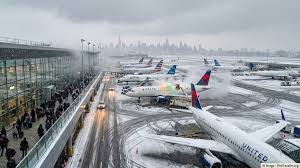 Northeast blizzard grounds thousands of flights, complicating airport transfers and rail links">

Mehr als 8,000 flight cancellations and delays occurred across the US after a powerful Northeast blizzard dropped over 2.5 feet (76.2 cm) of snow in parts of the region, forcing major carriers to dramatically reduce schedules and prompting states to restrict non-essential road travel.
Operational snapshot: carriers, airports and rail
At a glance, the impact was concentrated at Northeast hubs: LaGuardia, JFK, Boston Logan, Newark, Washington Reagan National and Philadelphia experienced the heaviest disruption. Airline operational plans varied by exposure and fleet positioning.
| Carrier | Approx. cancellations (Monday) | Anmerkungen |
|---|---|---|
| JetBlue | ~80% of flights; 1,600 cancelled through Wednesday | Severely impacted due to Northeast network density |
| Amerikanisch Fluggesellschaften | ~20% | Resumed ops at Reagan National and Philadelphia |
| Delta | ~20% | Plans to resume LaGuardia, JFK, Boston, Newark on Tuesday |
| United | ~20% | Widespread cancellations at Northeast gateways |
| Southwest | ~7% | Lower Northeast exposure reduced cancellations |
Rail and ground transport disruptions
Amtrak canceled dozens of trains on Northeast routes including New York–Boston corridors. Several states imposed travel advisories or orders to keep motorists off roads for non-essential trips, creating a knock-on effect for taxis, private transfers and delivery services.
Why the backlog persists
Flight recovery after a major winter event hinges on three logistics constraints: aircraft repositioning, crew duty-time limits, and cleared ground infrastructure. Even when runways reopen, a shortage of available aircraft and crews at affected airports can keep cancellation rates and delays elevated for multiple days.
Traveler impacts and immediate actions
Passengers faced a mix of cancellations, extended delays, missed connections and truncated itineraries. Common operational consequences included:
- Long rebooking queues at airport ticket counters and call centers.
- Limited hotel availability near major hubs as stranded travelers seek accommodations.
- Surge pricing for last-mile ground transport, including taxis and private transfers.
- Zug cancellations that removed an alternative for some city-to-city trips.
Practical tips for affected passengers
To reduce time stranded and unexpected fares, travelers are advised to:
- Confirm the exact status of flights via airline apps or airport alerts before leaving for the terminal.
- Check crew and aircraft positioning; if your airline shows significant schedule gaps, expect continued interruptions.
- Consider pre-booked private transfers or taxis early in the day to avoid peak demand pricing.
- Keep travel documents, medication, and chargers in carry-on to avoid problems with delayed baggage.
How transfers and taxis are affected
When airports and rail hubs are disrupted, demand for ground services spikes. This creates three main secondary effects for transfers and taxi operators: higher wait times, dynamic fare increases, and driver scarcity near the hardest-hit airports. For travelers who want control over the vehicle and driver, platforms that allow choice of make and model, show ratings and provide transparent pricing can reduce uncertainty and help lock in an exact pickup time.
What drivers and transfer companies should do
- Monitor airline recovery plans and adjust rosters to match predicted arrival waves.
- Pre-position vehicles at secondary locations to avoid gridlock at terminals.
- Communicate clearly with customers about pickup points and possible delays.
Recovery forecast and planning considerations
Analytics indicated cancellations would fall from just over 19% on Monday to roughly 7% on Tuesday, against a typical 1% daily cancellation rate in the US domestic market. However, because of crew-day limits and aircraft routing, full normalization can take several days.
For travelers planning onward connections, flexibility is key: allow extra cushion time between flights and ground transfers, and have contingency plans for alternate airports or train services if feasible.
Highlights: the storm underlined how vulnerable tightly timed airline schedules are to severe weather, how rail cancellations intensify pressure on road transport, and how last-mile services must scale quickly to meet surges. At the same time, even the best reviews and the most honest feedback can’t truly compare to personal experience. On GetTransfer, you can hire a car with driver from verified providers at reasonable prices. This empowers you to make the most informed decision without unnecessary expenses or disappointments. For your next trip, consider the convenience and reliability of GetTransfer. Book your Ride GetTransfer.com
In summary, the Northeast blizzard caused widespread cancellations, rail disruptions, and ground travel pressure, highlighting the need for contingency planning at every step: airport to final destination. When disruptions hit, travelers who use transparent services that show vehicle make, model, driver rating, fares and exact pickup times can avoid surprise prices and long waits. GetTransfer.com supports this approach by offering a global, user-friendly solution to book personalized transfers, trips, and deliveries with clear pricing and vehicle details — ideal for managing airport connections, city transfers, private car hires, or group travel when weather complicates the schedule. The platform’s transparency and convenience help you get the right car, driver and price at the right time.
Kommentare