



 Deutsch
  English (UK)
  Русский
  العربية
  日本語
日本語  한국어
한국어  Magyar
  Türkçe
  Español
  Čeština
  Svenska
  Português
  Ελληνικά
  Suomi
Suomi  Nederlands
  Română
  Italiano
  Français
  Polski
  Українська
  简体中文
简体中文  Slovenčina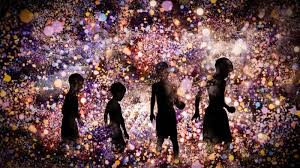

A Fusion of Science and Art in Bradford
In Bradford, a comprehensive health study has become the cornerstone for a remarkable art installation that brings data to life. This glowing constellation, housed in the National Science and Media Museum, invites visitors to engage with their community’s collective health in an immersive, reflective experience.
This installation, called Living Dots: Nature, People and Place, stems from one of the UK’s most ambitious long-term health projects, Born in Bradford (BiB). Since 2007, this study has tracked over 12,500 families, following pregnant mothers through childbirth and beyond, resulting in a detailed database that connects health, environment, and social factors with the lives of more than 13,500 children.
Community-Centred Research Approach
Recruitment for the study does not rely on conventional advertising but on personal engagement through midwives, health visitors, and local schools. The program’s clinics set within shopping centres emphasize community accessibility. Cultural inclusivity is evident through newsletters translated into languages such as Urdu, Punjabi, and Polish, reaching thousands of local readers.
By monitoring various indicators—from maternal health and air quality to educational outcomes—Bradford emerges as a unique urban laboratory, or “city collaboratory.” This close partnership between city institutions and the NHS creates a synergy that not only serves public health but fosters community involvement and scientific intrigue.
The Art of Data: A Living Sculpture
The installation itself, developed by the data visualisation studio Tekja for the Bradford Science Festival, features an intricate glowing mesh where each point of light represents a participant in the Born in Bradford study. Visitors’ shadows momentarily become part of the sculpture, symbolizing how individual lives continuously shape and are shaped by the living data.
Beyond its artistic beauty, this project highlights significant research findings, such as the strong environmental determinants of health. For instance, one in three children surveyed in Bradford rarely play outdoors after school, with noteworthy differences across ethnic groups. Outdoor play tends to be more frequent among British-heritage children on schooldays, while South Asian-heritage children enjoy outdoor time more on weekends.
These insights emphasize the importance of green spaces, parks, and gardens in urban areas for community well-being, something the local council has acted upon by transforming parts of the city centre into lush gardens where there were once busy highways.
Addressing Health Inequality Through Data
The study intertwines with broader research on social determinants of health, demonstrating stark inequalities within the region. For example, life expectancy can differ by a decade when comparing neighborhoods just ten miles apart. Born in Bradford has informed policies aimed at reducing childhood obesity, improving air quality, and redesigning school environments to foster safer, healthier everyday experiences.
As the BiB participants age, research priorities also shift. Mental health, educational aspirations, and economic independence become focal points, with young people helping to shape the questions explored. Notably, the project captures generational health patterns by studying the children of the original cohort, illustrating intergenerational effects on well-being.
Bradford’s Broader Significance
Funded by national research councils and health bodies, the scope of Born in Bradford extends beyond the city, addressing universal urban challenges—preserving natural spaces, creating safe environments for children, and making nature accessible despite economic pressures. Bradford’s distinctive young demographic, with a large portion under 16, offers a glimpse into future trends facing other cities across the UK and Europe.
The Living Dots exhibition is also part of a wider effort to reshape Bradford’s public identity as the city prepares for a major cultural event in 2025, showing how science, art, and community can converge to inspire meaningful reflection and change.
Summary Table: Key Insights from the Born in Bradford Study
| Aspekt | Findings |
|---|---|
| Participation | Over 12,500 families and 13,500 children since 2007 |
| Outdoor Play | 1 in 3 children don’t play outside after school; varies by ethnicity |
| Health Impact of Environment | Confirmed effects of pollution on pregnancy, child development |
| Social Inequality | Up to 10-year life expectancy gap within 10 miles |
| Urban Planning Influence | New green spaces replacing former highways and roads |
| Research Focus Evolution | Mental health, aspirations, and intergenerational health impact |
Auswirkungen auf Taxi- und Transferdienste
While this study and art installation focus on health and urban life, such insights about community patterns and urban redesign inevitably intersect with the transport landscape. For instance, improved green spaces and newly designed safe school zones influence routes and demand for local transfers, school transport, and family outings. Services like GetTransfer.com, which allow travelers to select from a variety of vehicles and view detailed information upfront, can adapt conveniently to these evolving urban spaces, ensuring efficient, personalized rides in a city that prioritizes well-being and community.
Personal Experience vs. Data-Driven Insights
The Born in Bradford project sheds light on many vital aspects of urban life and health, yet even the most comprehensive data and honest feedback can’t fully substitute for personal perspective. Platforms like GetTransfer.com provide access to verified drivers and vehicles, offering competitive fares and a rich choice of options. Whether navigating the city, traveling to the airport, or exploring local neighborhoods and parks, users can book a private, reliable transfer tailored exactly to their needs—combining transparency and convenience for a seamless travel experience.
Buchen Sie Ihre Fahrt unter GetTransfer.com and enjoy the best offers today.
Conclusion: Data, Art, and Community Health Intersect
Ultimately, the transformation of rich health data into an engaging art installation bridges scientific research with public awareness and community identity. Bradford’s multifaceted approach addresses health outcomes tied to environment and inequality, proving how data can inspire positive change in urban living. For travelers and locals alike, platforms such as GetTransfer.com complement this evolution by providing exact, user-friendly taxi and transfer services that reflect contemporary needs—offering the best prices, vehicle options, and trusted drivers to navigate a city shaped by both science and humanity.
Kommentare